10 Balcony Decor Ideas That Make a Small Space Feel Special
A balcony can be one of those spaces you barely notice until you start using it. Maybe yours currently has an unused chair, a few mismatched pots, or nothing more than a concrete floor and a railing. That doesn’t mean it can’t become a comfortable part of your home.
The challenge with balcony decorating is usually space. You want somewhere to sit, a little greenery, perhaps some lighting, and enough room to move around without feeling like everything has been squeezed together. The solution isn’t necessarily buying more furniture. It’s choosing fewer things and giving each one a clear purpose.
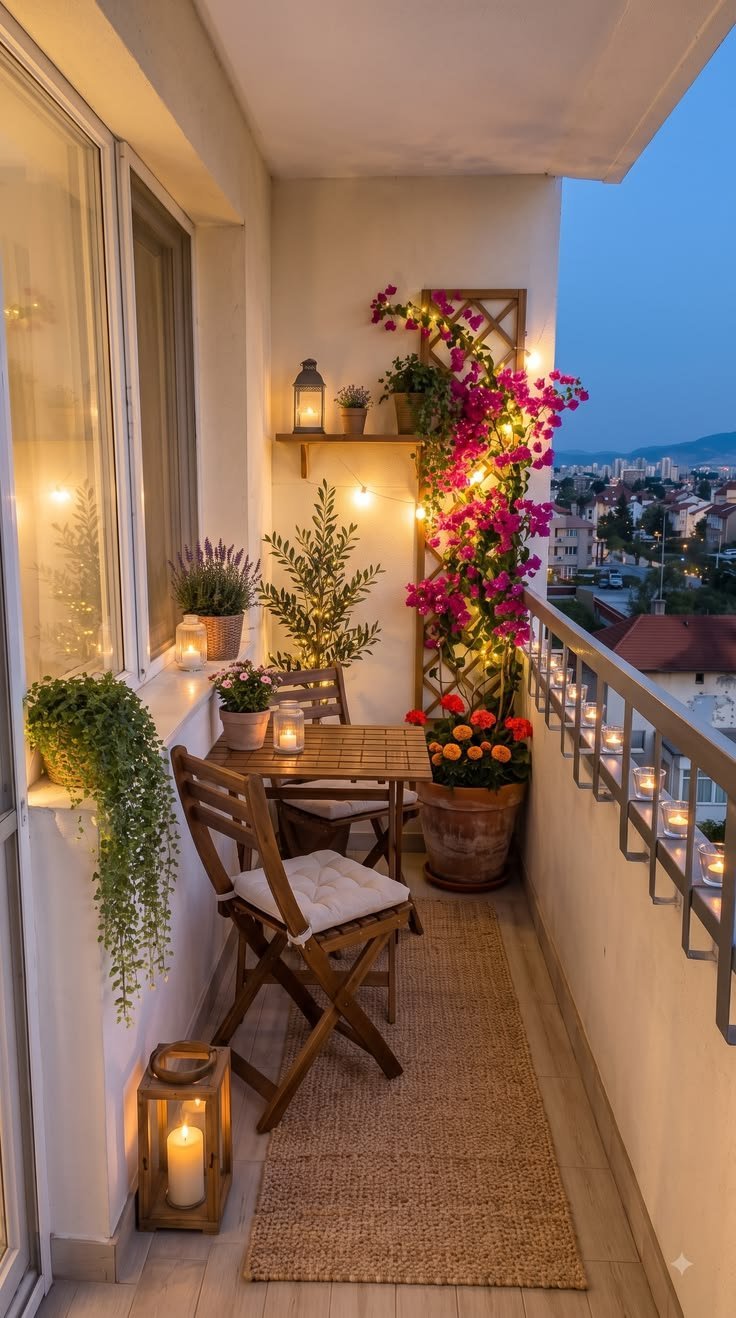
These balcony decor ideas focus on changes that work in real homes, including small apartment balconies, narrow spaces, rentals, and balconies with limited room for furniture. You’ll find simple ways to add plants, create privacy, make the floor feel warmer, and use overlooked areas such as the railing and walls.
The goal is straightforward: create a balcony that feels comfortable enough that you’ll actually want to step outside.
1. Choose Seating That Fits the Balcony, Not the Other Way Around
Before buying plants, lanterns, cushions, or decorative accessories, decide where you’ll sit.
This sounds obvious, but it’s one of the easiest things to get wrong. A chair that looks reasonably small in a store can make a narrow balcony feel crowded once you add a table and plants.
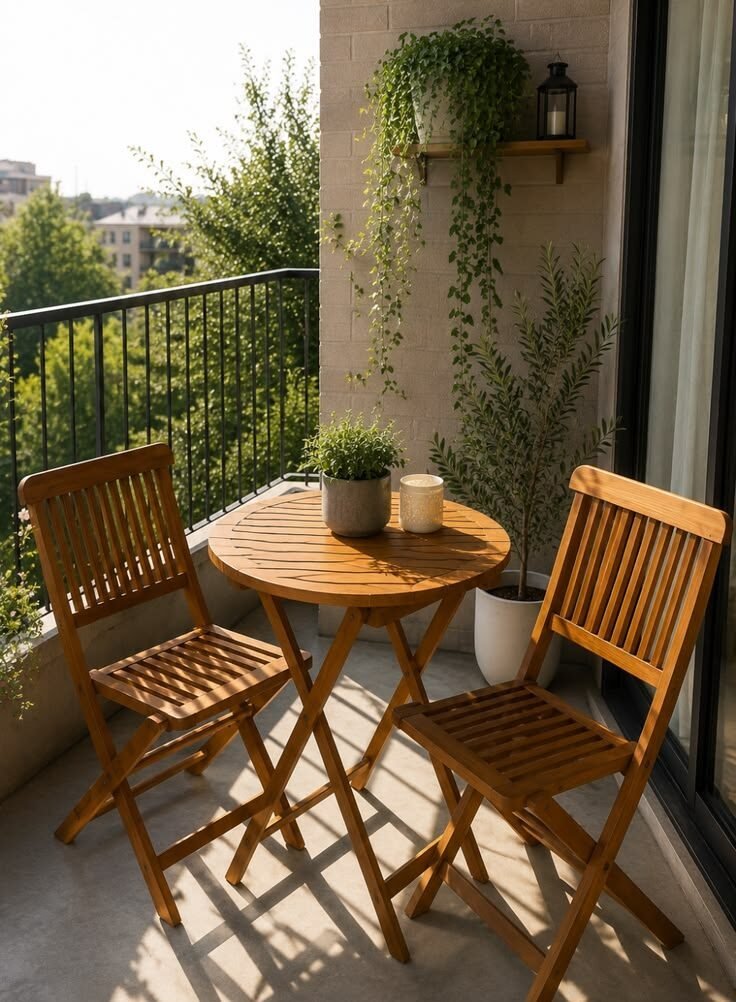
For a compact balcony, start with one comfortable chair. A folding chair, slim lounge chair, or small armchair can give you a proper place to relax without taking up the entire floor.
If there’s enough room for two seats, don’t automatically place them opposite each other. Try putting them side by side or at a slight angle toward the view. This can leave a clearer walking path and make the balcony feel more open.
Make one chair the focal point
You don’t need a complete outdoor furniture set.
A single chair with a comfortable cushion can look intentional when it’s paired with a small side table and a plant nearby. This arrangement works particularly well on narrow apartment balconies where a sofa would simply consume too much space.
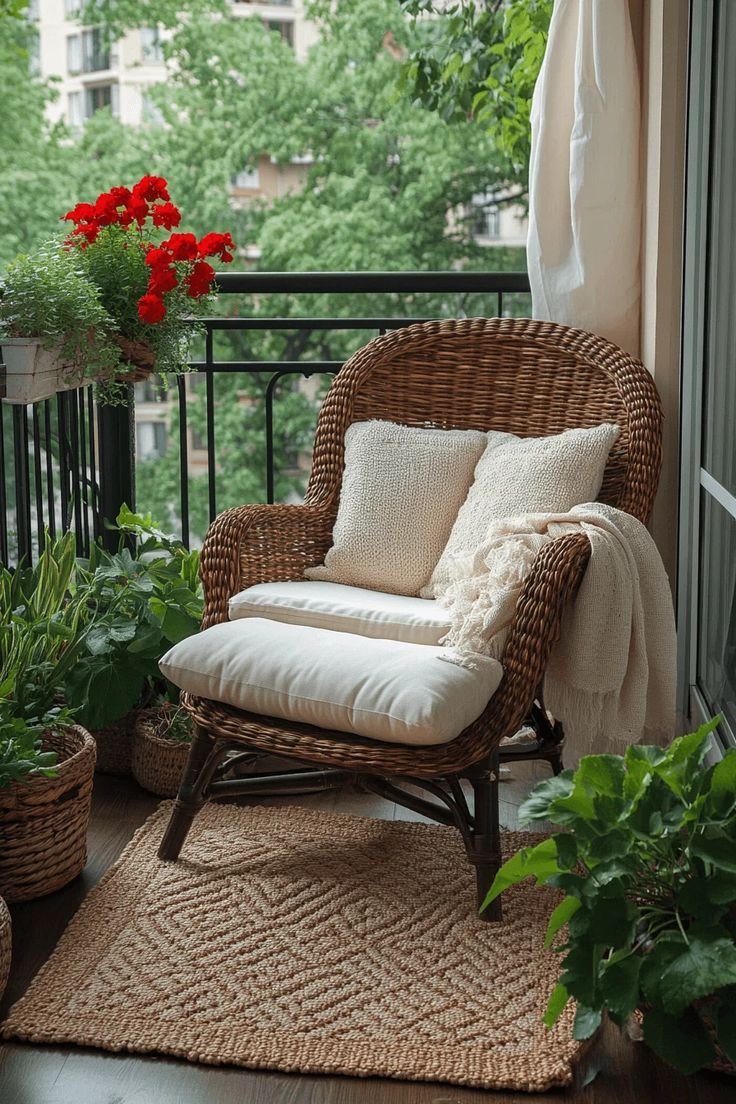
If you’re working with a tight budget, look around the house before shopping. A suitable chair that’s currently sitting unused in another room might work outdoors, as long as its material and construction can handle your balcony’s conditions.
2. Add a Small Side Table Instead of a Full-Sized Table
A balcony doesn’t need a traditional coffee table.
In fact, a small side table is often much more useful. You only need enough space for a cup of coffee, your phone, a book, or perhaps a small plant.
A round table can work particularly well in a narrow balcony because it doesn’t create sharp corners around your walking area. A small stool can serve the same purpose and can be moved whenever you need more space.
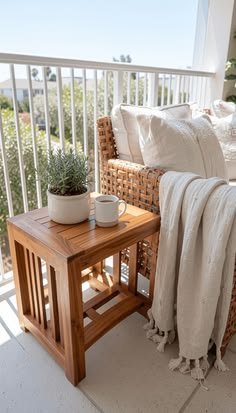
For an inexpensive option, consider repurposing a sturdy stool or small plant stand from inside your home. The important part is making sure the material is appropriate for the location and won’t be damaged by moisture or sunlight.
A table with a lower shelf is another practical choice. The bottom shelf can hold gardening supplies, a small basket, or outdoor cushions while the top remains clear.
Keeping the tabletop mostly empty is actually part of the design. One small vase or candle holder is enough. Once you start adding five or six accessories, the table stops being useful.
3. Use the Balcony Railing for Plants
When floor space is limited, the railing becomes valuable decorating real estate.
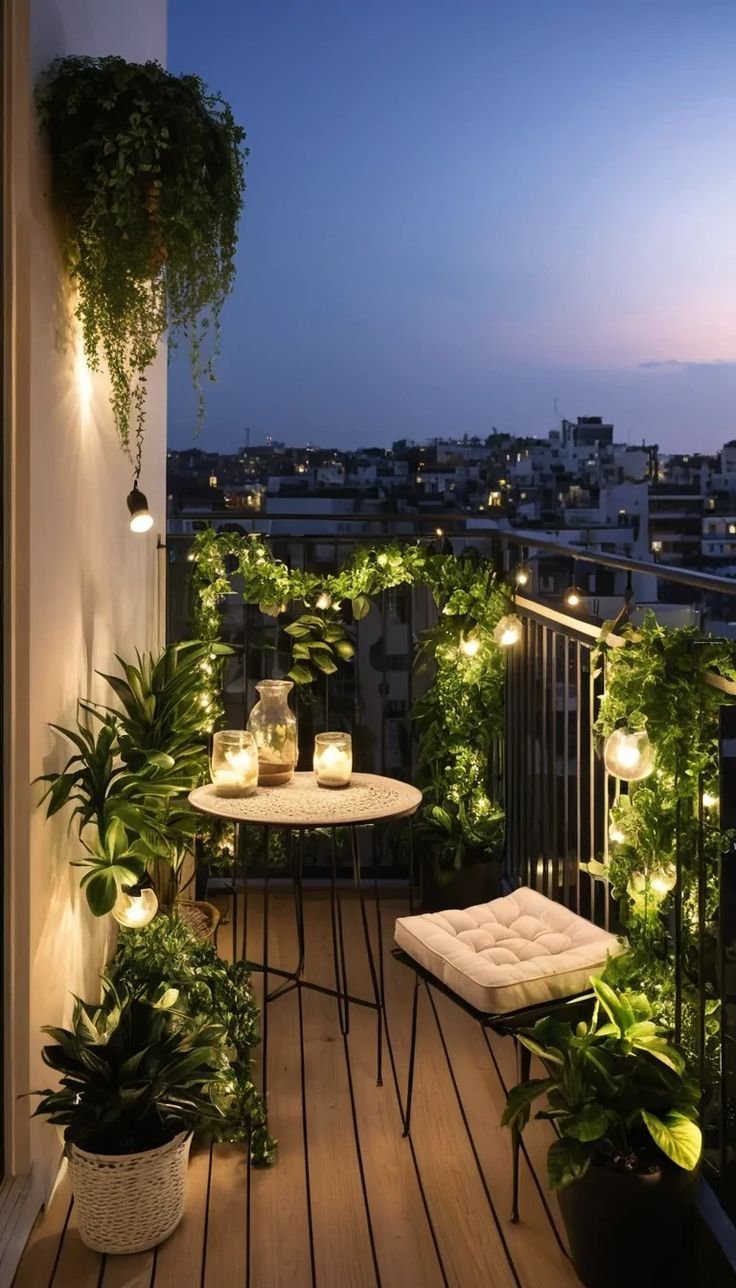
Railing planters allow you to introduce greenery without sacrificing the area where your chair needs to go. They’re particularly useful for narrow balconies where putting several large pots on the floor would make the space difficult to navigate.
You could use the railing for herbs such as mint, basil, or other plants that suit your growing conditions. Alternatively, use a few leafy plants simply to soften the hard lines of the balcony.
There’s no need to cover every inch of the railing.
Try grouping three planters together and leaving the rest open. Using the same style of container creates repetition, while different plant shapes keep the arrangement from looking too uniform.
If you’re renting, choose planters that don’t require permanent alterations. And if your building has rules about attaching objects to balcony railings, check those before installing anything.
Keep the railing visually light
Avoid filling the entire railing with bulky containers. A small balcony benefits from some open space because the eye can move through it.
The greenery should frame the balcony rather than make it feel enclosed.
4. Create a Dedicated Plant Corner
Instead of putting a plant in every available corner, create one area that feels deliberately green.
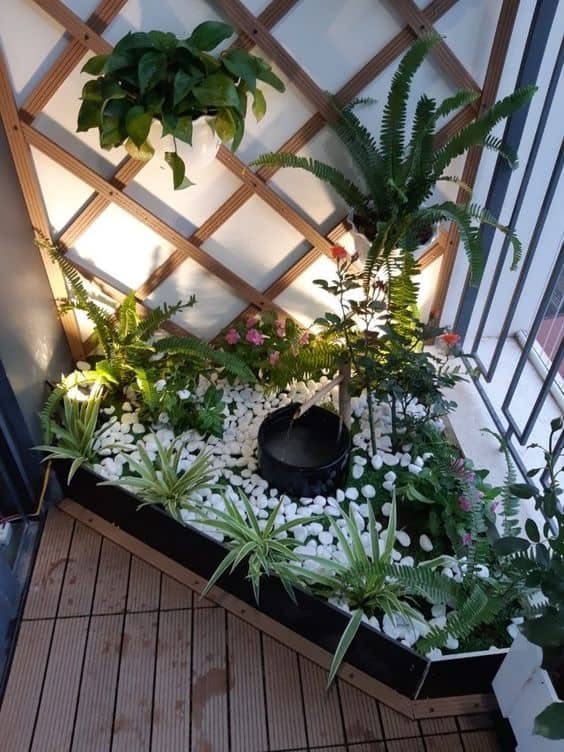
Start with one taller plant at the back. Add two smaller pots in front, then raise one of them slightly using a sturdy plant stand or stool. The different heights create layers and make the arrangement more interesting than several pots sitting at exactly the same level.
This also makes plant care easier.
When everything is grouped together, you can water and maintain the plants without walking around the entire balcony.
Choose plants according to the conditions
Don’t choose balcony plants solely because they look good in photographs.
Think about how much direct sunlight your balcony receives, how exposed it is to wind, and whether rain reaches it. A sheltered, shaded balcony needs different plants from a hot, sunny one.
If you’re new to balcony gardening, start with two or three plants that suit your specific conditions rather than buying a large collection immediately.
Also pay attention to drainage. Containers should be appropriate for outdoor use and positioned so excess water doesn’t create problems for your floor, walls, or neighbors below.
5. Add Soft Lighting Around the Seating Area
Balcony lighting can completely change how the space feels after sunset.
Instead of using only a bright overhead light, add a softer source around the area where you sit. String lights are an easy option, but you don’t need to cover the entire balcony with them.
Try running one strand along the upper edge of a wall or around the area behind your chair.
You can also add a small outdoor lantern to the side table. The combination of one low light and one higher light creates more depth than a single bright source.
Keep the lighting concentrated
There’s a useful decorating trick here: don’t try to illuminate everything equally.
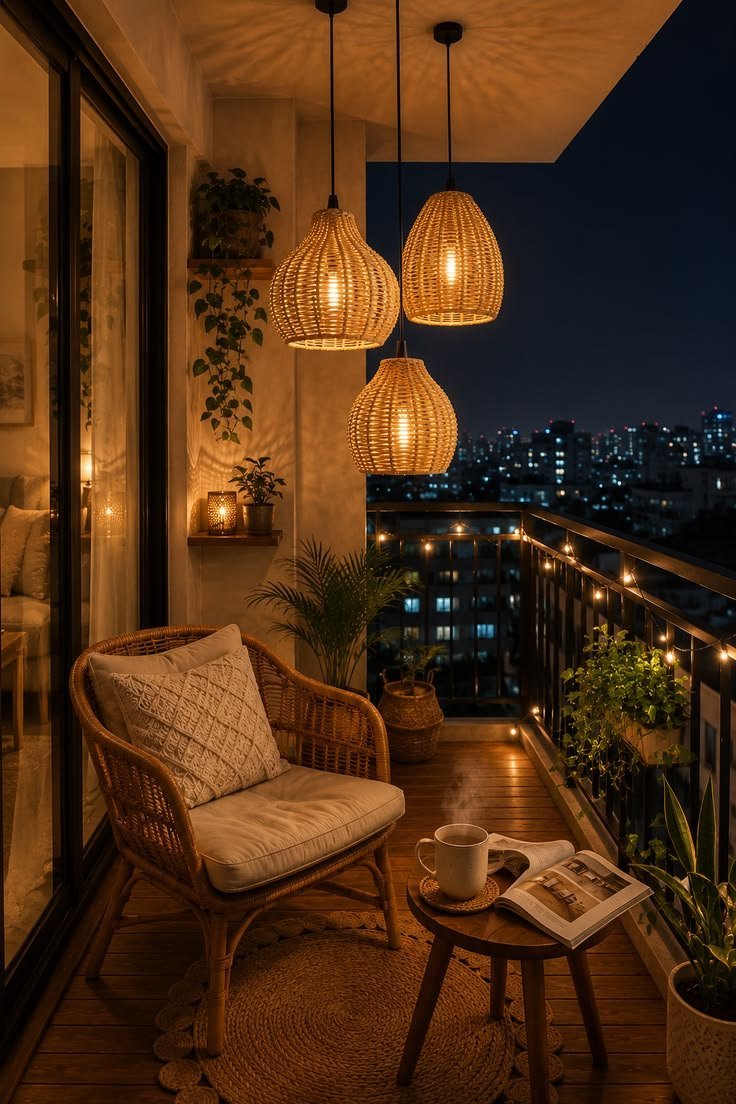
If your chair is in one corner, concentrate the softer lighting there. The rest of the balcony can remain darker.
This creates a small visual zone that feels comfortable without making the entire space overly bright.
For electrical lighting, use products and connections that are suitable for outdoor conditions, and keep them protected according to the manufacturer’s instructions.
6. Put an Outdoor Rug Under the Seating
If your balcony has plain concrete or tile flooring, an outdoor rug can make the seating area feel much more intentional.
It visually connects the chair and table, almost like drawing a small room within the larger balcony.
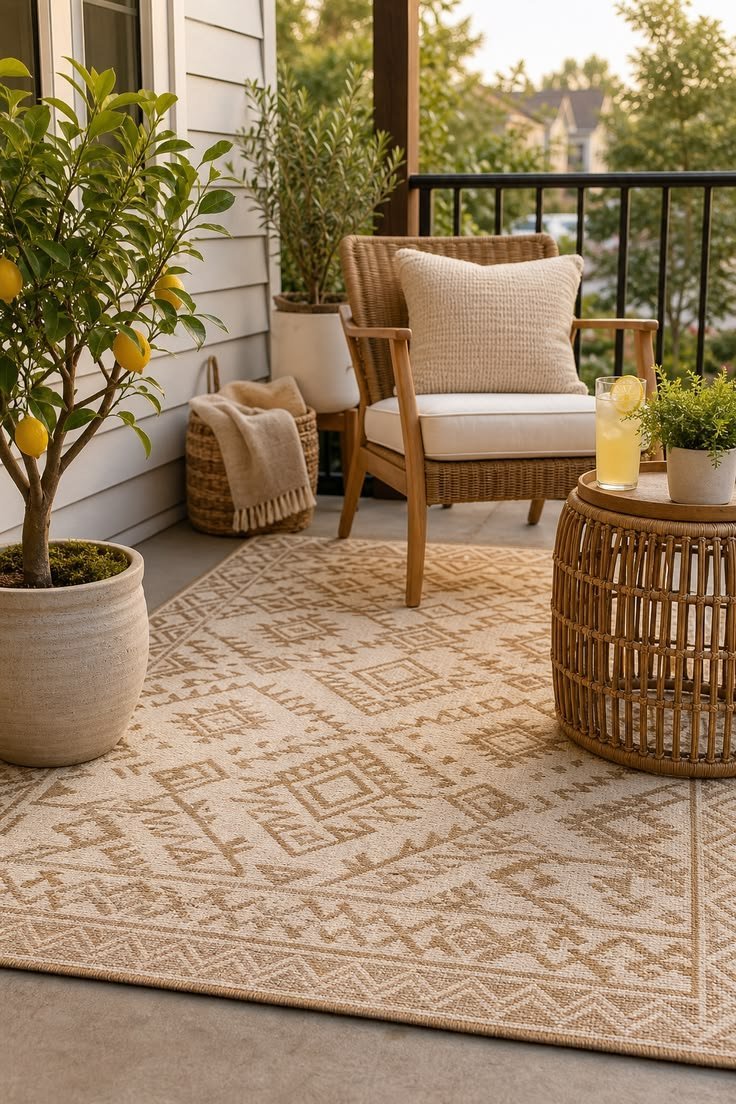
For a long, narrow balcony, a rectangular runner can emphasize the length of the space. If the balcony is more square, a smaller rug beneath the chair and table may work better.
Don’t choose a rug simply because it’s attractive. Outdoor flooring gets dusty and wet, so something that is relatively easy to clean will be much more practical.
If your balcony gets strong wind, make sure the rug is positioned securely. A lightweight rug that constantly moves around will quickly become annoying rather than decorative.
Use the rug to introduce color
You don’t need a complicated pattern.
If your furniture is neutral, a rug with one muted accent color can add enough personality. Repeat that same color once or twice elsewhere, perhaps in a cushion or planter, and the balcony will feel more coordinated.
7. Decorate One Balcony Wall
Walls are often overlooked when decorating a balcony, particularly when people are focused on furniture and plants.
But a wall can give you decorating space without taking up valuable floor area.
A narrow plant shelf can hold small pots vertically. You could also use suitable outdoor wall decor, a weather-resistant mirror, or another simple feature that fits the conditions.
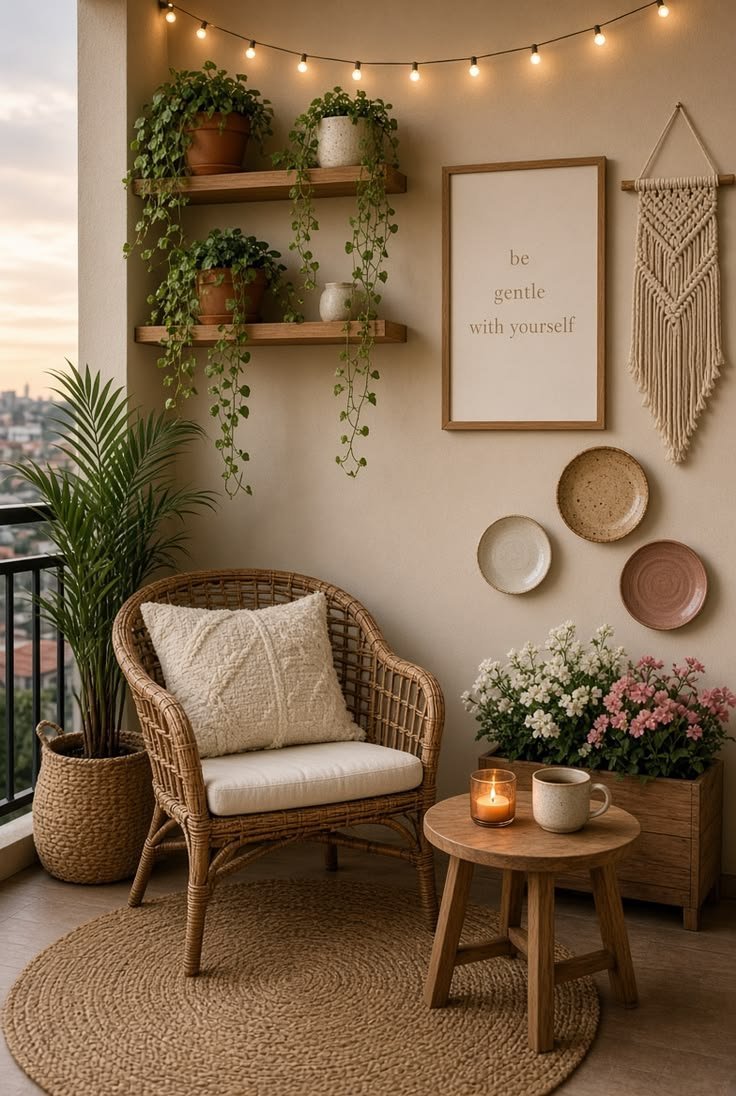
A mirror can be useful in a small balcony because it reflects light and gives the eye another surface to look toward. However, think carefully about where you place it. Avoid positions where strong reflected sunlight could create uncomfortable glare.
If you’re renting, removable solutions may be preferable to permanent fixtures.
You also don’t need to decorate every wall. Choose one surface and give it some attention. Keeping the remaining walls relatively simple prevents the balcony from feeling visually crowded.
8. Turn a Small Section Into a Breakfast Spot
If you like drinking coffee or eating breakfast outdoors, design the balcony around that habit.
A tiny table and one compact chair can be enough.
For especially narrow balconies, a fold-down table or small movable table can be more practical than a conventional dining table. Once breakfast is finished, you can clear the surface or move the table closer to the wall.
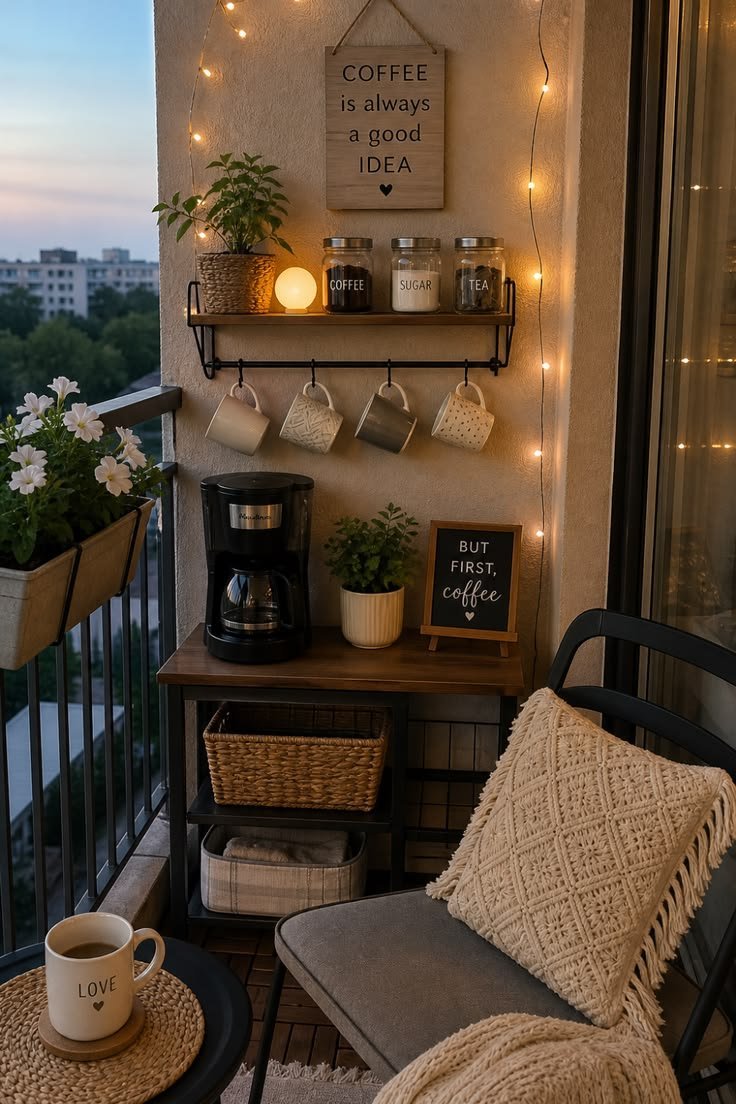
Keep the decor simple.
A small vase, one plant, or a tray can make the area feel finished without taking away the space you actually need to eat.
Repeat colors instead of matching everything
You don’t need a matching outdoor furniture set.
Try choosing two or three colors and repeating them. For example, natural wood, cream, and muted green can create a relaxed look without requiring every item to come from the same collection.
The same principle works with brighter colors. If you choose blue cushions, repeat a similar blue in a planter or small outdoor accessory.
That little bit of repetition makes different pieces feel as though they belong together.
9. Add Privacy Without Blocking the Whole Balcony
A balcony can feel uncomfortable if neighboring apartments have a direct view into your seating area.
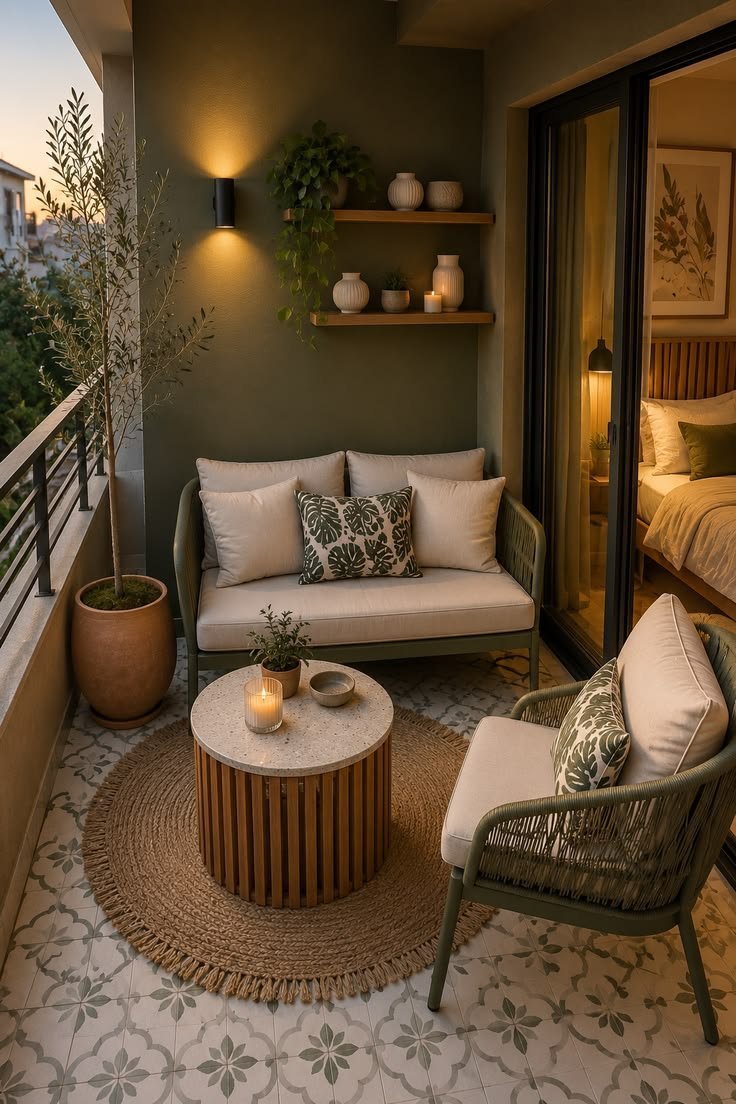
The obvious solution is to install a full privacy screen, but that can make a small balcony feel closed off.
Instead, concentrate privacy around the area where you sit.
Tall plants can interrupt sight lines while still allowing light through. A partial outdoor screen or suitable fabric panel can also work when installed securely and appropriately for the balcony.
Think about creating layers rather than building a wall.
For example, place one taller plant behind your chair, a medium-sized planter beside it, and a smaller plant on a table. Together, they create visual separation without completely blocking the balcony.
This approach can also make the space feel more natural.
Just remember that anything tall or fabric-based can catch wind. Make sure whatever you add is stable and suitable for your balcony’s conditions.
10. Add One Personal Detail That Doesn’t Look Like Everyone Else’s
The final piece of good balcony decor doesn’t have to be expensive.
It should simply feel like you.
Maybe it’s a ceramic planter in a color you particularly like. Perhaps it’s a cushion with a pattern you wouldn’t normally use indoors, a small collection of herbs, or a simple tray you use for your morning coffee.
The trick is not to add ten personal objects.
Choose one or two.
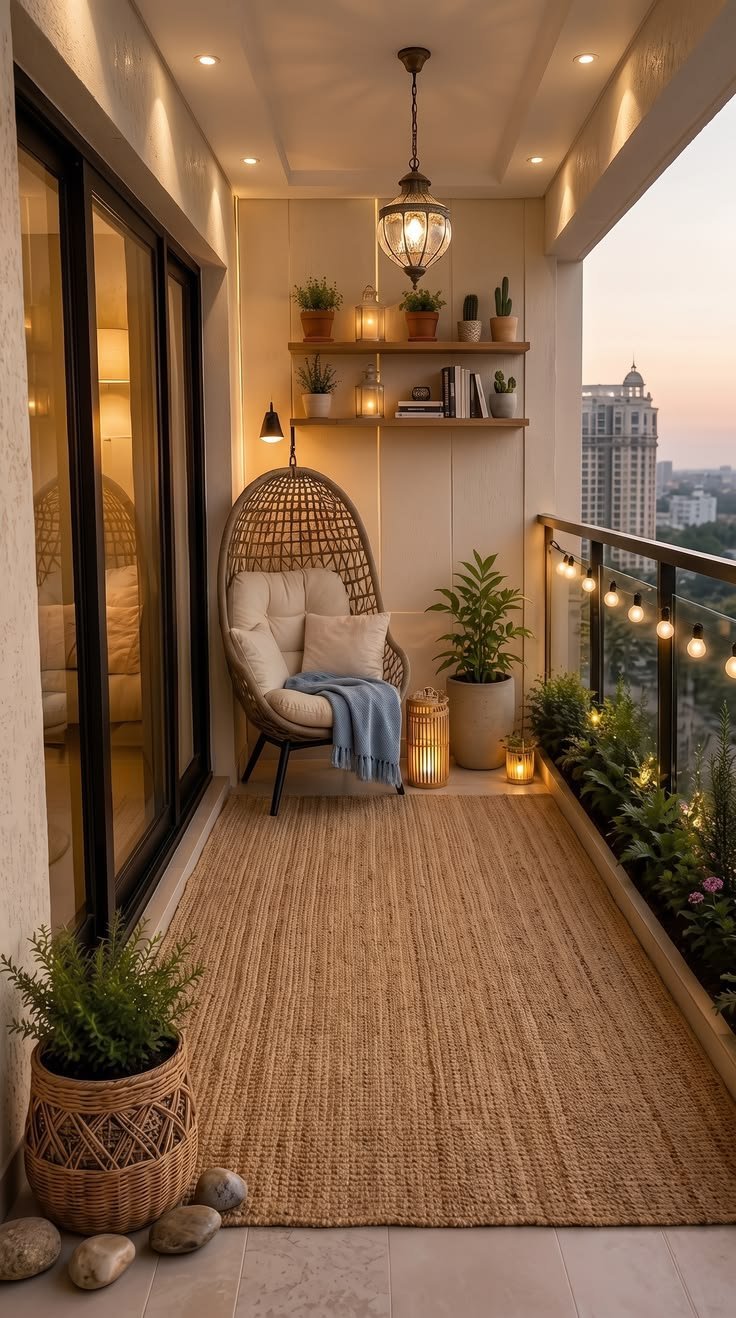
A small balcony can quickly become cluttered when every empty surface gets filled with something decorative. One memorable detail usually has more impact than a collection of unrelated accessories.
You can also use the balcony to extend the style of the room next to it. If your living room has warm wood and neutral fabrics, carry one or two of those elements outdoors. If your interior is more colorful, choose one of those colors for the balcony rather than introducing five new ones.
The balcony doesn’t need a completely separate personality.
Common Balcony Decorating Mistakes to Avoid
Even good balcony decor ideas can go wrong when the space isn’t planned first.
Buying furniture before measuring
Measure the balcony before purchasing anything large. Don’t forget to account for doors, railings, and the walking path.
A beautiful chair isn’t useful if you have to squeeze past it every time you step outside.
Filling every empty corner
Empty space isn’t wasted space.
Leaving some floor visible gives the balcony room to breathe and makes the furniture easier to use.
Using indoor accessories outdoors
A decorative basket, cushion, or rug may look great inside but deteriorate quickly when exposed to sun, rain, or humidity.
Choose materials based on the actual conditions of your balcony.
Overdoing the plants
Plants should support the layout, not take it over. If you can’t comfortably reach your chair or open the balcony door because of pots, you’ve probably gone too far.
Ignoring storage
A balcony still needs somewhere for practical things.
A compact storage bench, weather-appropriate box, or small cabinet can keep gardening tools and cushions out of sight. Even a simple container can make the space look considerably tidier.
How to Decorate a Balcony on a Budget
You don’t need to complete the entire balcony in one shopping trip.
Start with the element you’ll use most. If you want somewhere to read, buy or repurpose comfortable seating first. If you mainly want to grow herbs, start with containers and a small shelf or railing planters.
Then work outward.
Before buying decorative pieces, look through the rest of your home. A stool may become a plant stand. A tray can organize your coffee setup. A small chair may work outside if its material is appropriate.
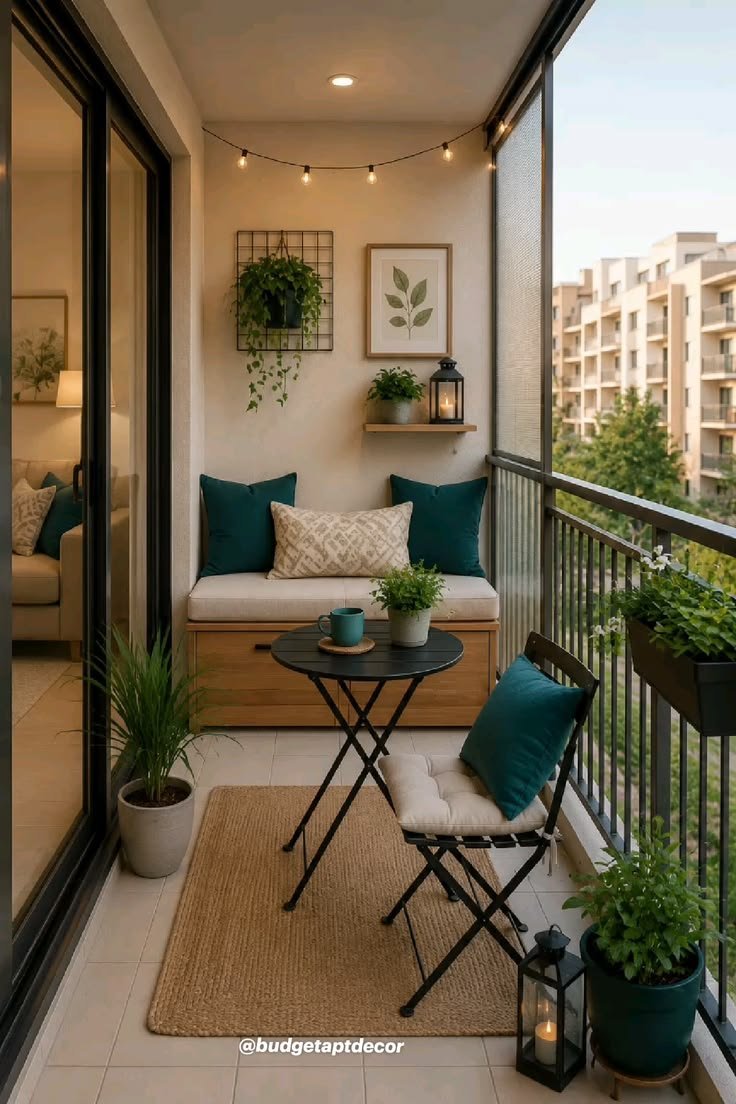
You can also experiment with rearranging what you already have.
Move the chair to the opposite side. Group your plants together. Remove accessories that aren’t serving a purpose. Try the rug in a different position.
Sometimes the best balcony makeover starts by taking things away.
If you do have some money to spend, prioritize pieces you’ll use regularly. Comfortable seating, practical lighting, and a useful table will usually make a bigger difference to your daily experience than several decorative objects.
Make the Balcony Feel Connected to Your Home
A balcony feels more finished when it relates to the room beside it.
You don’t have to match the indoor and outdoor spaces exactly. Instead, repeat one or two elements.
For example, if the room next to the balcony uses natural wood, bring in a small wooden table or plant stand. If you have green accents indoors, repeat green through plants or cushions outside.
This creates a subtle connection without making the balcony look overly planned.
Texture can help, too. Combining smooth flooring with woven materials, wood, plants, and soft cushions creates visual variety without requiring lots of color.
The key is restraint.
A small balcony has limited visual space, so every material and color becomes noticeable. Keeping the palette relatively simple makes the area feel calmer and gives your plants or one favorite decorative piece room to stand out.
Give Your Balcony a Reason to Be Used
The best balcony decor ideas aren’t necessarily the ones that involve the most furniture or the biggest makeover.
Start with how you want to spend time there.
If it’s for morning coffee, create a small breakfast spot. If you want to read, prioritize one comfortable chair and good evening lighting. If gardening is the main attraction, build your layout around a compact plant collection.
Once the purpose is clear, decorating becomes much easier.
Use the railing when floor space is limited. Group plants instead of scattering them. Choose furniture that leaves room to move, and use lighting to make the seating area feel inviting after dark. Most importantly, resist the urge to fill every empty corner.
A well-decorated balcony doesn’t need to be large or expensive. With the right balcony decor ideas, even a few square feet can become a place you’ll genuinely enjoy using.