10 Different Types of Tablecloths
A tablecloth does more work than it gets credit for. It protects the table from scratches and spills, hides a worn or mismatched surface, and changes the whole mood of a meal. The same dining table can look like a farmhouse kitchen, a garden party or a formal holiday dinner depending on what's laid over it.
The trouble is that tablecloths aren't all made for the same job. A beautiful linen cloth that's perfect for a slow Sunday lunch can be a headache under a toddler's spaghetti. A wipe-clean cover that saves you on weeknights can look out of place at a dinner party. Buy the wrong type and it either sits in a drawer or gets ruined in a month.
This guide walks through 10 different types of tablecloths, from everyday cotton to wipe-clean vinyl and fitted outdoor covers. For each one you'll find what it's good at, where it falls short, and how to style it, so you can pick the right tablecloth for the way you actually eat, entertain and clean up.
1. Cotton Tablecloths for Everyday Meals
If you only own one tablecloth, a good cotton one is a safe bet. Cotton is soft, absorbent and easy to wash, and it comes in almost every color and pattern you can imagine.
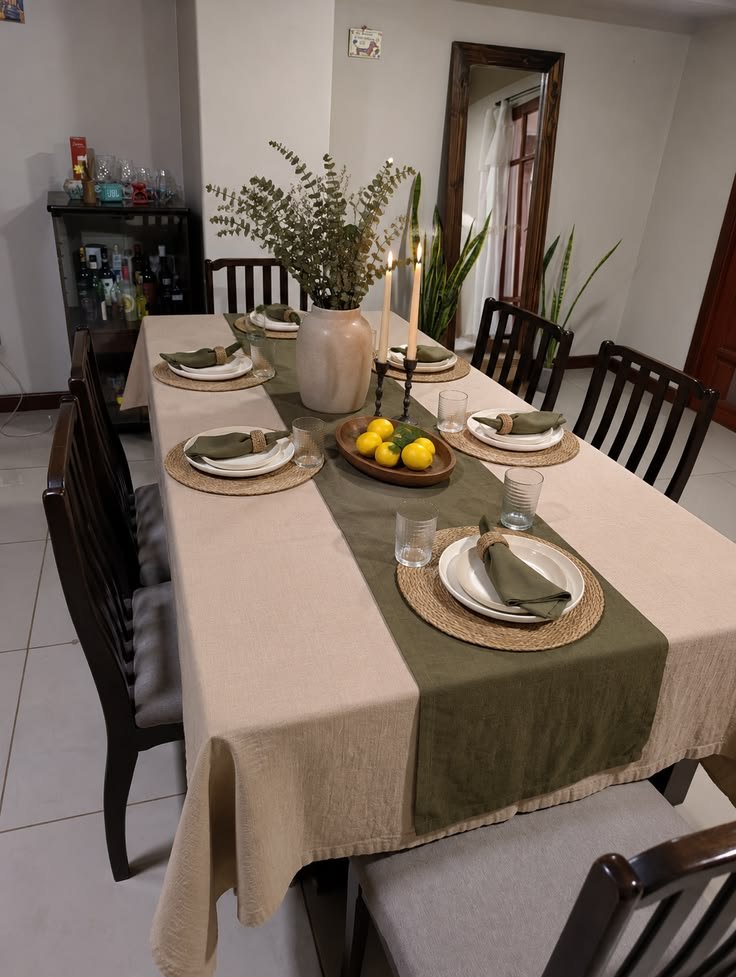
It handles daily use well. Crumbs shake off, small spills soak in rather than running onto your lap, and most cotton tablecloths can go straight in the washing machine. A plain white or cream cotton cloth suits almost any dining room, while a soft color like sage, terracotta or pale blue adds warmth without much effort.
The downside is that cotton stains more easily than synthetic fabrics, especially with red wine, tomato sauce or turmeric. Treat spills quickly rather than leaving them overnight. Cotton can also shrink a little if washed hot, so check the care label before the first wash.
A practical tip: own two. While one is in the wash, the other is on the table, and you're never tempted to leave a stained cloth out for days.
2. Linen Tablecloths for a Relaxed, Lived-In Look
Linen has a look that's hard to fake. It has a slightly uneven texture, a soft drape and a natural matte finish that makes even a simple table look thoughtfully set.
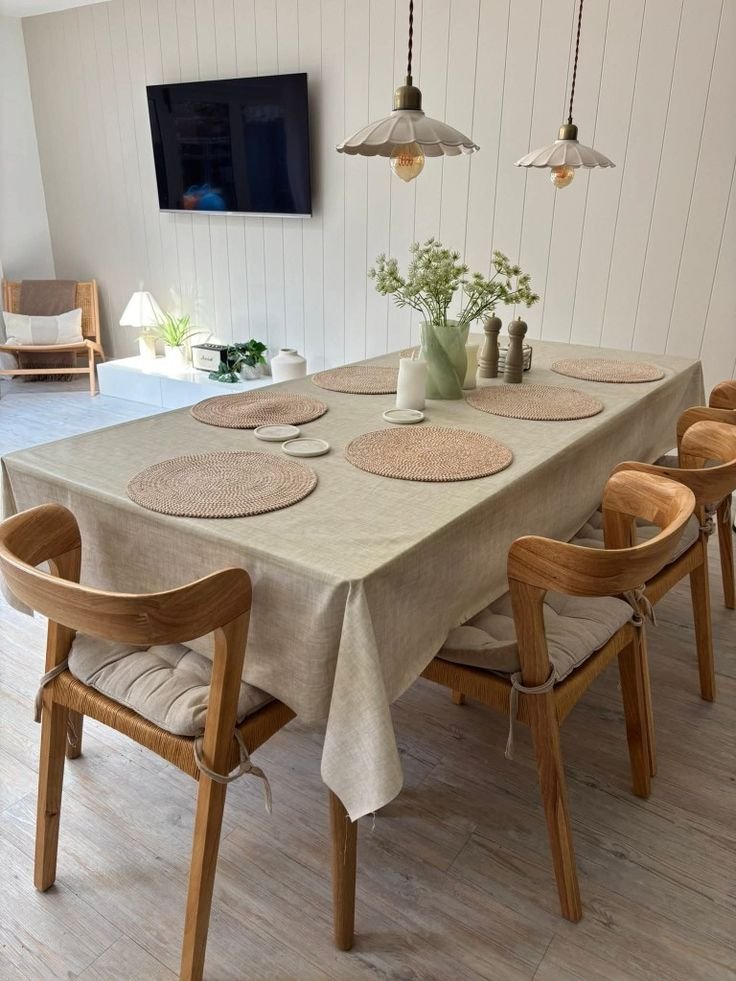
Linen wrinkles, and that's part of its charm. Many people choose it precisely because it looks relaxed and lived-in rather than starched and formal. If you like a crisp look, iron it while it's still slightly damp. If you prefer an easy, effortless style, shake it out after washing and let it dry flat or over a line.
It also tends to get softer each time you wash it, so a linen tablecloth that feels a little stiff at first usually improves with use.
Linen is generally more of an investment than cotton, so it suits people who'll use it regularly and enjoy how it ages. It works beautifully in neutral shades such as oatmeal, flax, white and charcoal, paired with simple ceramic plates and a few stems in a jar.
3. Polyester Tablecloths for Easy Care
Polyester tablecloths are the low-maintenance option. They resist wrinkles, hold their color well and usually come out of the washing machine looking almost ready to use, which is why you'll often see them in restaurants and at events.
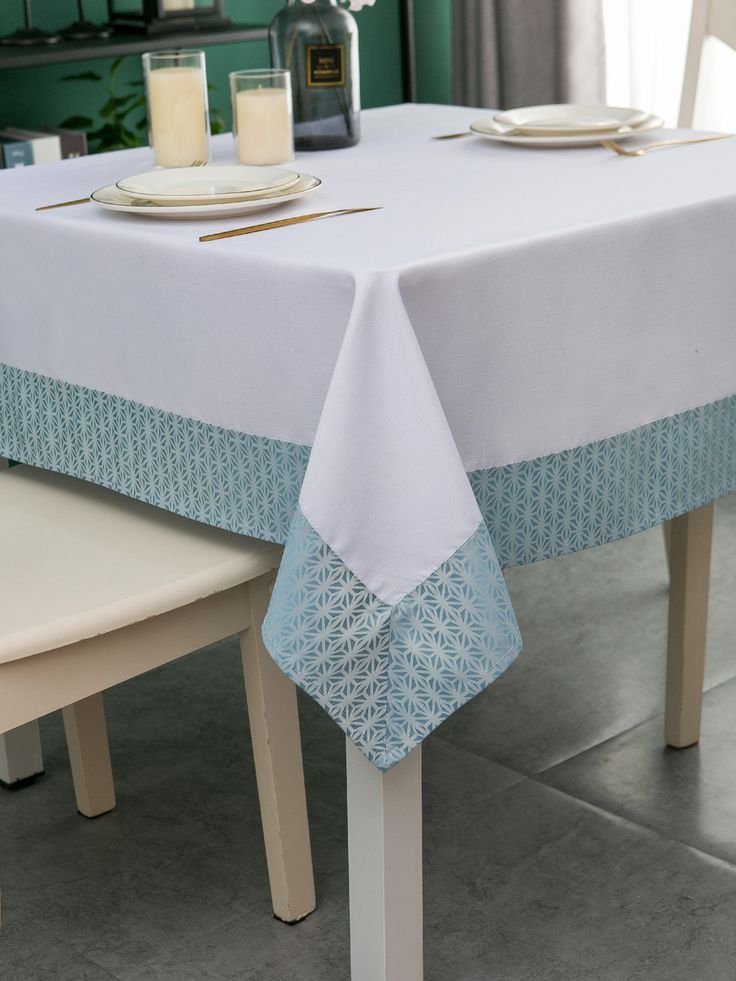
They're a good choice for busy households, rentals where you want something practical, or anyone who simply doesn't want to iron. Many spills also sit on the surface for a moment before soaking in, which gives you time to blot them up.
Polyester isn't as absorbent or breathable as cotton or linen, and some cheaper versions can look a little shiny or flat. To avoid that, look for a polyester with a woven texture or a matte finish, which looks much closer to natural fabric.
Polyester also suits large tables and parties. If you need several matching tablecloths for a long table or a celebration, it's usually a more affordable way to get a coordinated look.
4. Vinyl and Oilcloth Tablecloths for Messy Meals
For families with young children, crafts on the kitchen table or lots of outdoor eating, a wipe-clean vinyl or oilcloth tablecloth is hard to beat. Spills, sticky fingers and paint wipe off with a damp cloth, and there's no washing machine involved.
Traditional oilcloth was originally cotton treated to be water-resistant, and the name is now often used for printed vinyl tablecloths too. Both have a slightly glossy surface and come in bold, cheerful prints such as florals, fruits, checks and geometric patterns.
There are a few things to keep in mind. Vinyl can mark or warp from very hot dishes, so use trivets under pots and baking dishes. It's best folded loosely or rolled rather than creased hard, and if it arrives with folds, leaving it flat in a warm room for a while usually helps them relax.
To keep a vinyl tablecloth from looking too utilitarian, pick a print with only two or three colors and pair it with plain plates. That keeps the table cheerful rather than busy.
5. Coated Cotton Tablecloths for the Best of Both
Coated cotton, sometimes called laminated or acrylic-coated cotton, sits between fabric and vinyl. It's a cotton tablecloth with a thin protective coating on top, so it feels more like fabric but still wipes clean.
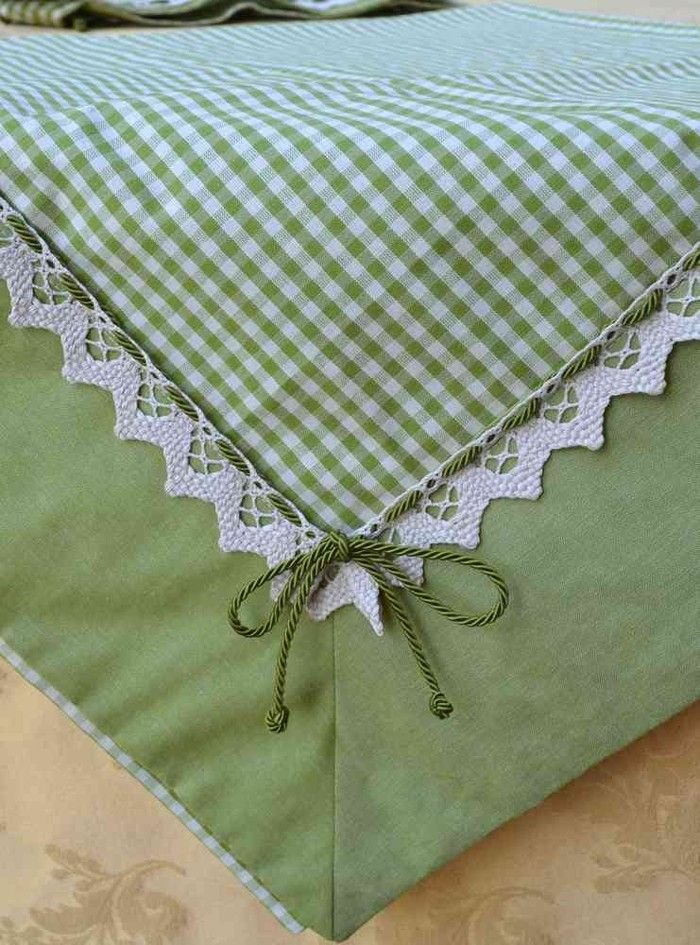
This makes it a good middle ground for anyone who likes the look of a printed cotton cloth but needs something that survives everyday spills. It usually has a softer, less shiny finish than vinyl, which looks more natural in a dining room.
Like vinyl, coated cotton generally shouldn't go in the washing machine. Wiping it down with a damp cloth and mild soap keeps it clean. It's also best to protect it from very hot pans.
Coated cotton works well on kitchen tables that are used for everything: breakfast, homework, laptop work and dinner. It also suits outdoor tables on a covered patio or balcony, where it's likely to face crumbs and drink rings more often than formal dinners.
6. Lace Tablecloths for a Soft, Vintage Feel
Lace tablecloths bring a delicate, romantic look to the table. They suit cottage, vintage and traditional homes, and they're lovely for tea parties, bridal showers and holiday tables.
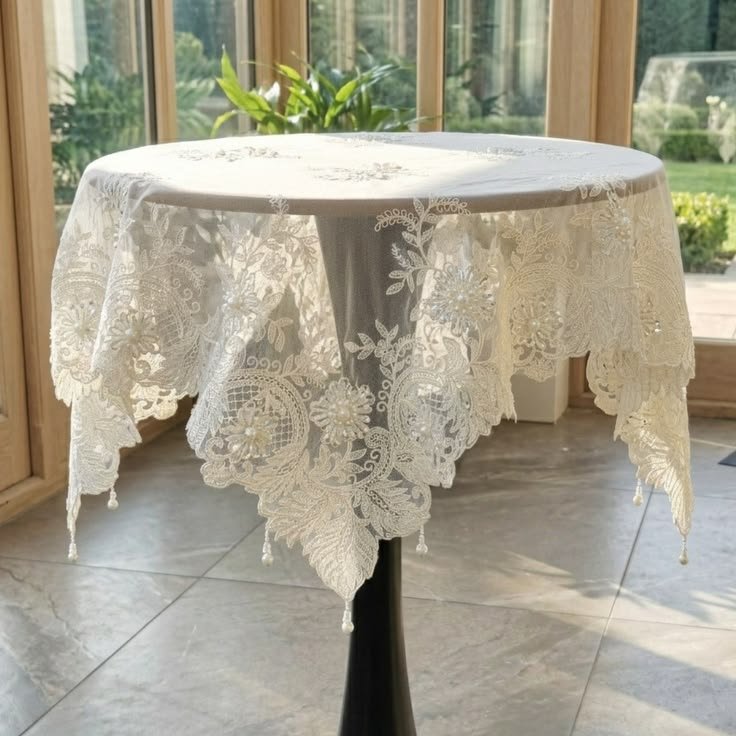
The secret to making lace look fresh rather than old-fashioned is layering. Lay a lace tablecloth over a solid-colored cloth in a shade like dusty pink, sage, navy or deep green. The color shows through the pattern and makes the lace look intentional and modern. A plain white undercloth gives you the classic look.
Lace also works well as a smaller topper rather than a full tablecloth. A lace square laid diagonally over a plain cloth adds detail without covering the whole table in pattern.
Because lace is delicate, wash it gently and avoid using it for messy everyday meals. If you find a vintage lace tablecloth at a thrift store or market, check it for small holes or stains before buying, and keep it for special occasions so it lasts.
7. Jacquard and Damask Tablecloths for Special Occasions
When you want the table to feel properly dressed up, jacquard and damask tablecloths are the traditional choice. Both have a pattern woven into the fabric itself rather than printed on top, so the design catches the light and changes as you move around the table.
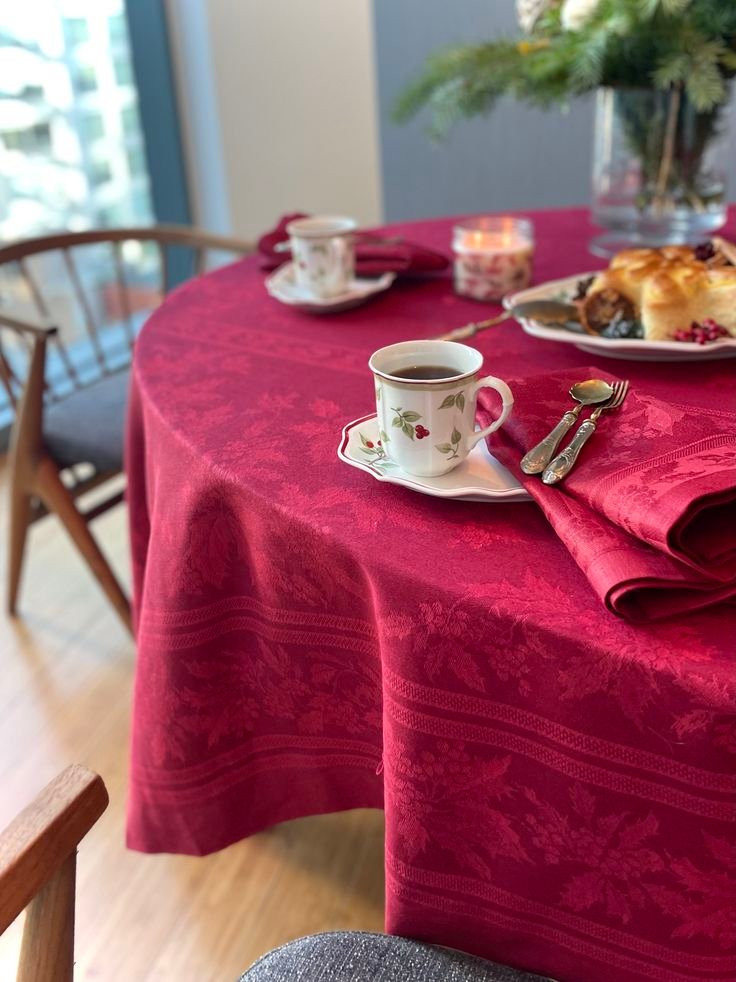
Damask is a type of jacquard weave that usually has a classic, often floral or scroll design. It's especially common in white, cream or ivory, where the pattern appears through the contrast between the shiny and matte parts of the weave. It looks elegant without being loud.
These tablecloths are ideal for holidays, anniversaries and formal dinners. They pair well with simple white dishes, cloth napkins and candlelight, which lets the woven pattern stand out.
They can feel too formal for a casual weeknight, so most people keep them for special days. To make one feel less stiff, try layering a simple linen runner down the middle, or set the table with mismatched vintage plates for a more relaxed look.
8. Gingham and Checked Tablecloths for a Casual Table
Gingham and other checked tablecloths have a friendly, informal look that's hard not to like. They suit farmhouse kitchens, picnics, breakfast nooks and summer lunches outside.
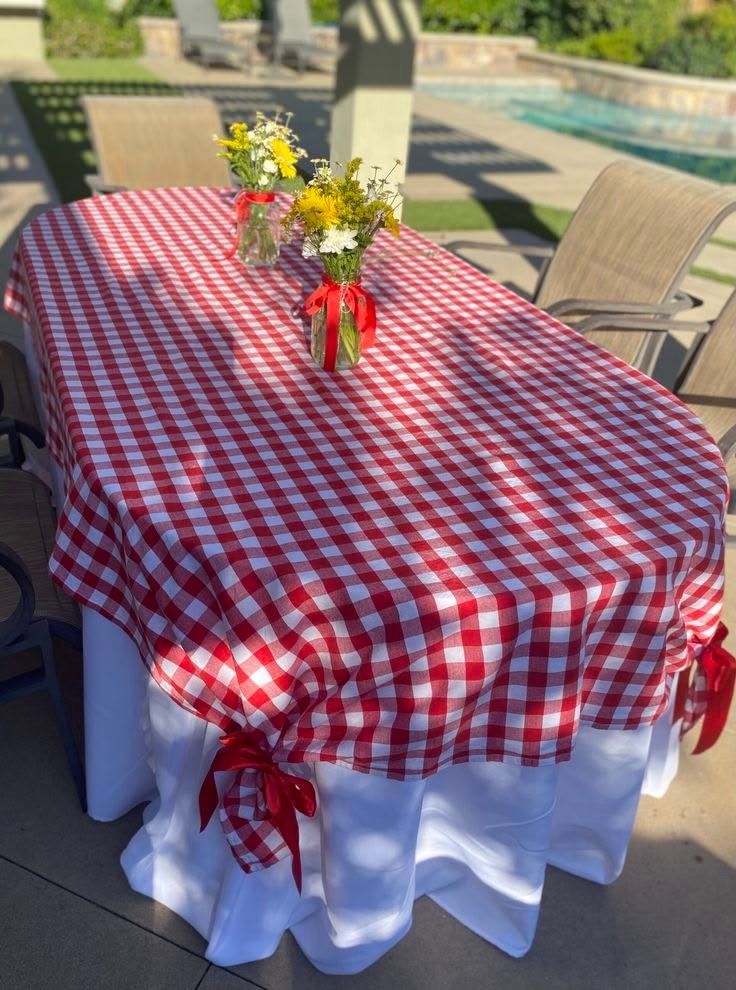
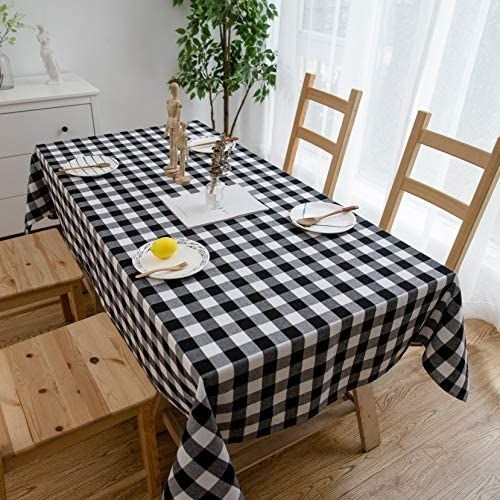
The size of the check changes the mood. A small check looks neat and slightly vintage. A large buffalo check feels bolder and more rustic. Red and white is the classic picnic look, while blue and white, green and white, or soft yellow checks feel fresher and a little more modern.
Checked tablecloths are also forgiving. The pattern hides small stains and crumbs better than a plain light-colored cloth, which makes them practical for everyday use.
To keep a checked table from looking too much like a themed restaurant, pair it with plain, solid-colored plates and simple glassware. A jar of wildflowers or a bowl of fruit in the middle is all it needs. Avoid adding more pattern on top, because two busy prints on the same table tend to compete.
9. Block-Print Tablecloths for Pattern and Personality
Block-print tablecloths are made by pressing carved blocks dipped in dye onto the fabric by hand, so each one has small irregularities that give it character. They often feature floral, paisley or geometric designs in rich colors such as indigo, rust, mustard and green.
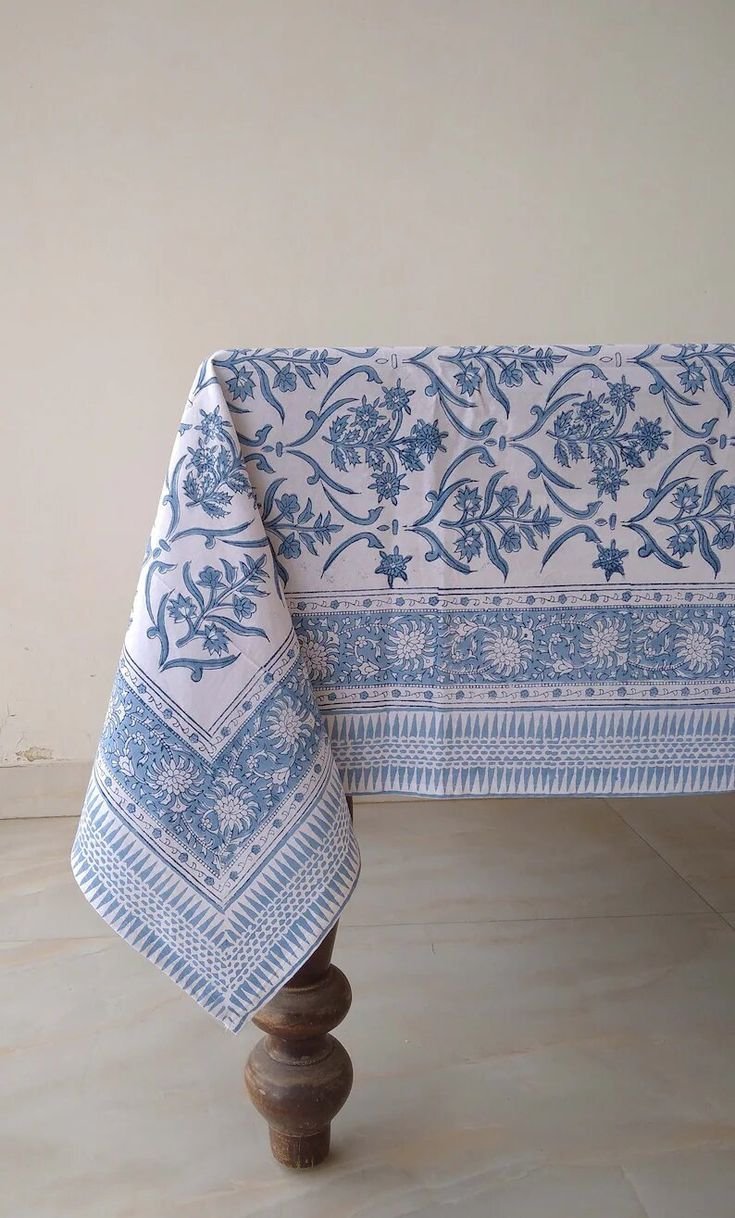
A block-print tablecloth brings instant personality to a plain dining room. It's an easy way to add color and pattern without painting walls or buying new furniture, and it suits boho, eclectic and global-inspired homes particularly well.
The handmade quality means the pattern may not be perfectly even, and that's part of the appeal. Some hand-dyed fabrics can release a little color in the first few washes, so wash them separately at first, following any care instructions that come with them.
Let the tablecloth be the star. Use simple white or earthy ceramic plates, natural wood serving boards and plain glasses. If the print has several colors, pick one of them for your napkins to tie the table together.
10. Fitted Tablecloths for Outdoor Tables
Anyone who's eaten outside on a breezy day knows the problem: the tablecloth lifts, flaps and eventually knocks over a glass. Fitted tablecloths solve this with an elastic edge that hugs the table, a bit like a fitted bed sheet.
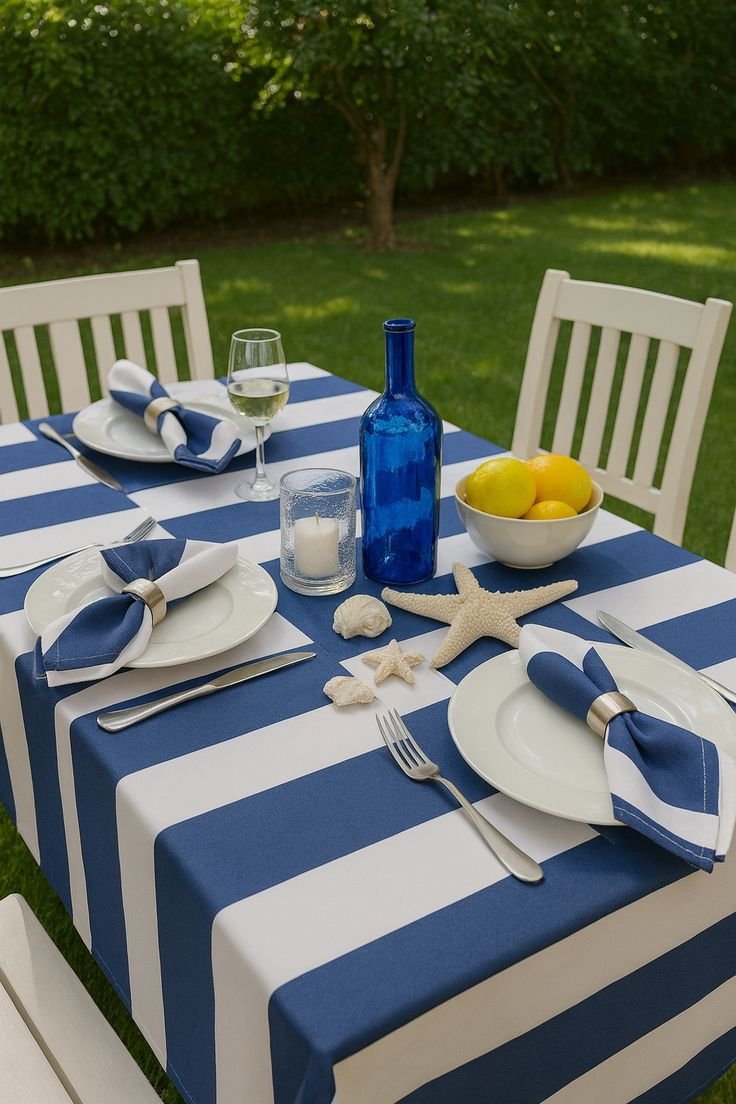
They're made in standard sizes for rectangular, round and square tables, so it's worth measuring your table before you buy. Many fitted tablecloths are made from vinyl, coated fabric or polyester, which also makes them practical for outdoor use where spills and weather are part of the deal.
A fitted cloth also gives a neat, tailored look that works well on folding tables at parties, garden events and children's birthdays. It covers the table cleanly without a long drop that people trip over.
If you prefer a regular tablecloth outdoors, tablecloth clips or small weights that hang from each corner help keep it in place. Either way, bring outdoor tablecloths in after use so the sun and rain don't fade or damage them too quickly.
Choosing the Right Tablecloth for Your Table
The right tablecloth depends less on what's in fashion and more on how you use your table. For everyday meals, cotton and polyester are easy to live with. Linen gives a relaxed, natural look that improves with time. When spills are part of daily life, vinyl, oilcloth and coated cotton wipe clean in seconds.
For special occasions, lace, jacquard and damask make the table feel dressed up. Gingham and block prints bring personality, and fitted tablecloths keep outdoor meals under control.
Many homes end up with two or three types: one practical cloth for weeknights and one special one for gatherings. Start with the one you'll use most often, measure your table before buying, and build from there.