10 Living Room Center Table Ideas
The center table is the one piece of furniture everyone in the living room ends up using. Mugs land on it, feet rest on it, and the remote, the mail and a phone charger slowly gather there until it looks more like a drop zone than part of the room. Because it sits right in the middle of everything, it's also the first thing your eye goes to when you walk in. When the center table looks messy, the whole room feels messy, even if everything else is tidy.
The good news is that it doesn't take a new table to fix. Most of what makes a center table look good comes down to size, a little structure, and choosing a few objects with care instead of letting them pile up.
These living room center table ideas cover all of it: getting the proportions right, styling the top so it looks finished but still usable, and some cheap alternatives if you don't have a table at all. There are ideas for small apartments, rentals and busy family rooms, along with the common mistakes that make a table look cluttered.
1. Get the Size and Shape Right First
Before you style anything, look at the table itself. A center table that's too small makes the sofa look huge and leaves people stretching for their drinks. One that's too big turns the room into an obstacle course.
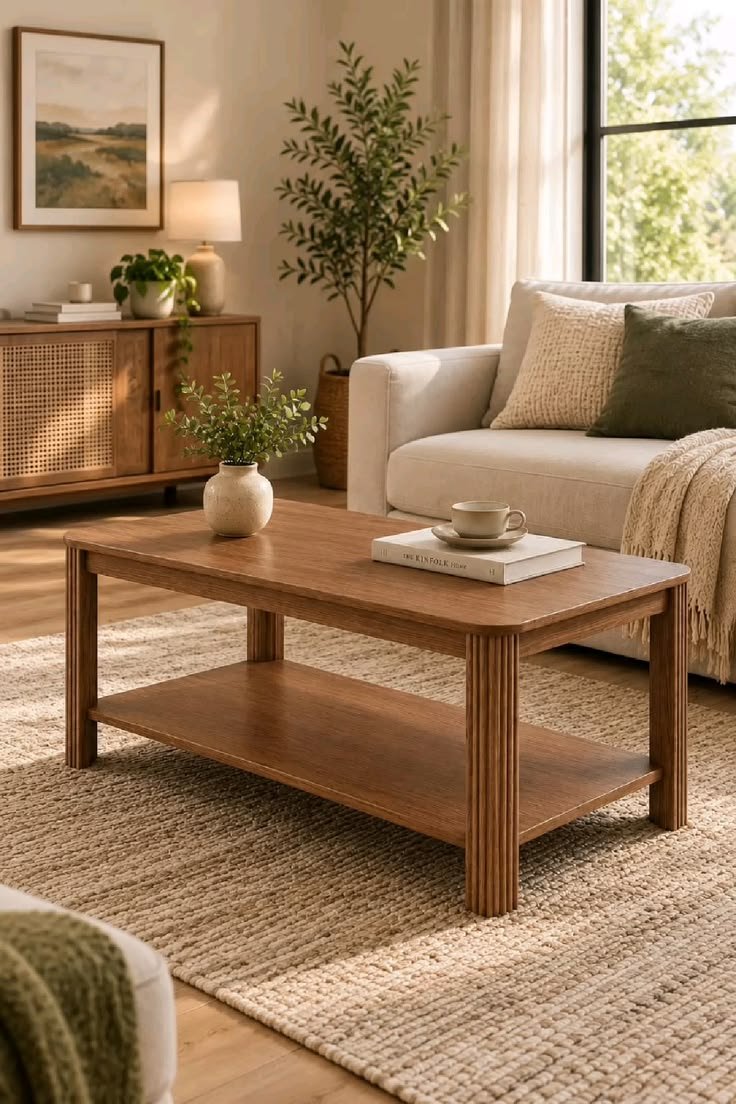
A rule of thumb many designers use is that the table should be roughly two-thirds the length of the sofa. It doesn't have to be exact. The point is that the table and sofa should look like they belong together, not like one was bought for a different room. Leave enough space between the sofa and the table to walk through comfortably, but keep it close enough that you can set a cup down without getting up.
Shape matters more than people expect. A rectangular table suits a long sofa and a fairly open room. A round or oval table works better in tight spaces, because there are no corners to bump into on your way past. That makes it a smart choice if you have small children or a narrow walkway between the sofa and the TV.
If your current table is the wrong size and replacing it isn't an option right now, don't worry. Ideas 7, 8 and 9 below can stand in for it.
2. Group Objects in Threes at Different Heights
The most reliable way to style a center table is to group three objects of different heights. Try something tall, like a slim vase or a candlestick, something medium, like a small sculpture or a lidded jar, and something low and wide, like a shallow bowl.
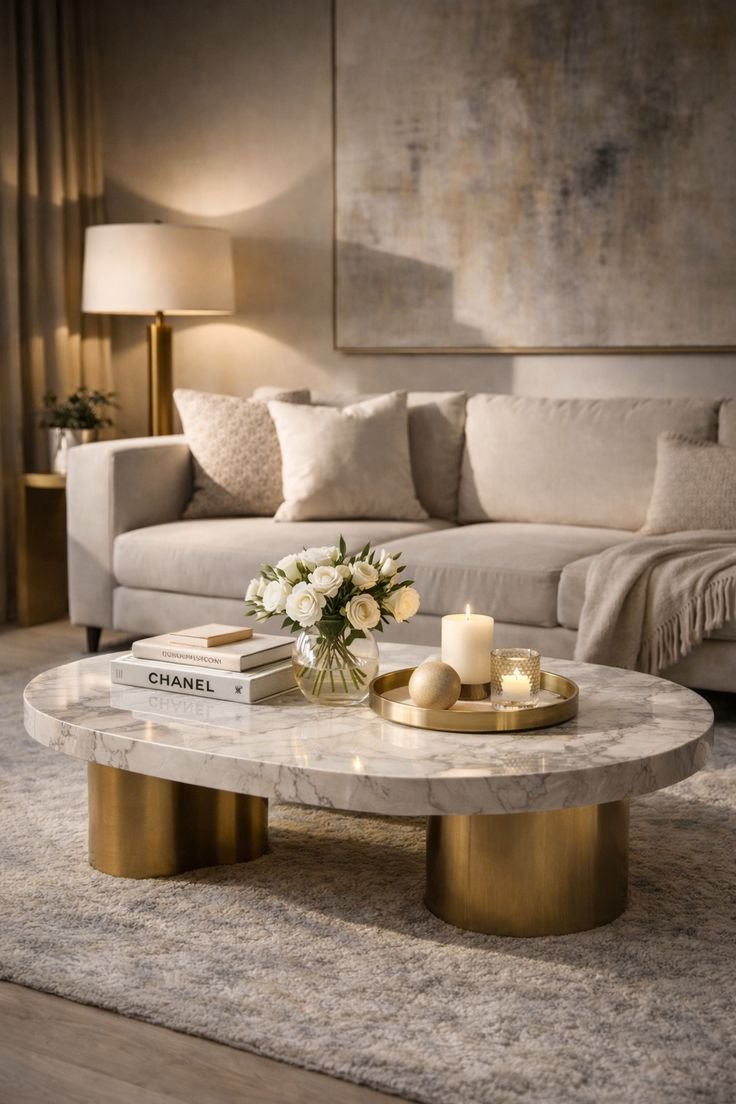
The different heights keep the arrangement from looking flat, and an odd number tends to look more relaxed than a matching pair. Place the group slightly off-center rather than dead in the middle. That leaves an open area on the other side, which makes the table look styled rather than crowded and gives you a spot for your coffee.
Mix materials within the group too. A ceramic vase, a wooden bowl and a small brass object have more interest together than three pieces in the same glossy finish. If everything you own is the same color, contrasting textures will do the work that contrasting colors would otherwise do.
3. Corral Everything on a Tray
A tray is the simplest way to make a group of objects look intentional. Remotes, coasters and a candle scattered across a table look like clutter. Put the same things on a tray and they suddenly look arranged.
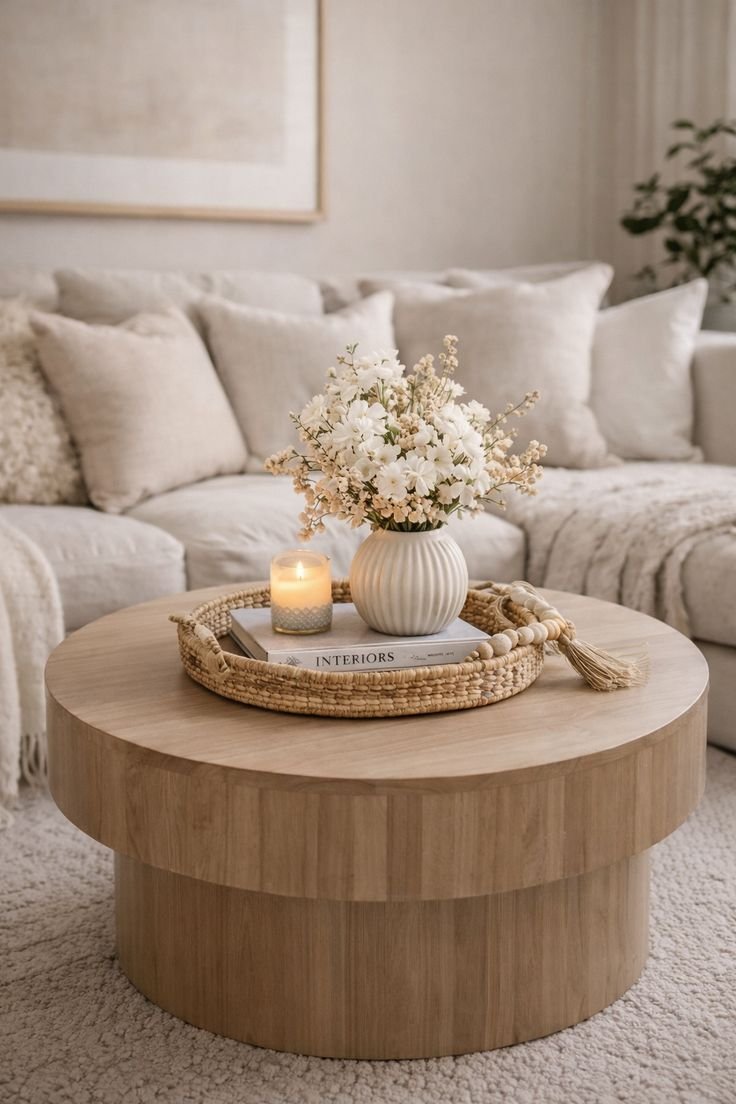
It's also practical. When you need the whole table clear for a board game or dinner in front of the TV, you lift one tray instead of moving ten small things.
Pick a tray that suits the size of your table. A large tray on a small table hides the table entirely, and a tiny tray on a big table looks lost. Woven trays make a room feel warmer and more casual. Wood suits almost any style. Metal or marble looks crisper, which works well in a modern room.
You don't need to buy one, either. A wooden cutting board, a large flat platter or even a shallow baking dish lined with a cloth can do the same job.
4. Stack Books to Create Height
Books are one of the most useful things you can put on a center table. A stack of two or three hardcovers gives you instant height, and they're something you already own.
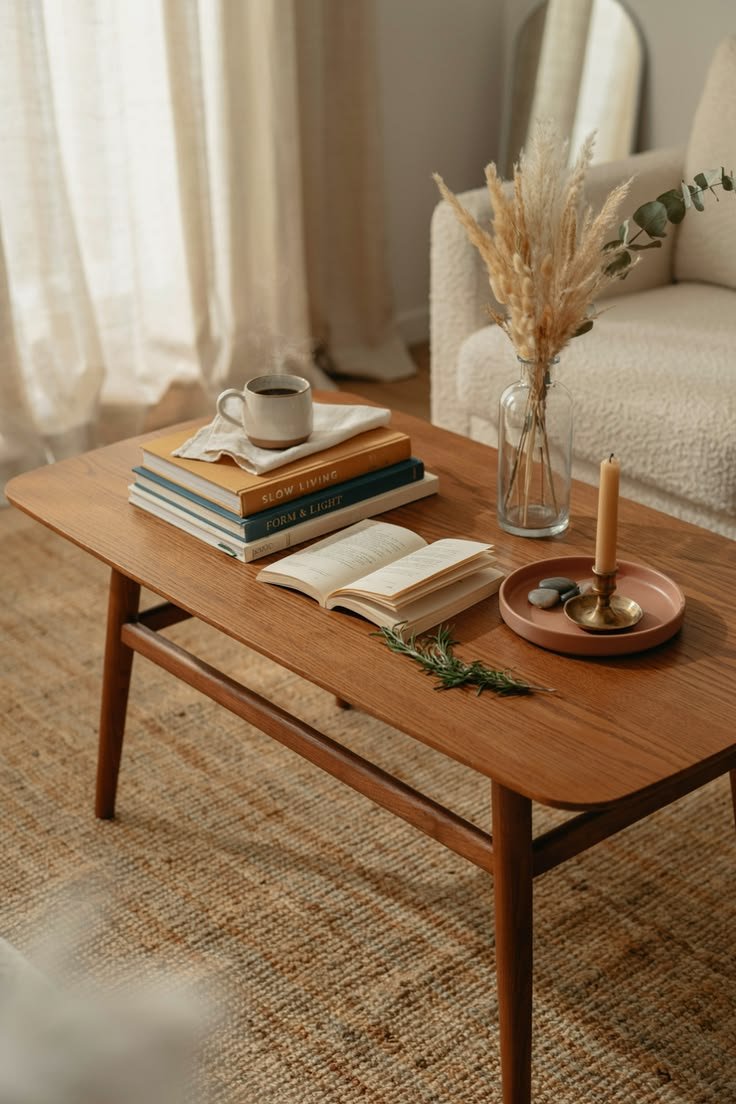
Put the largest book on the bottom and work up to the smallest. Then set a small object on top, such as a candle, a little plant or a pretty stone. This turns a plain stack into a deliberate display and lifts the top object so it doesn't get lost among the other things on the table.
Choose books you'd actually be happy to pick up: travel, cooking, art, photography or design. Books with worn paper covers can look tired, so try taking off the dust jackets. The cloth covers underneath are often a nicer color and texture.
If your books don't match your room, you can wrap a few in plain craft paper or cover them in fabric. It's an old trick, but it works when you want a calmer look.
5. Choose a Branch or Plant Over Fresh Flowers
Something living makes a big difference on a center table. It softens all the hard surfaces, and it brings in a color that no decoration quite matches.
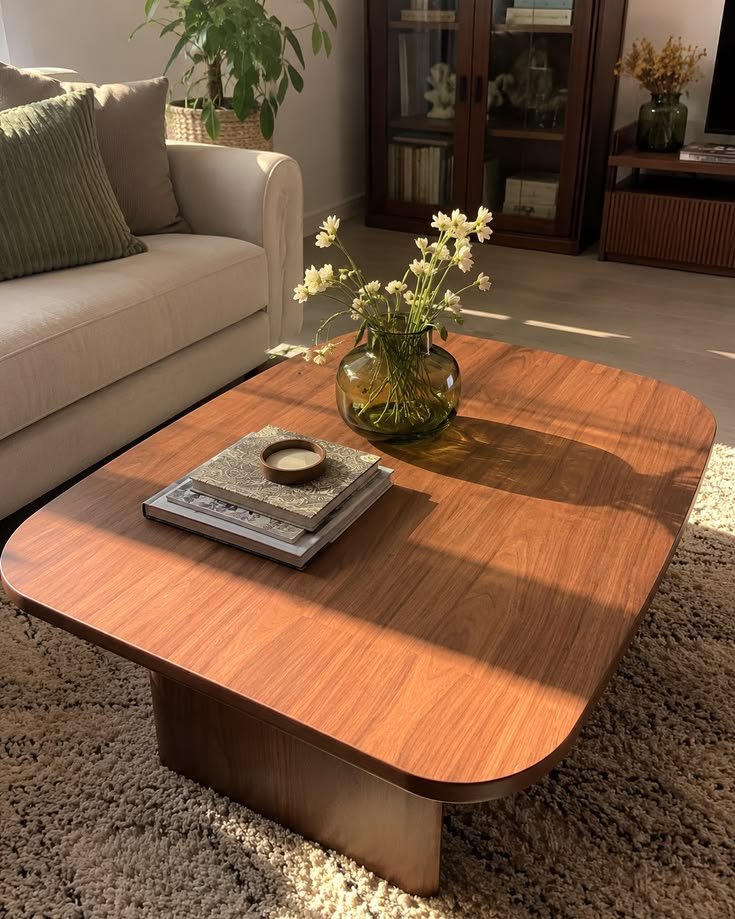
Fresh flowers are lovely, but they don't last long and need replacing often. A single cut branch in a tall vase lasts much longer and looks relaxed and modern. Eucalyptus, olive branches or whatever leafy cuttings you can find from the garden or a market all work well. Change the water regularly and they'll stay fresh for a good while.
A small potted plant is another easy option. Pick one that suits the light in your room. A table in the middle of a dim room won't get much sun, so choose a plant that tolerates low light, or move the plant to a window now and then so it doesn't struggle.
Keep anything living low enough that people can see each other over it while sitting on the sofa. A tall arrangement looks good in photos but gets in the way of conversation.
6. Hide the Clutter in a Lidded Box
Every living room has things that need to live on or near the center table: remotes, chargers, coasters, a notepad. Instead of fighting this, give those things a home.
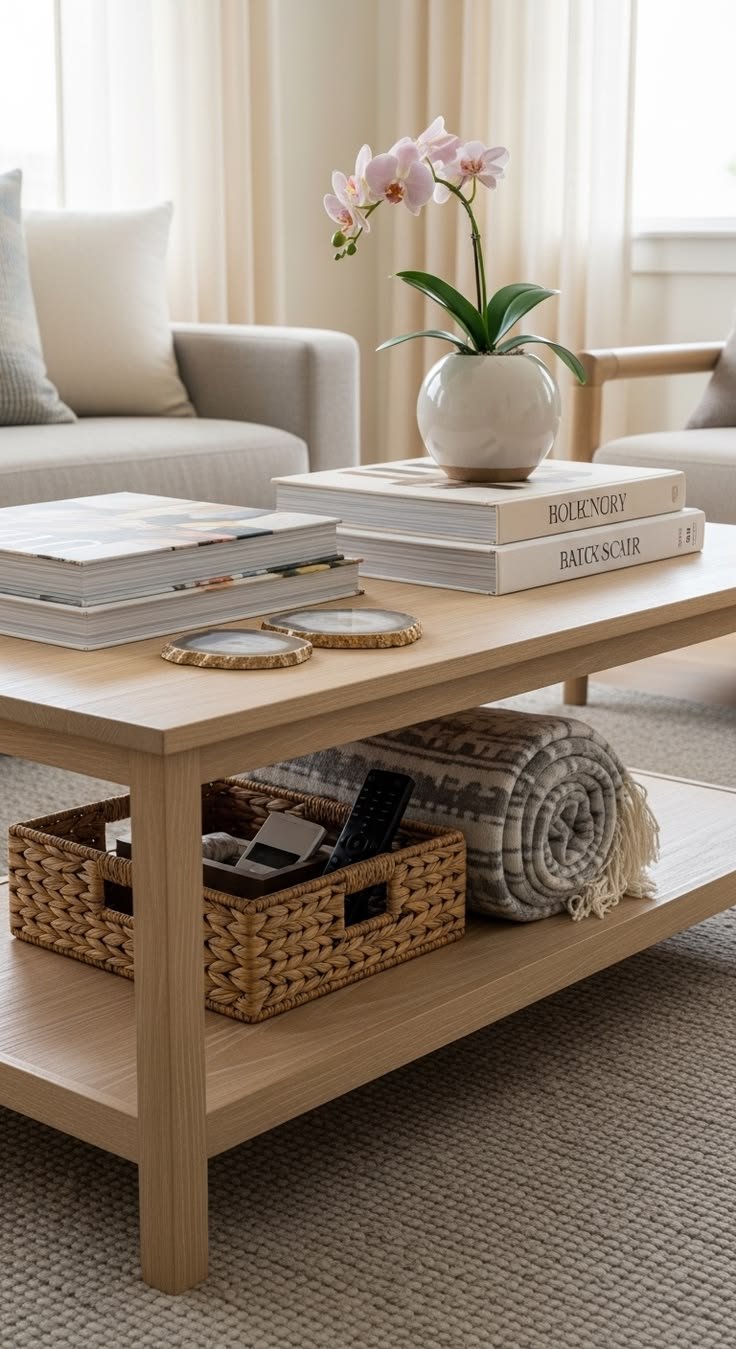
A lidded box is the easiest answer. Wood, woven rattan or a fabric-covered storage box all work. Lift the lid, drop the remotes in, and the table looks tidy in seconds. It counts as one of your styling pieces too, so a box can be the "low" object in your group of three.
If your center table has a shelf underneath, use it. A couple of baskets on the lower shelf can hold blankets, magazines or children's toys out of sight. Keep the shelf from becoming a second pile by limiting it to two or three containers.
The idea is simple: when everyday things have a set place to go, the table stays tidy on its own, and you don't have to rearrange it every evening.
7. Use an Ottoman as a Soft Center Table
An upholstered ottoman makes a good center table, especially if you have kids, or if people like to put their feet up. There are no hard corners, it's comfortable, and it can double as extra seating when guests come over.
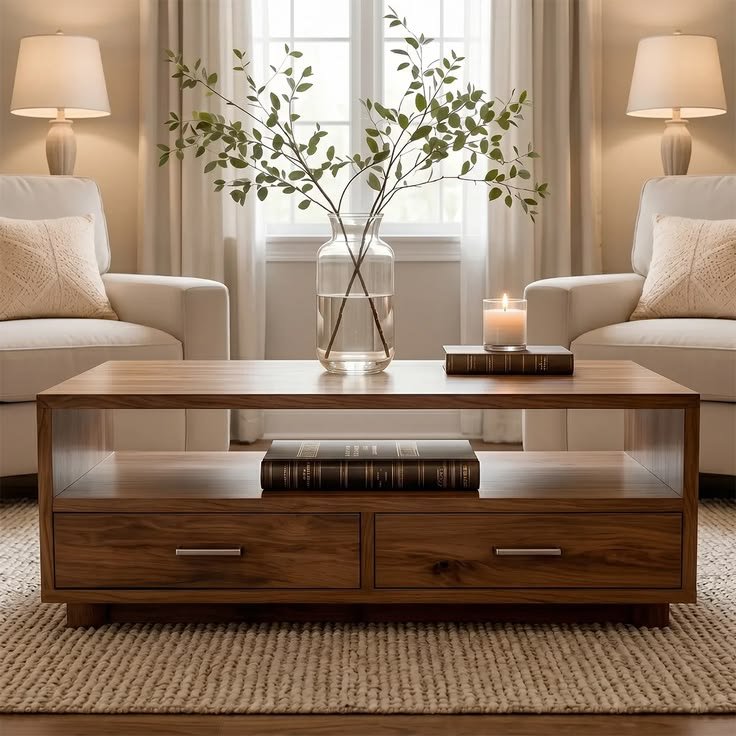
The catch is that an ottoman isn't flat or stable enough for drinks on its own. Put a large tray on top and you have a steady surface for cups and a place to style a few objects. When you need the seating, move the tray aside.
Many ottomans also have storage inside, which is useful in a small apartment where every bit of hidden storage counts. Blankets, board games and extra cushions can all go in there.
Choose a fabric that's easy to clean, such as a tightly woven fabric or a leather-look cover, because a center ottoman gets heavy use. A color slightly different from your sofa looks more interesting than an exact match.
8. Try Two Small Tables Instead of One
If one large table feels too heavy for your room, try two smaller ones side by side. Two round tables placed slightly apart, or a pair of nesting tables, give you the same surface without the bulk.
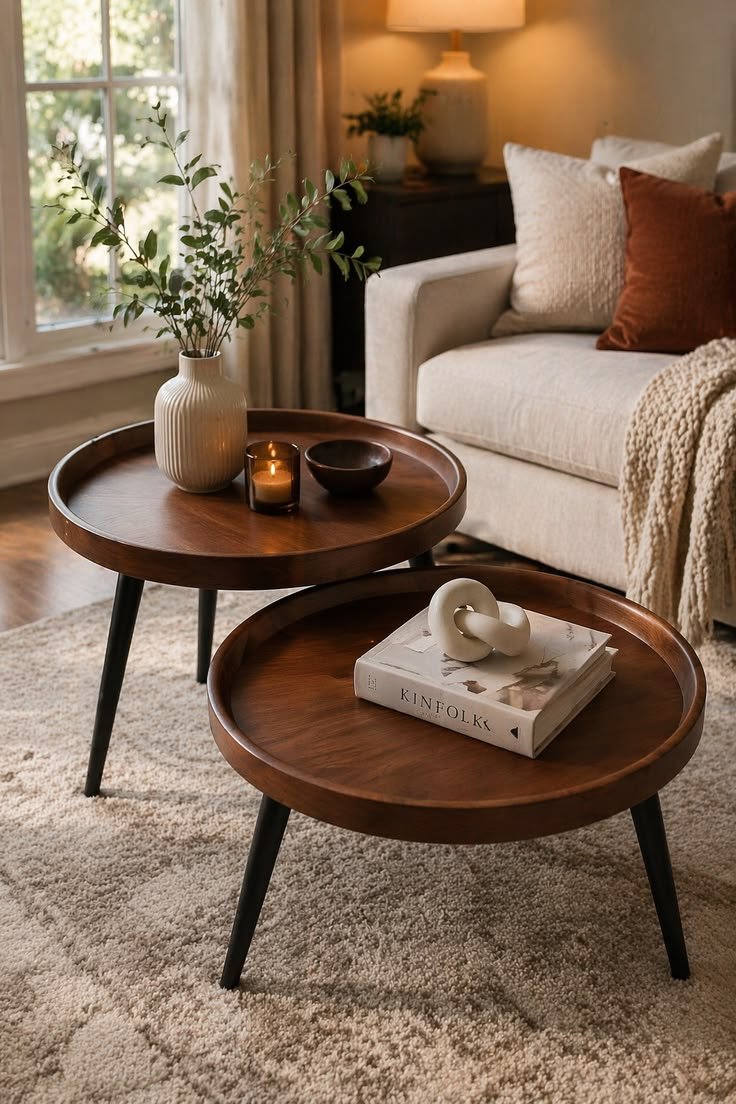
This works well in small or awkward rooms because you can move them around. Pull one closer to a chair when someone sits there, or push them together when you need more room. Nesting tables are especially handy: slide the smaller one out when you have guests and tuck it away again afterward.
For a pair, try two tables at slightly different heights, or in two different materials, such as one wood and one metal. That looks collected over time rather than bought as a matching set.
Style them lightly. One or two objects on each table is plenty. If you try to fill both, the arrangement starts to look busy, and you lose the airy feeling that made two small tables appealing in the first place.
9. Repurpose a Trunk, Bench or Crate
A center table doesn't have to be a center table. Some of the most interesting living rooms use something else entirely.
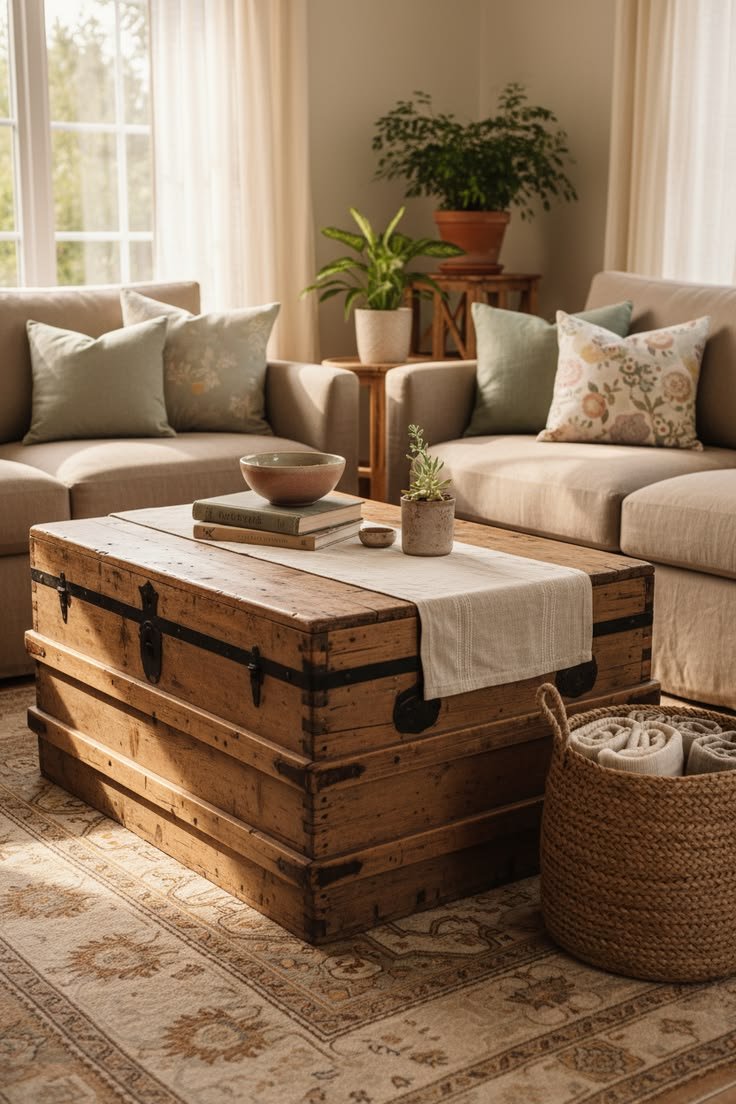
An old wooden trunk adds character and hides plenty of storage inside. A long wooden bench works nicely in front of a narrow sofa, especially in a rental where you don't want to invest in bulky furniture. Two sturdy wooden crates placed side by side, or stacked on their sides to create cubbies, give you a rustic table with built-in shelving.
These pieces are often easy to find secondhand. Check them for rough edges and splinters, and add felt pads underneath so they don't scratch the floor. If a piece is a little too low, a large tray on top can help make it more practical.
Something with a history also gives the room a more personal feel than a table from a catalog. It's a good way to make your living room look like yours rather than a showroom.
10. Swap One Piece Each Season
Once your center table looks good, keep it fresh by changing one thing at a time. You don't need to restyle everything. Swapping a single piece is enough to make the table look new again.
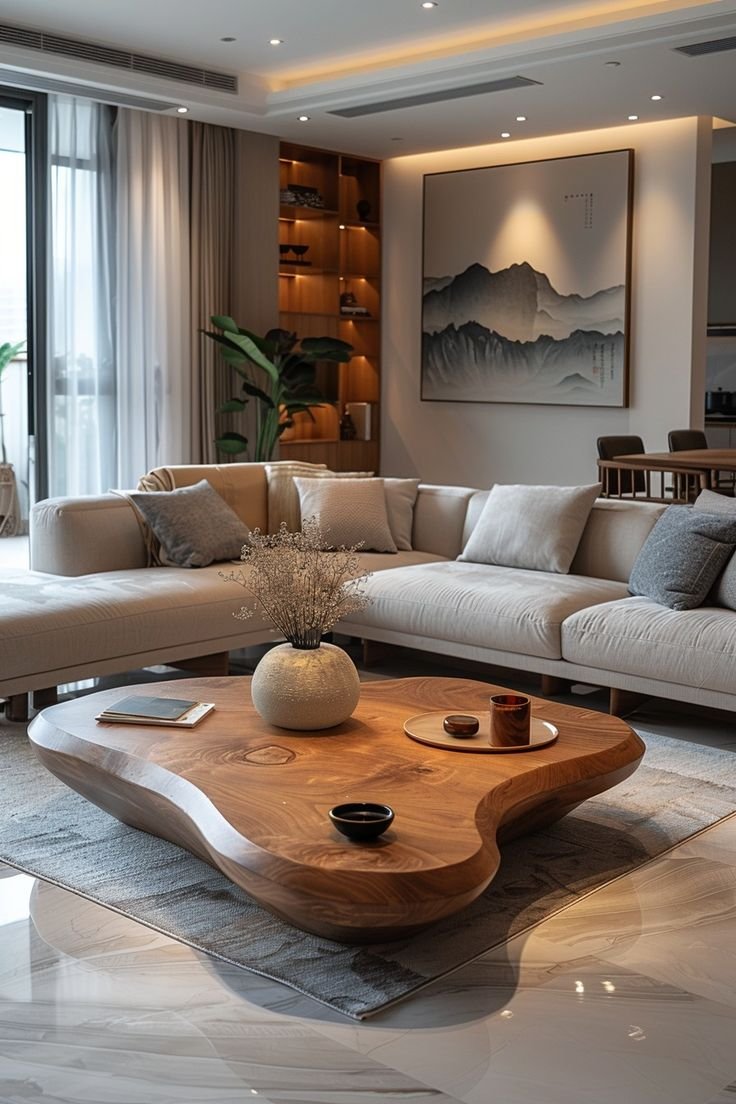
In spring, bring in a branch with fresh green leaves. In summer, try a bowl of lemons or limes, which looks bright and costs very little. In autumn, a few small pumpkins, pinecones or dried grasses add warmth. In winter, a cluster of candles in different heights makes the room feel cozy on dark evenings.
Keep the base of your arrangement the same: the tray, the book stack and the box. Then you only change the top layer. This saves money and time, and it means you're never starting from scratch.
It also stops the table from fading into the background. When something changes, even slightly, people notice the room again.
A Center Table That Works Every Day
A good living room center table is a balance between looking finished and being easy to live with. Start with the right size and shape for your sofa and space. Then add some structure with a tray, a stack of books and a group of three objects at different heights, and give the everyday clutter a box to live in.
If a regular table doesn't suit your room, an ottoman, a pair of small tables or a repurposed trunk can work just as well, sometimes better. And once it's set up, a small seasonal swap keeps it from going stale.
Pick one idea to try this week. Clear the table completely, put back only what you love or use, and see how much calmer the whole room feels.