10 Living Room Decor Ideas for Small Apartments
Decorating a small apartment living room can be tricky. You want it to feel comfortable and personal, but adding too much furniture or too many accessories can quickly make the room feel cramped. The challenge isn’t necessarily having less space—it’s making every choice work a little harder.
The good news is that a small living room doesn’t have to look sparse or overly minimalist. With the right layout, colors, furniture proportions, and a few clever decorating choices, you can create a room that feels open while still having plenty of character.
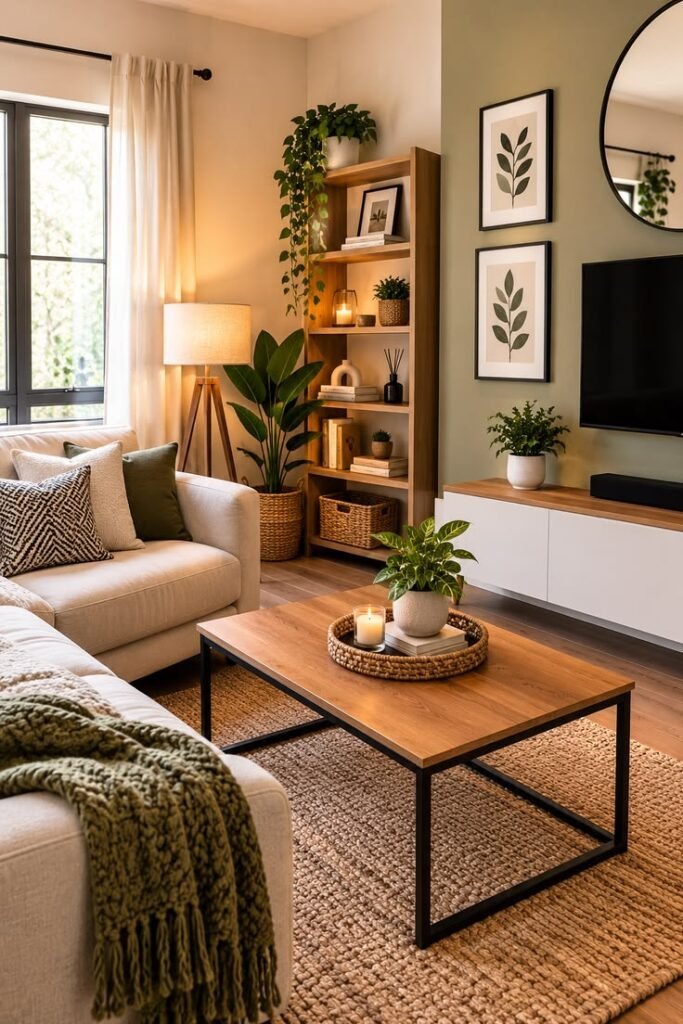
These living room decor ideas for small apartments focus on changes that are realistic for everyday homes. Some involve rearranging what you already own, while others are simple additions that can make a noticeable difference. The goal is to create a living room that feels easy to live in rather than a room where every inch has been carefully staged.
1. Choose Furniture That Fits the Room, Not Just the Wall
One of the most common mistakes in a small living room is buying furniture based on whether it technically fits rather than how it feels once everything is in place.
A sofa might fit against a wall, for example, but if it leaves only a narrow walkway between the sofa and coffee table, the entire room can feel crowded.
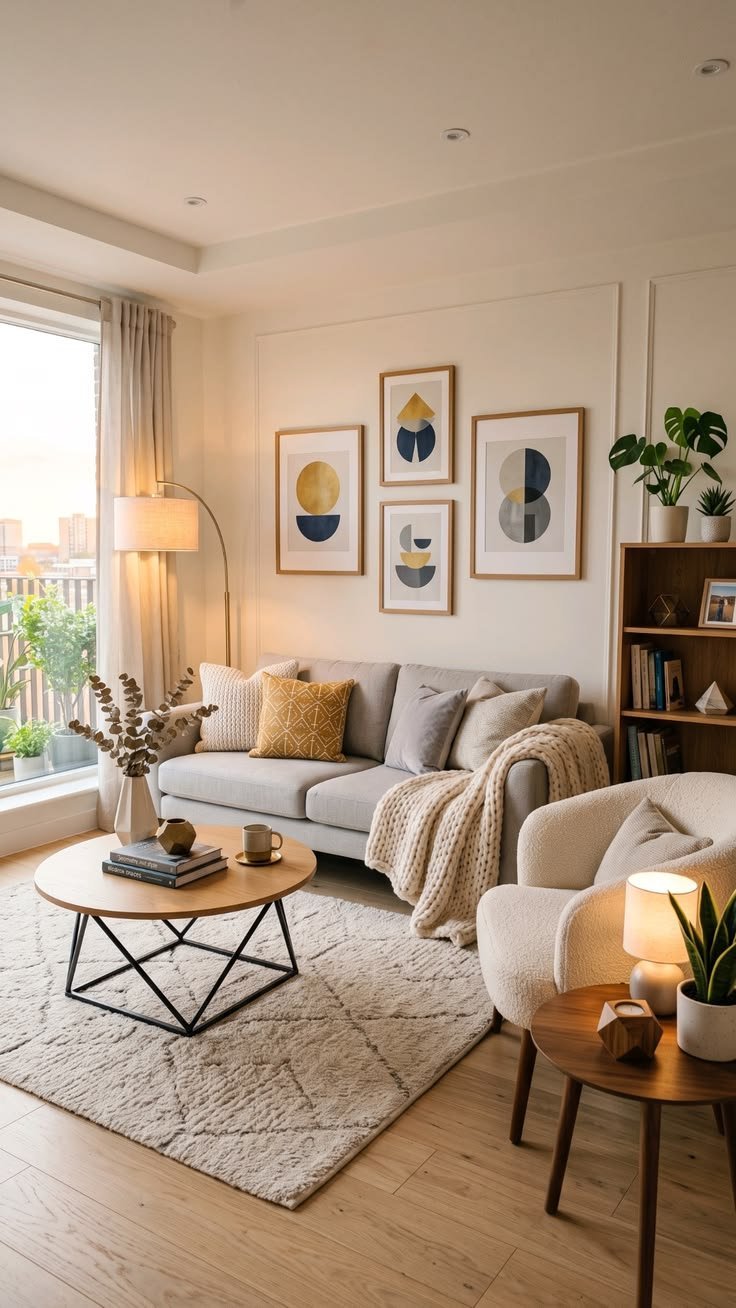
Before buying anything, measure the available floor area and think about how you’ll actually move through the room. A slightly smaller sofa with comfortable proportions can often work better than an oversized sectional.
Look for visual breathing room
Furniture with visible legs can make a small apartment living room feel lighter because you can see more of the floor underneath it. The same idea works with coffee tables, chairs, and side tables.
You don’t need every piece to have exposed legs. Even replacing one heavy, boxy item with a more open design can change the balance of the room.
If you already own large furniture, try pulling it a few inches away from the wall instead of automatically pushing everything against it. Sometimes creating a little breathing room makes the layout feel more intentional.
2. Use One Larger Rug Instead of Several Small Ones
A rug can define the living room, but using several small rugs in a compact apartment can visually chop the floor into separate pieces.
A single rug that connects the main furniture usually creates a stronger sense of continuity.
Ideally, at least the front legs of your sofa and chairs should sit on the rug, depending on the size and layout of the room. If that’s not possible, choose a rug large enough to visually connect the seating area rather than leaving it floating in the middle of the floor.
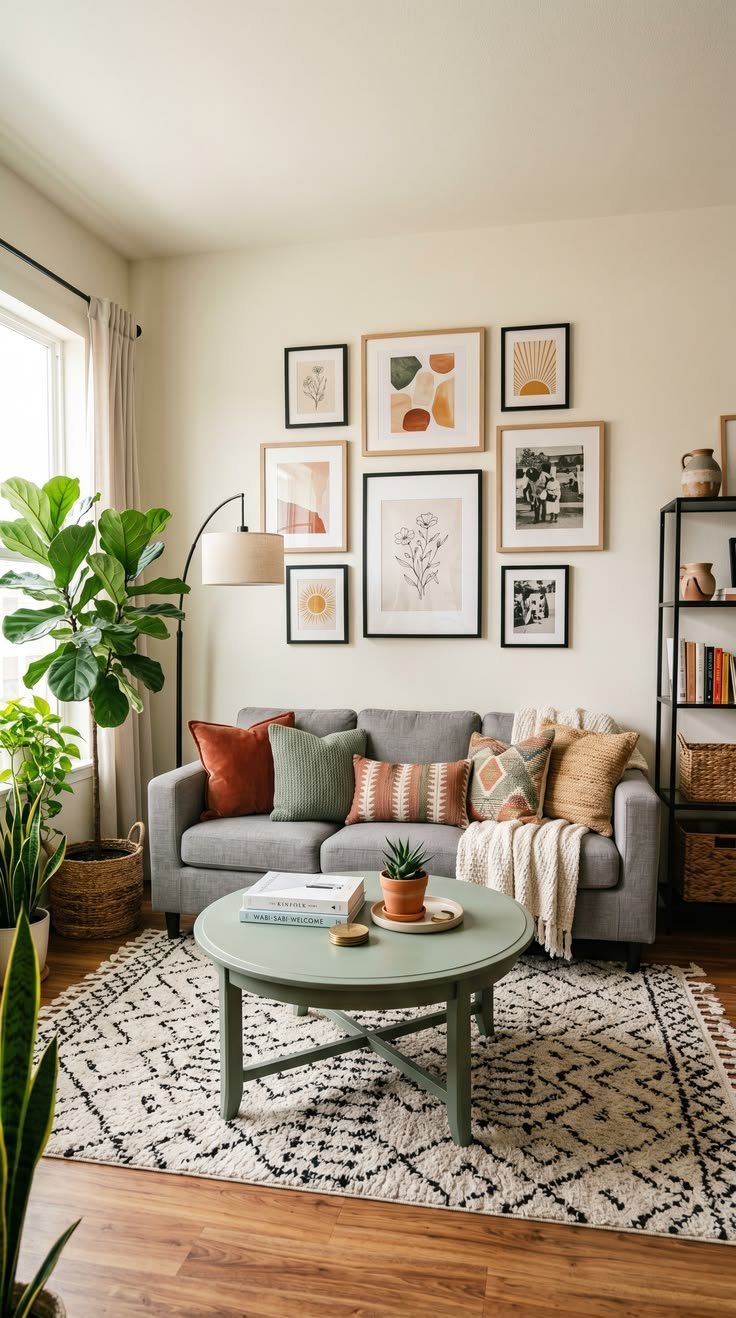
This is especially useful in studio apartments or open-plan spaces where the living room shares space with a dining area or kitchen.
A neutral rug doesn’t have to be boring. Look for subtle stripes, small geometric patterns, woven textures, or tonal designs. These add interest without making the floor feel visually busy.
3. Make the Walls Work Harder
When floor space is limited, the walls become valuable decorating real estate.
Instead of filling the floor with cabinets, plants, baskets, and floor lamps, move some of that visual interest upward.
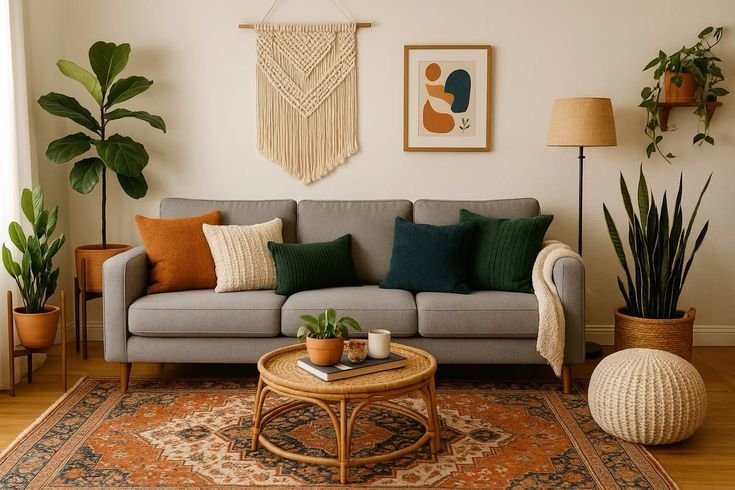
A few framed prints above the sofa can give the room personality without taking up any floor space. A narrow wall shelf can hold books, small artwork, or a few decorative objects.
You can also use a tall bookcase to take advantage of vertical space. Rather than choosing a very wide unit, look for a slimmer piece that reaches upward.
Don’t fill every inch
There’s a difference between using vertical space and covering every available wall.
Leaving some empty wall area helps the room breathe. If you have one gallery wall, for example, you don’t necessarily need artwork on every other wall.
A simple approach is to choose one wall as the main visual focus and keep the surrounding areas quieter.
4. Hang Curtains Higher to Create Height
Small apartments often have low ceilings or windows that aren’t particularly large. The way you hang curtains can make the entire room feel taller.
Instead of placing the curtain rod immediately above the window frame, position it closer to the ceiling when the room allows it. Let the curtains fall all the way toward the floor.
This creates a longer vertical line and draws the eye upward.
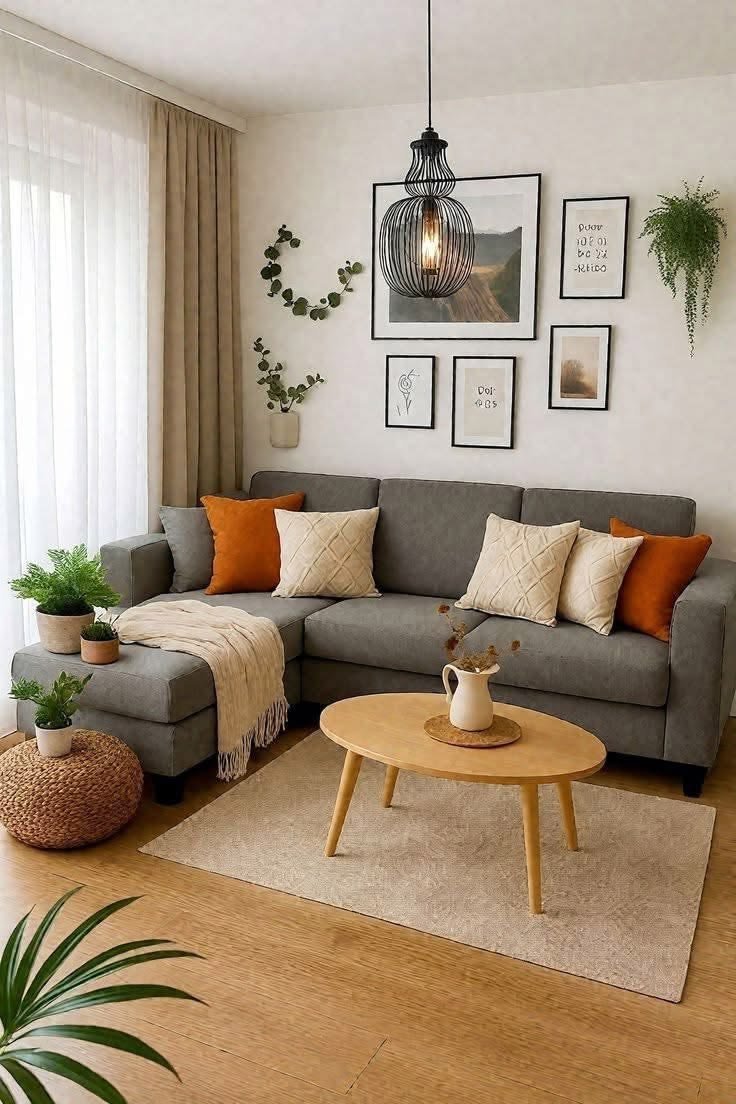
For a small living room, lightweight curtains can also work better than very heavy, bulky window treatments. Linen-look or cotton curtains in soft neutral shades can provide privacy while allowing the room to maintain a lighter appearance.
If your apartment has limited natural light, avoid choosing curtains that are so thick or dark that they make the windows feel closed off during the day.
5. Pick a Coffee Table That Gives You Options
A coffee table doesn’t have to be a large rectangular block sitting permanently in the center of the room.
For a small apartment, consider a round table, nesting tables, or a design with a lower shelf for storage. The right choice depends on how you use the space.
Round tables are particularly useful when you have tight walking paths because there are no sharp corners to navigate around.
Nesting tables are another practical option. You can separate them when guests come over and tuck them together when you need more floor space.
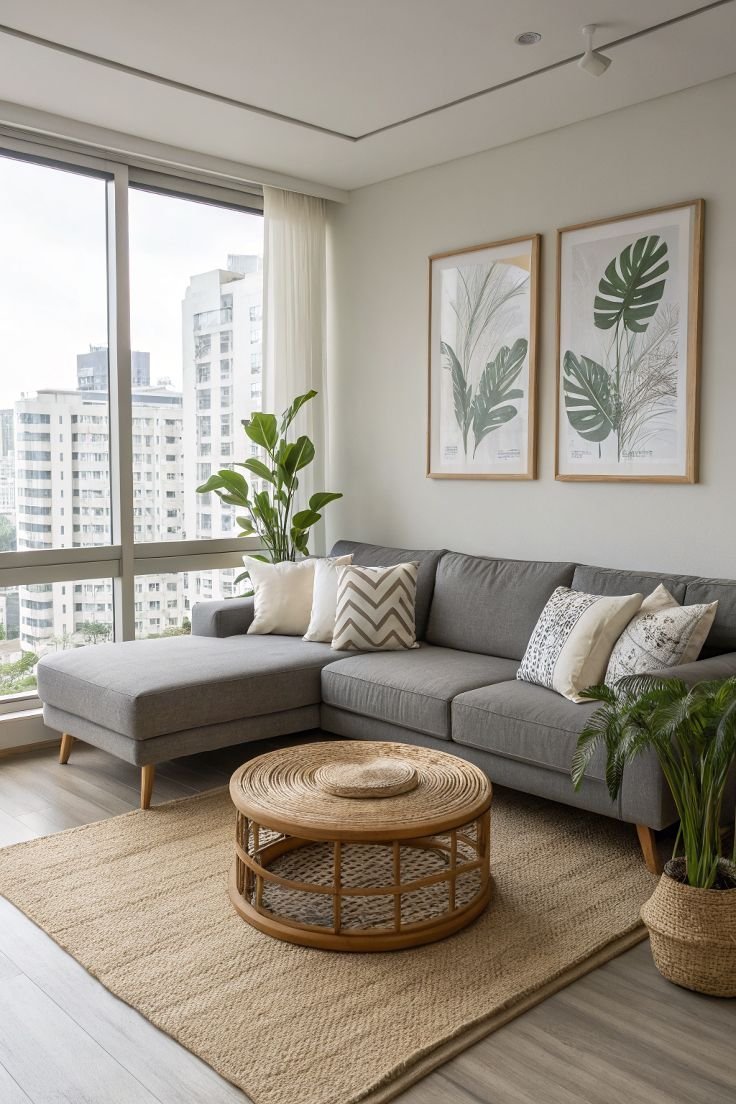
If you already have a coffee table you like, look underneath it. An attractive basket can turn unused space into storage for blankets, magazines, or remote controls.
The trick is to keep the surface relatively clear. A small tray containing a candle, a book, and a little vase is usually enough. Covering the entire tabletop with accessories makes a small room feel busier than it needs to.
6. Use Mirrors Where They Actually Help
Mirrors are often recommended for small rooms, but simply putting a mirror on the wall doesn’t automatically make the space feel larger.
Placement matters.
A large mirror opposite or near a window can reflect daylight and make the room feel brighter. A mirror positioned where it reflects an attractive part of the room can also create a sense of depth.
For example, instead of placing a mirror opposite a cluttered storage area, position it so it reflects a window, artwork, or an uncluttered section of the room.
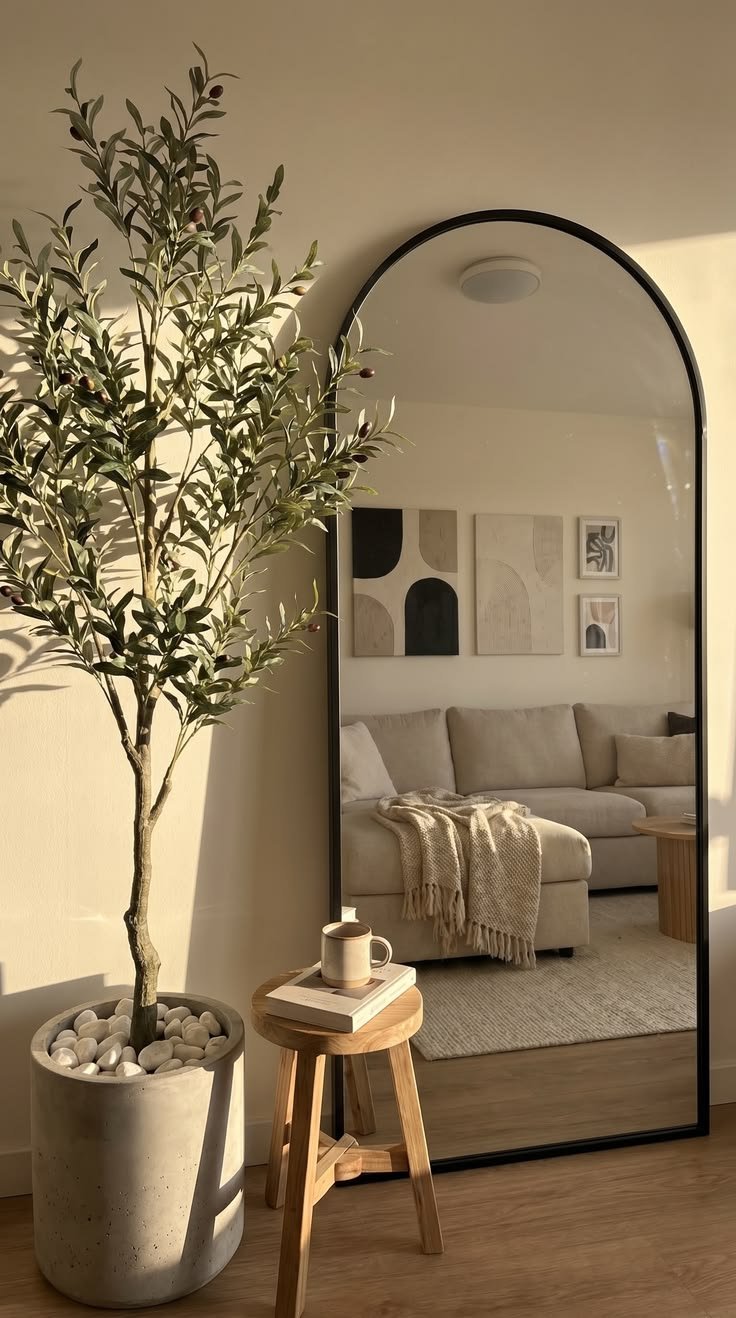
You don’t necessarily need a huge decorative mirror. A medium-sized framed mirror can be just as useful if it’s positioned thoughtfully.
Another option is a collection of smaller mirrors arranged together, although this works best when the frames share some visual connection.
7. Give Every Small Item a Place
Small living rooms tend to look messy faster than large ones because there are fewer surfaces available to hide everyday clutter.
The solution isn’t necessarily more storage furniture. In fact, adding another bulky cabinet may create a new problem.
Instead, look for small storage opportunities that already exist.
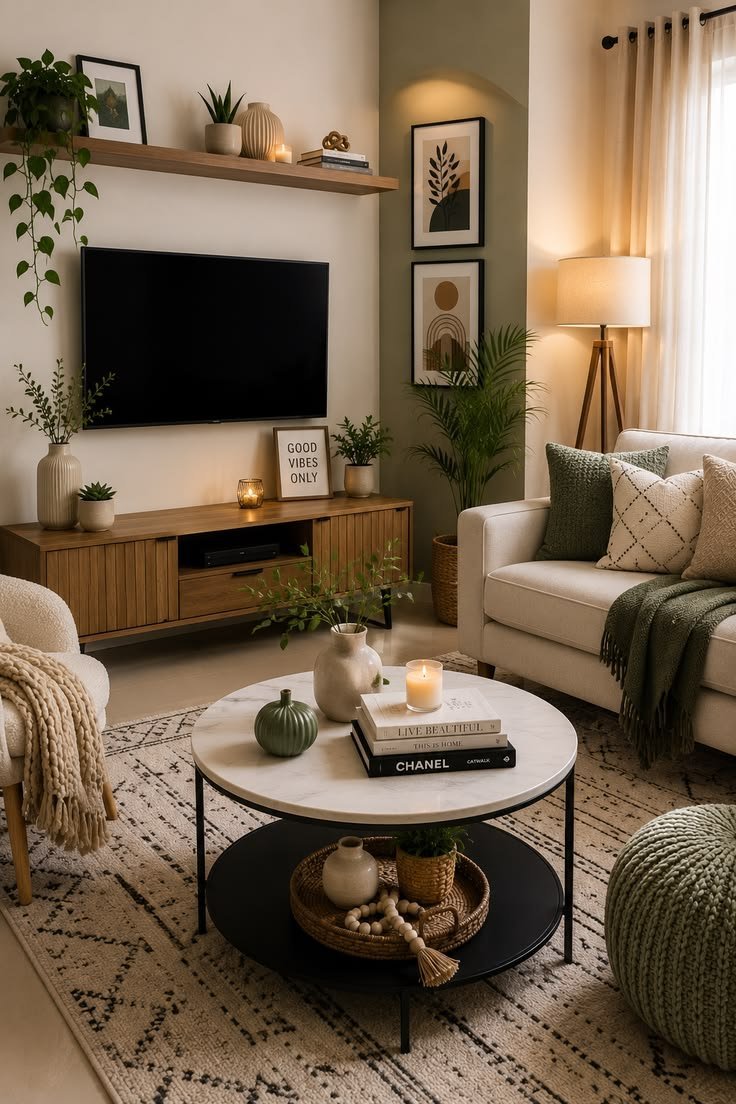
A storage ottoman can hold blankets. A basket beside the sofa can collect things that otherwise end up on the floor. A side table with a drawer can hide chargers and remote controls.
Even decorative boxes on a shelf can help contain small items.
Try a “clear surface” rule
Choose a few surfaces that should stay mostly clear, such as the coffee table, TV console, and side table.
This doesn’t mean they have to be completely empty. It simply gives you a limit.
For example, keep one tray on the coffee table and return loose items to their proper place at the end of the day. In a small apartment, this tiny habit can make a surprisingly big difference.
8. Create a Cozy Corner Without Adding Much Furniture
Small living rooms don’t always have enough space for a traditional reading nook, but you can still create a comfortable corner with very little.
If you have an unused corner near a window, try adding one compact accent chair and a small side table. You don’t need a large lounge chair or a separate bookshelf.
A floor lamp can provide reading light without requiring a table lamp and side table combination.
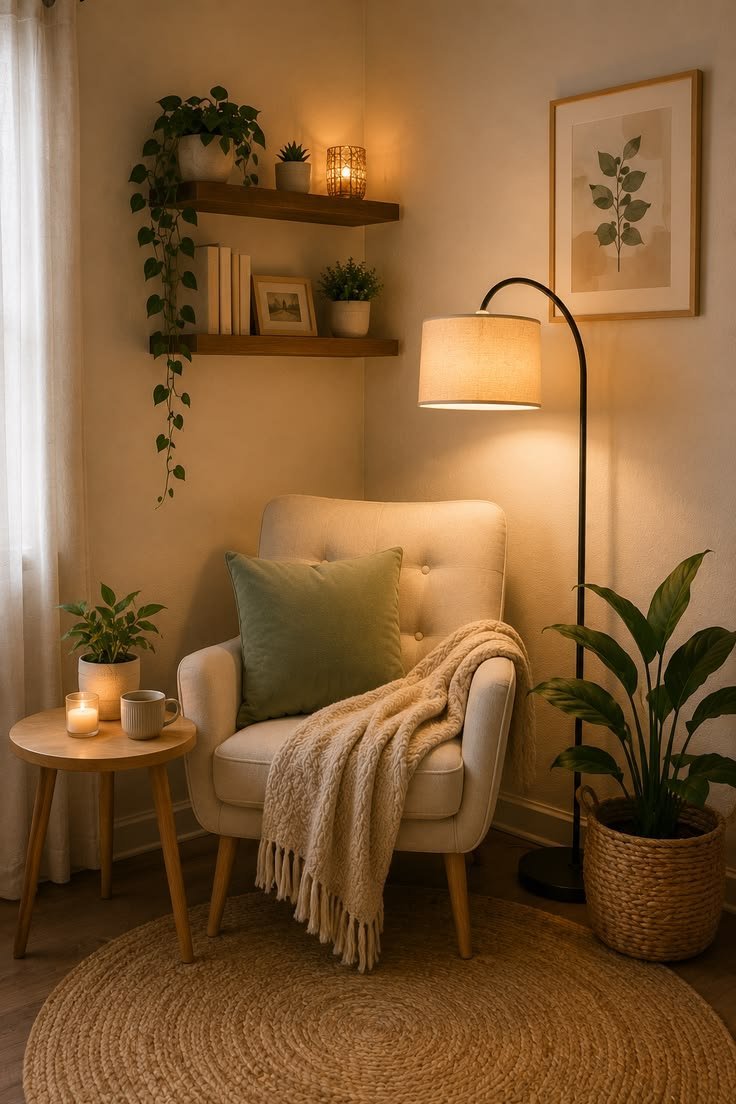
Another simple option is a small stool that can function as extra seating when needed and as a plant stand or side table at other times.
The important thing is flexibility. In a small apartment, furniture that serves more than one purpose is much more useful than something that only looks good in one particular arrangement.
9. Keep the Color Palette Simple, Then Add Contrast
A small living room doesn’t need to be completely white to feel spacious.
What helps more is having some consistency between the larger elements of the room.
You might use warm white or soft beige for the walls, a slightly darker neutral sofa, and natural wood tones for furniture. Then introduce contrast through cushions, artwork, a rug, or a small accent chair.
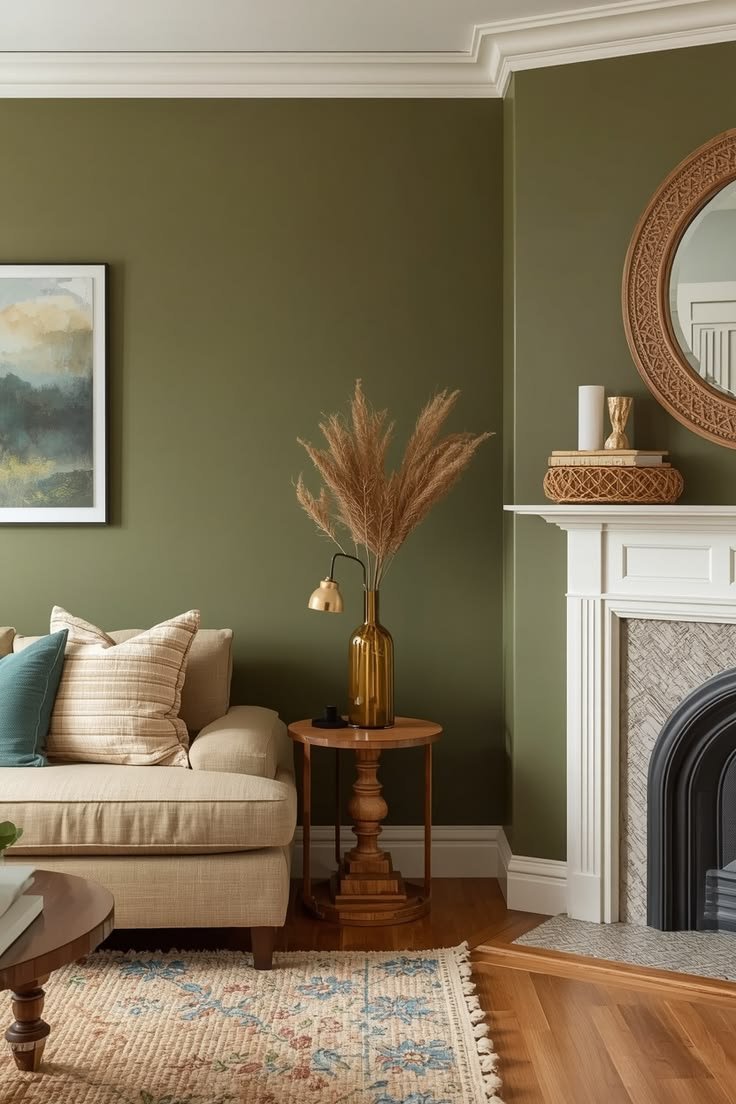
A simple palette doesn’t mean everything should match exactly.
In fact, using several shades of the same general color can make a room feel more layered. For example, a beige sofa could work with cream curtains, a muted brown rug, and cushions in olive, rust, or charcoal.
Repeat colors instead of matching everything
If you introduce a color through a cushion, repeat a smaller version of it somewhere else.
A muted green cushion could connect with a plant pot or a piece of artwork. A warm terracotta shade could appear in a small vase and one or two books.
These repeated touches make the room feel pulled together without looking like a furniture showroom.
10. Use Lighting to Make the Room Feel Bigger and Warmer
Good lighting can completely change how a small living room feels, especially in an apartment with limited natural light.
Instead of depending entirely on one ceiling fixture, create several smaller sources of light.
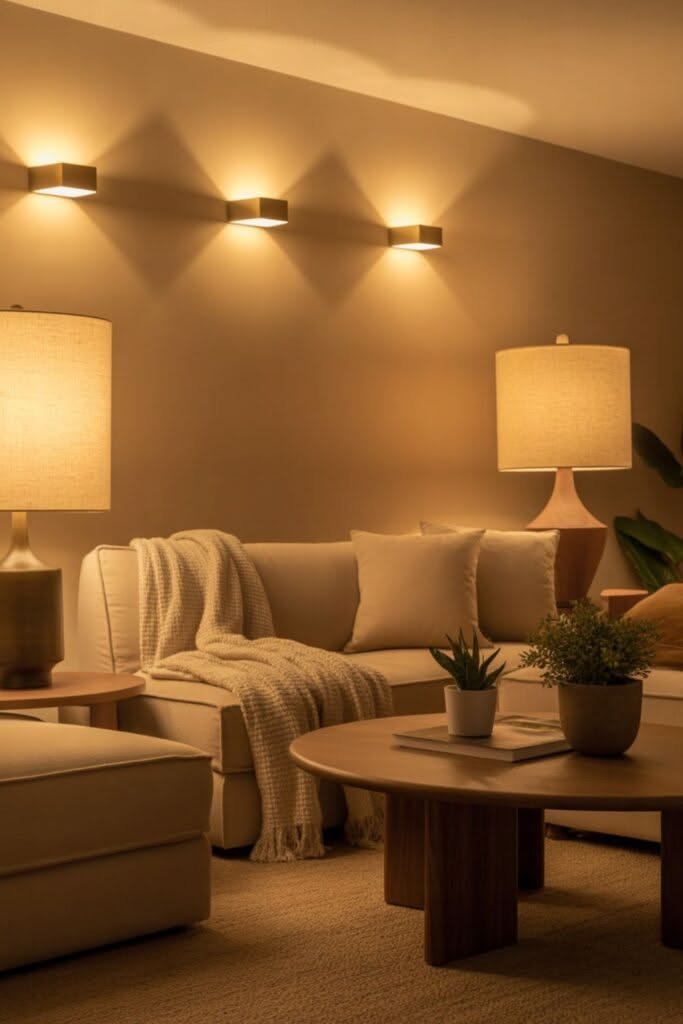
A floor lamp beside the sofa, a table lamp on a console, or a small lamp on a side table can create different levels of illumination.
This is useful in the evening because you don’t always need the entire room brightly lit. A softer lamp beside the sofa can make the space feel much more comfortable for reading, talking, or winding down at the end of the day.
Light the corners, not just the middle
When all the light comes from the center of the ceiling, the corners of the room fall into shadow and the walls seem to close in. A lamp placed in a dim corner pushes that edge back, so the room reads as larger than it is.
Check the bulbs, too. A bulb labeled warm white gives a softer, more relaxed glow than a cool white one, which can make a living room feel more like an office. Using the same warmth in every lamp keeps the room from looking patchy in the evening.
Start With One Change and Build From There
A small living room rarely needs a full makeover. Most of the difference comes from a few decisions: furniture that suits the size of the room, a rug that pulls the seating together, curtains hung higher, and lighting spread across the space instead of coming from one fixture.
If you’re not sure where to begin, start with whatever bothers you most. That might be a cramped walkway, a dark corner, or a coffee table that’s always cluttered. Fix that one thing, live with it for a few days, and the next step usually becomes obvious. These small living room decor ideas work best added gradually, so the room ends up feeling like yours rather than a copy of a catalog page.