12 Curtain Decor Ideas
Most curtains get bought in a hurry. You move in, the bedroom is too bright at six in the morning, and you grab whatever panels fit the rod that came with the place. They do the job, but they rarely do anything for the room. They hang a little short, sit tight against the window frame, and somehow make the ceiling feel lower than it is.
That's a shame, because curtains cover more wall than almost anything else you'll add to a room. Get them right and a plain space looks taller, softer, and more put-together, often without changing anything else.
These 12 curtain decor ideas focus on the choices that actually make a difference: where you hang the rod, how long the panels should be, which fabrics suit which rooms, and how to use curtains in places you might not have considered, like a doorless closet or the wall behind your bed. You'll also find fixes for rentals, small rooms, and windows that don't get much light, plus a few low-cost tricks for making inexpensive panels look custom.
1. Hang the Rod Higher Than the Window Frame
Where the rod goes matters more than the curtains themselves. When it sits just above the window frame, the fabric stops where the window stops, and your eye reads the whole wall as shorter.
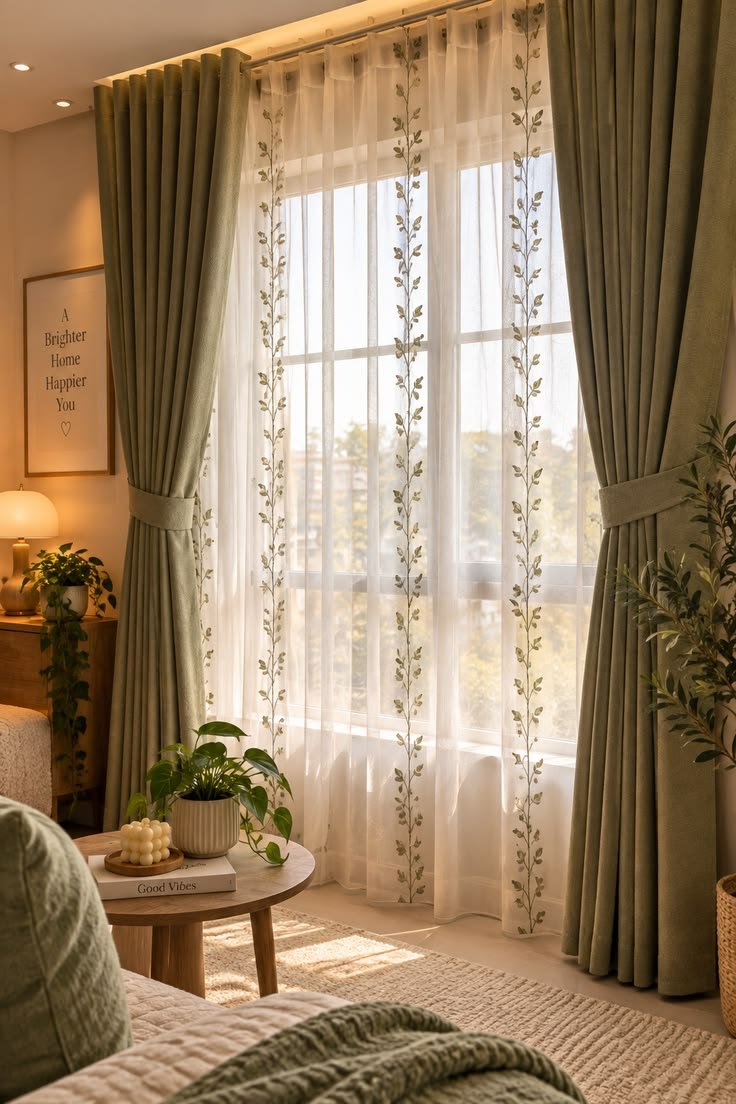
Move the rod up. Halfway between the top of the frame and the ceiling is a good starting point, and in rooms with low ceilings you can go almost all the way up. The curtains now draw one long vertical line from near the ceiling to the floor, and the window looks larger than it really is.
Before you drill, tape a piece of painter's tape to the wall at a few heights and step back to the doorway. It's much easier to judge from where you'll actually see it every day.
If you rent, check your lease before drilling. If new holes aren't an option, no-drill brackets that clip onto the top of the window frame can be a workable compromise for lighter curtains.
2. Extend the Rod Past the Sides of the Window
Width works the same way as height. If the rod ends right at the frame, open curtains bunch over the glass and block part of the view and the daylight.
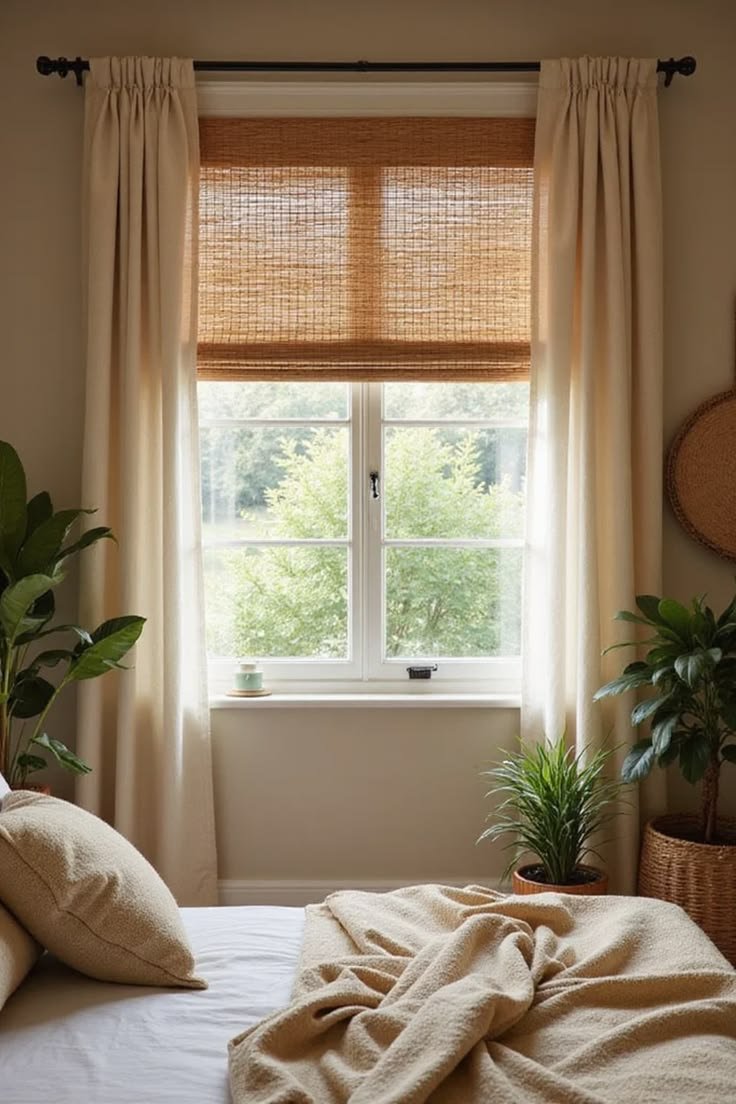
Let the rod extend past the frame on both sides so that when the curtains are open, the fabric stacks against the wall instead of the window. The window looks wider, and you keep every bit of light.
This matters most in rooms with limited natural light. A dark bedroom where the curtains cover a third of the glass even when they're "open" feels gloomier than it needs to.
A quick check: open the curtains fully and look at the edges of the window. If you can't see the whole frame, the rod is too short.
3. Get the Length Right (and Avoid "Floods")
Curtains that stop a few inches above the floor are one of the most common decorating mistakes, and one of the easiest to notice once you've seen it. They look like they've shrunk in the wash.
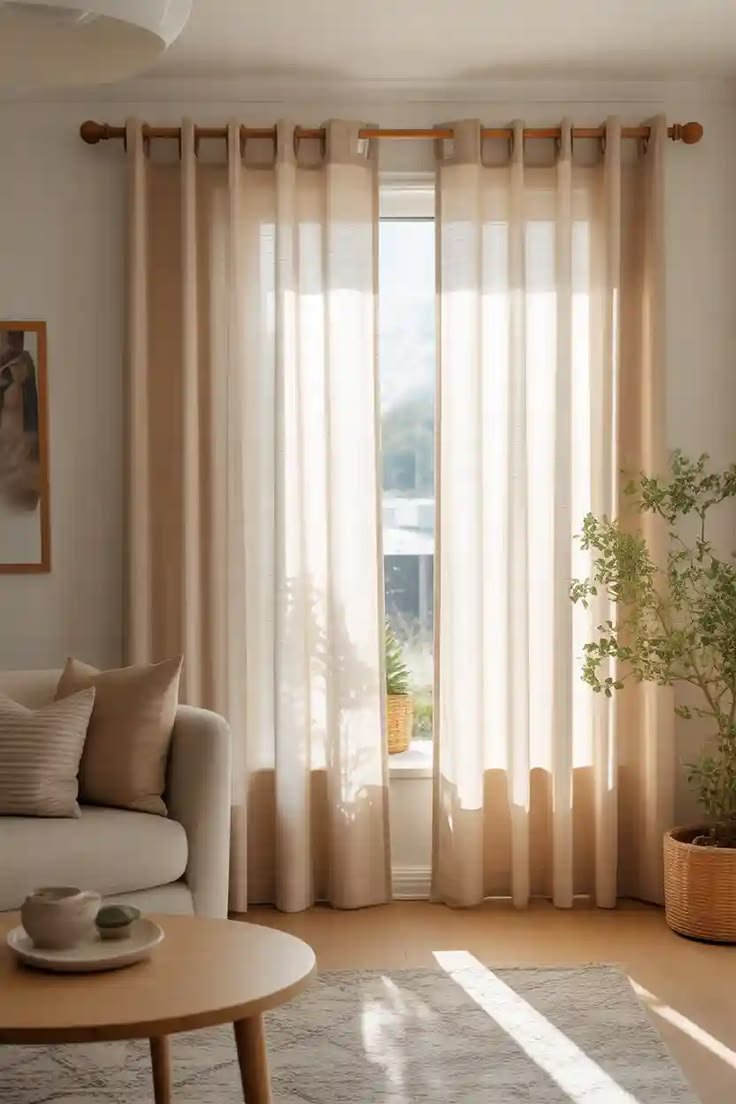
For most living rooms and bedrooms, aim for panels that just touch the floor or hover barely above it. This looks tailored and is easy to vacuum around. If you want a softer look, let them extend slightly onto the floor so they break a little, like a trouser hem. Full puddling, where fabric pools on the floor, looks romantic in photos but collects dust and pet hair, so it's best kept for rooms that don't get much foot traffic.
If your curtains are too long, iron-on hem tape is a no-sew fix. If they're too short, clip rings will drop them a little lower than a rod pocket does. For bigger gaps, add a band of contrasting fabric along the bottom. It looks like a design choice rather than a rescue.
4. Layer Sheers Behind Heavier Panels
A single set of curtains usually has to do two conflicting jobs: let light in during the day and give you privacy at night. Layering solves that.
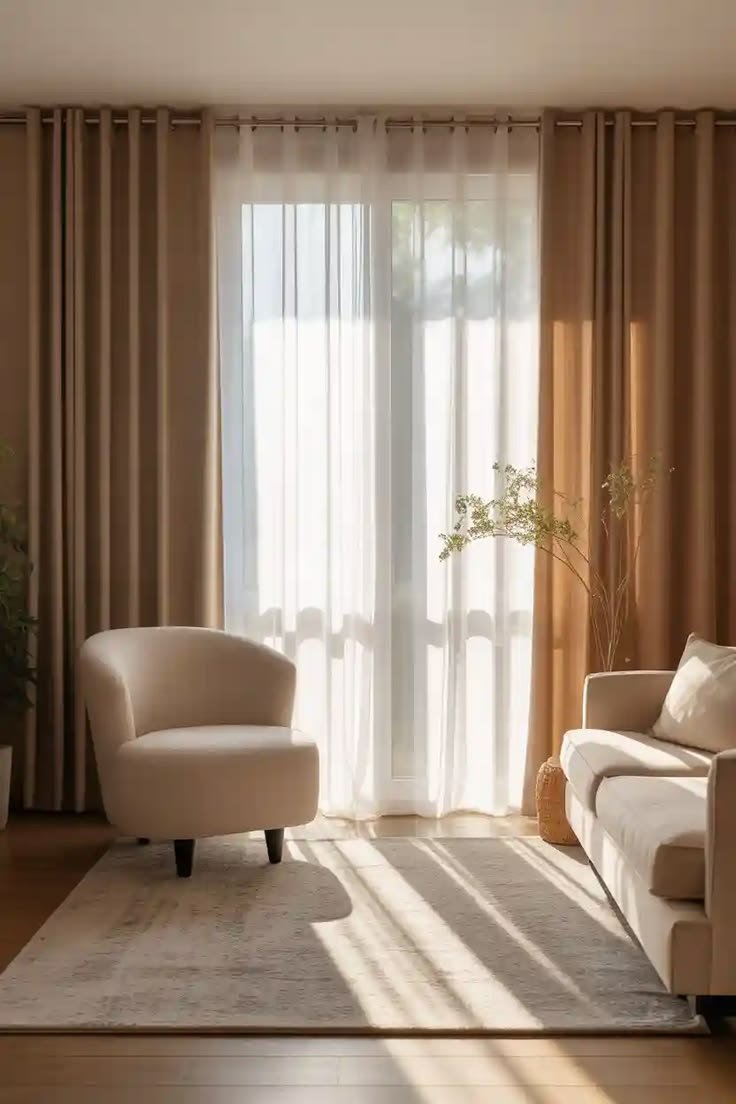
Hang sheer panels closest to the window and heavier curtains in front, using a double rod or two separate rods. During the day, pull the heavy panels open and leave the sheers closed. You'll get soft, filtered light, and people outside won't see straight in. At night, close both.
This works especially well in ground-floor apartments and street-facing rooms. It also adds depth, since two fabrics with different weights look more considered than a single flat panel.
Keep the colors close. A white sheer behind oatmeal linen, or a pale gray sheer behind charcoal panels, looks calm. Very different colors can make the window feel busy.
5. Choose Linen or Textured Fabric for a Softer Look
Fabric changes the mood of a room more than people expect. Shiny polyester can look stiff and flat, especially in daylight. Linen, cotton, or a linen-look blend has visible texture that catches light unevenly, so even a plain neutral curtain feels warmer.
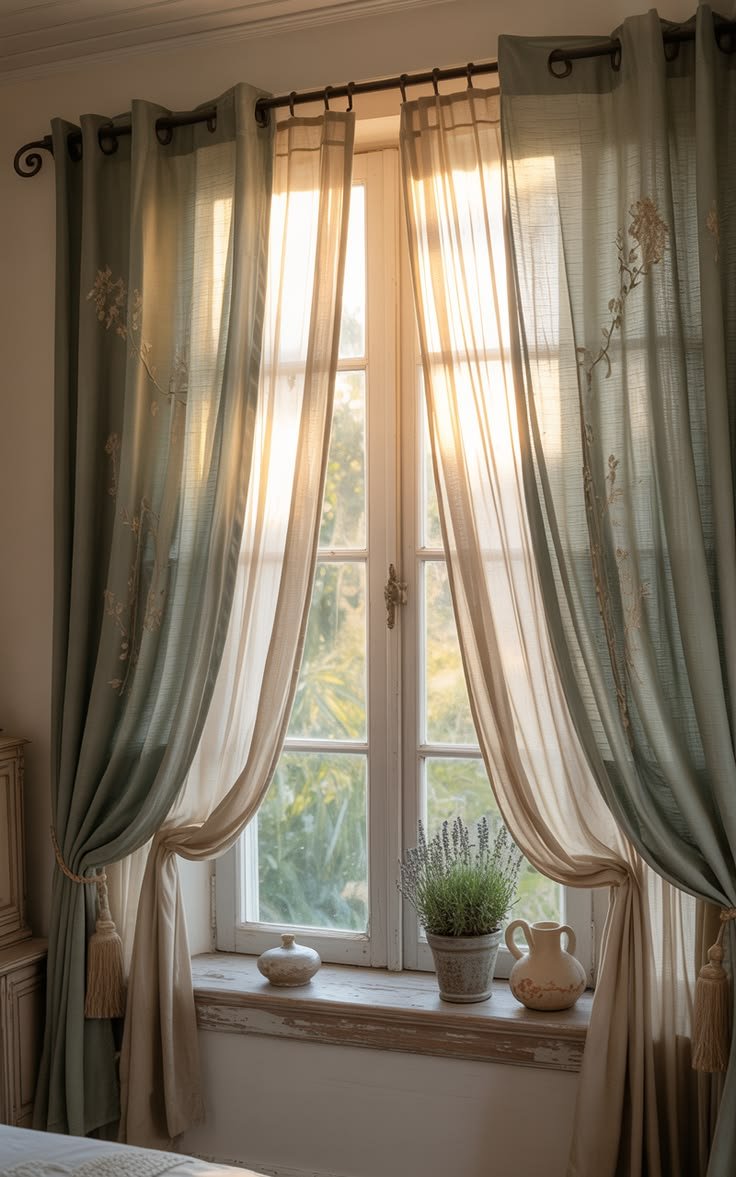
In a room with limited natural light, an unlined or lightly lined linen curtain in warm white or a pale natural shade lets brightness through while still softening the window. Heavy, dark fabric in the same room can make it feel smaller.
One practical note: most curtains arrive with sharp fold lines from the packaging. Hang them first, then steam them in place. Those creases are often what makes new curtains look inexpensive, and it's an easy fix.
6. Try Café Curtains in the Kitchen or Bathroom
Café curtains cover only the lower half of a window, which gives you privacy at eye level while leaving the top open for light. They suit kitchens, bathrooms, and any window that looks straight into a neighbor's.
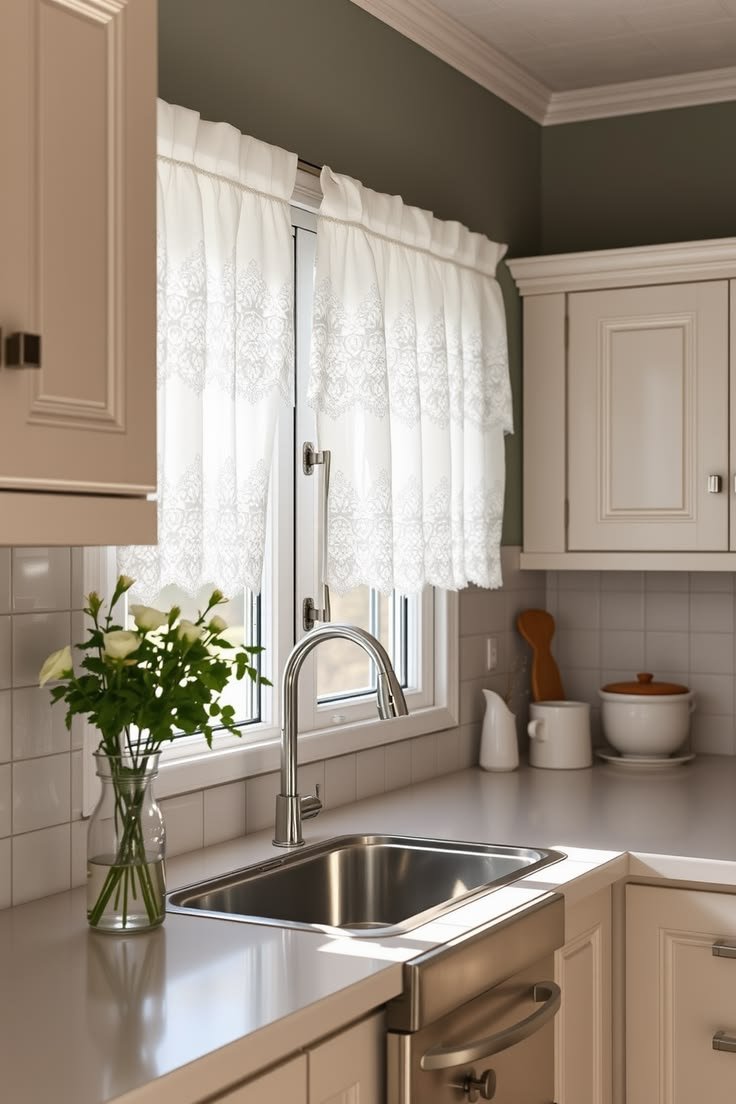
A tension rod set inside the window frame, roughly at the midpoint, is all you need. No drilling required. A simple cotton or gauze panel works, but for a small window you can also use a vintage tea towel or a linen napkin. Clip rings let you hang almost any flat piece of fabric without sewing a rod pocket.
In a kitchen, choose something washable. Curtains near a stove or sink pick up grease and steam faster than you'd think.
7. Use a Curtain Instead of a Door
Curtains aren't only for windows. In a small home, a curtain can replace a closet door, hide open shelving, or close off a laundry nook, and it takes up less floor space than a door that swings open.
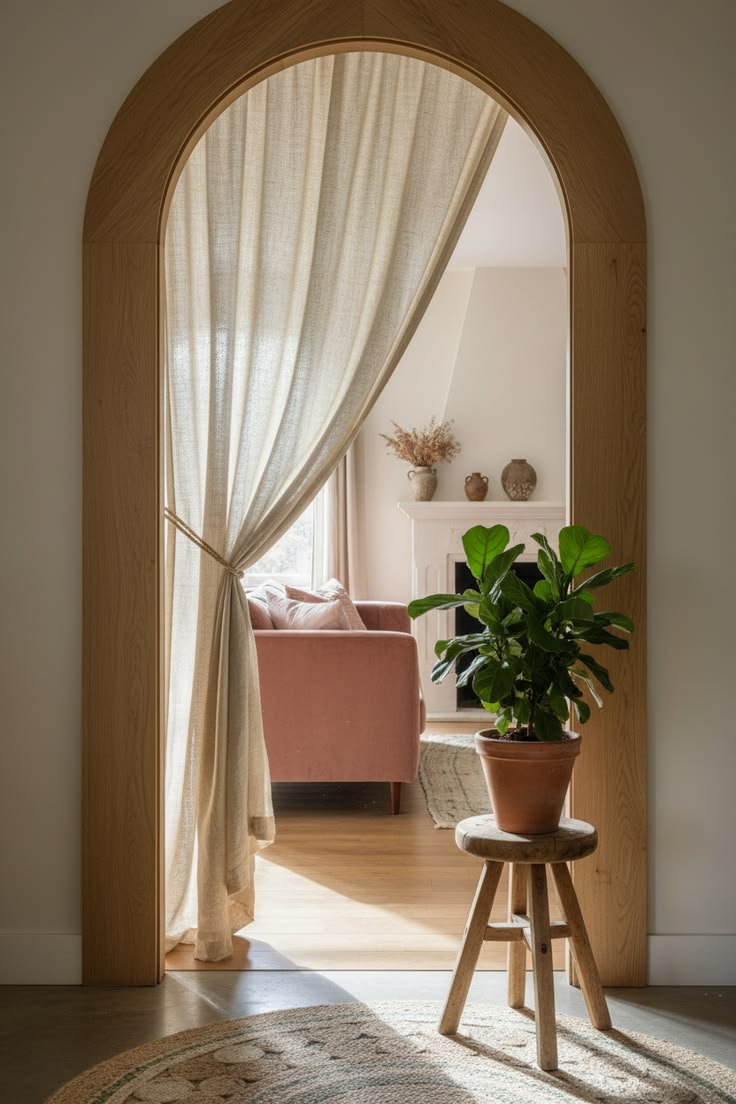
A ceiling-mounted track gives the neatest result because the fabric hangs from the very top and slides smoothly. For narrow alcoves, a tension rod is a lighter option.
This is one of the most useful curtain ideas for studio apartments, too. A floor-length curtain on a ceiling track can separate the bed from the living area at night, then pull back completely during the day so the room still feels open. Pick a fabric close to your wall color so it reads as part of the room rather than a temporary fix.
8. Match Curtain Color to the Walls for a Calmer Room
If you're unsure what color to choose, curtains close to your wall color are the safest bet. The window blends into the wall instead of breaking it up, which makes small rooms feel larger and quieter. Think warm white curtains against cream walls, or soft sage panels against a slightly paler green.
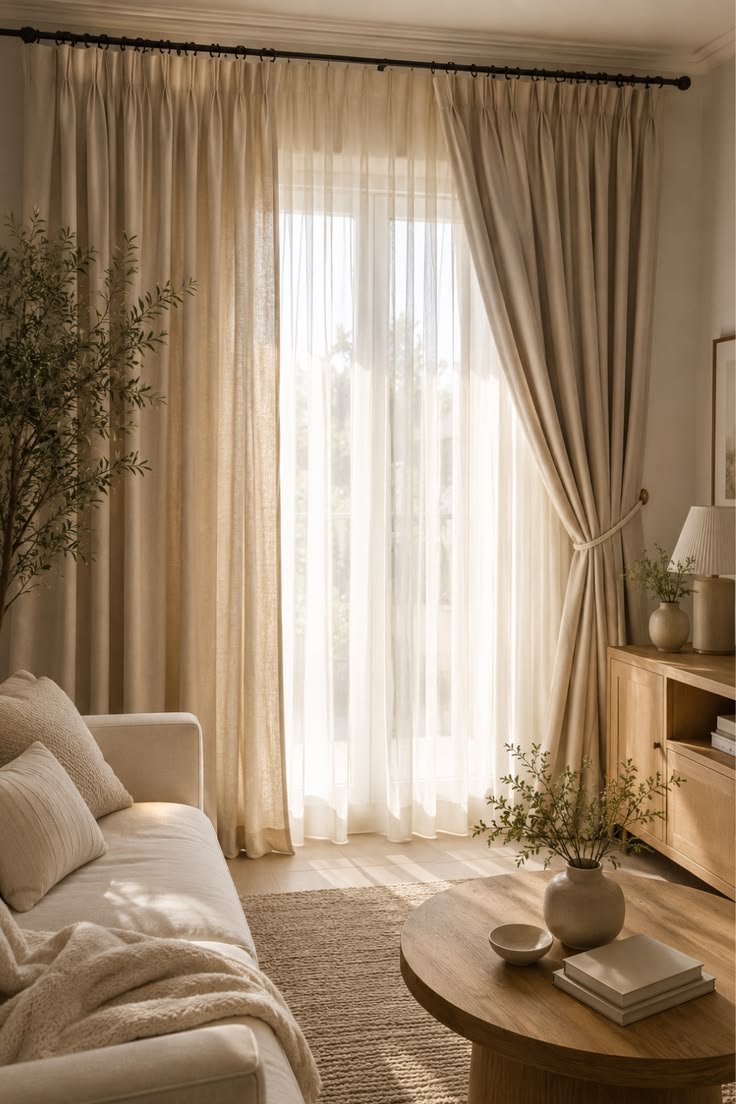
If you'd rather use curtains to add color, one simple rule helps: repeat a shade that already appears somewhere else in the room. Rust curtains work when there's a rust cushion or a terracotta pot nearby. Deep blue works when there's a blue rug or a navy print on the wall. That repetition makes the choice look deliberate rather than random.
Very saturated curtains can take over a small room quickly, so if you're drawn to a bold color, try it first where there's plenty of wall space around the window.
9. Use Stripes and Patterns With a Plan
Patterned curtains bring personality to a plain room, but they cover a lot of area, so the pattern becomes a big part of the space.
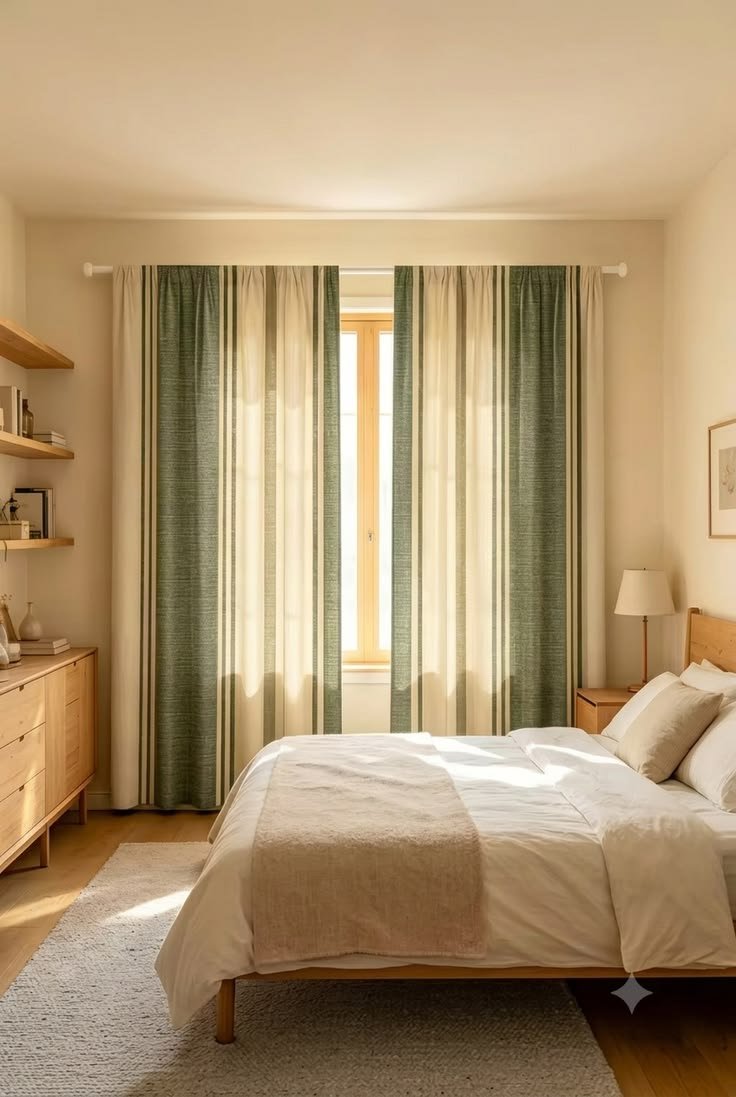
Vertical stripes are a good place to start. They emphasize height and look neat in both traditional and modern rooms. Small, soft prints, like a tiny floral or a faded check, add interest without competing with everything else.
If your room already has a busy rug or a patterned sofa, keep the curtains solid, or choose a pattern at a very different scale. Two patterns of the same size tend to fight. A large-scale pattern on the rug and a fine stripe on the curtains usually sit together much more comfortably.
10. Make Budget Curtains Look Custom
Expensive curtains usually look better because of their details, not their fabric alone: proper pleats, lining, and plenty of fullness. You can borrow most of those details.
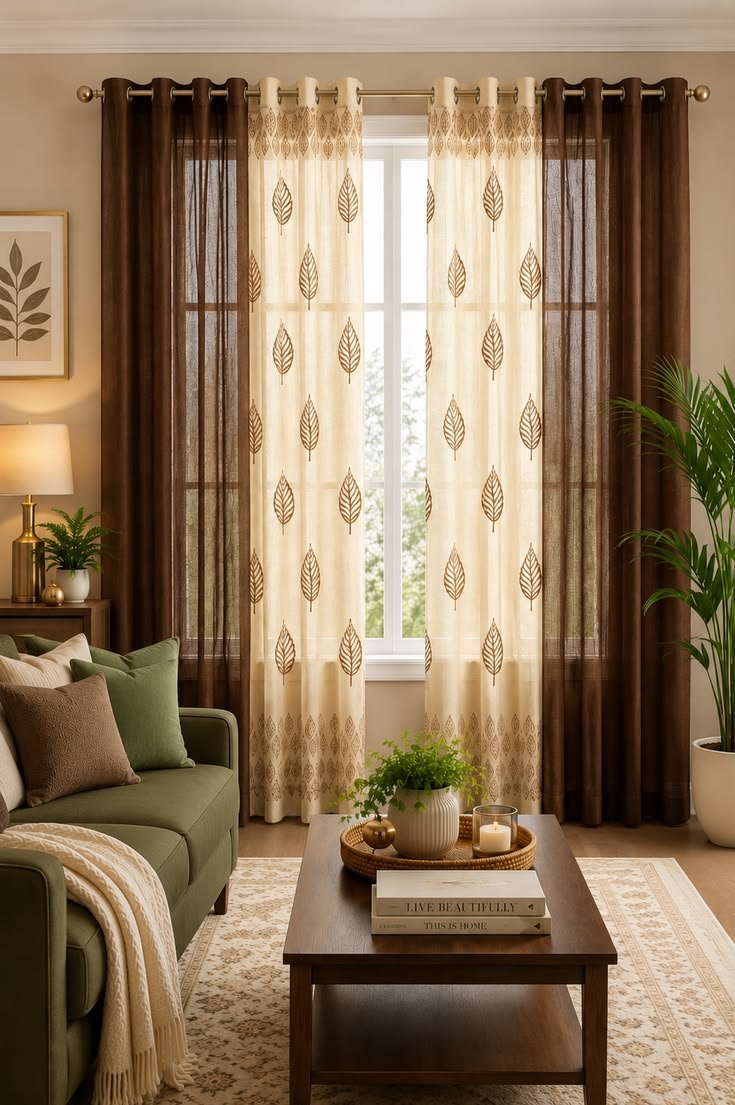
Swap a rod pocket for clip rings or pleat hooks. Fabric hanging from rings falls in cleaner folds and slides more easily than fabric bunched on a rod. Pleat tape, sewn or ironed onto the back of a flat panel, creates evenly spaced folds similar to made-to-measure curtains.
Buy more width than you think you need. Curtains that barely cover the window when closed look thin. A common guideline is a total panel width of around twice the window's width, which gives soft, full folds.
For a large window on a tight budget, canvas drop cloths or plain cotton bedsheets can be hemmed and hung with clip rings. Wash them first to soften the fabric and get any shrinkage out of the way.
11. Add Tiebacks at the Right Height
Tiebacks keep curtains open and give them a softer shape, but where you place them changes the look a lot. Tying curtains back at the middle of the window can make them look pinched. Placing the tieback lower, about a third of the way up from the floor, creates a relaxed curve. Placing it higher, near the top of the window frame, looks more formal.

You don't need matching tiebacks from a curtain shop. A leather strap, a length of cotton rope, a wooden peg, or a simple brass hook all work. Leave the fabric loose rather than cinching it tight. A relaxed drape looks more natural and creases the fabric less.
12. Hang Curtains Behind the Bed for a Soft Headboard Wall
If your bed has no headboard, or it sits against a plain wall, try hanging floor-length curtains on a ceiling track or a long rod behind it. The fabric acts as a soft backdrop, frames the bed, and makes the room feel cozier. It's similar to an upholstered headboard, but often cheaper and much easier to take down when you move.
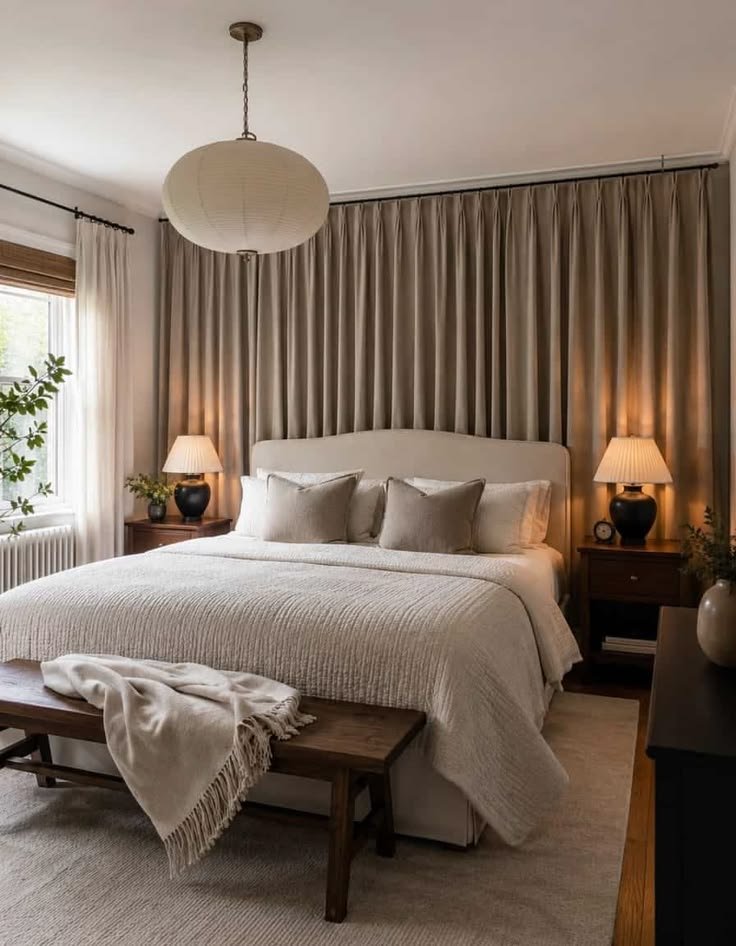
This also helps when the bed has to sit in front of a window or against an awkward wall with uneven paint. Choose a relaxed fabric like linen or cotton in a color close to the walls or your bedding, and let the panels run wider than the bed on both sides so it looks intentional rather than like a covered window. Keep the fabric well away from bedside lamps and any heat source.
Small Curtain Changes, a Different-Looking Room
Most of these curtain decor ideas don't require buying anything new. Raising the rod, widening it so the fabric clears the glass, fixing the length, and steaming out fold lines can change how a room looks in a single afternoon. Once those basics are right, fabric, color, and pattern are what make the curtains feel like yours.
If you only change one thing this week, start with the rod height. It's the adjustment people notice without quite knowing why: the room suddenly looks taller and more finished. Then work through the rest one window at a time, and let each room tell you what it needs, whether that's more light, more privacy, or simply a little more softness.