15 Simple Dining Room Decor Ideas That Make a Small Space Feel Bigger
A small dining room can be tricky to decorate. You want a table that’s comfortable for everyday meals, enough room to pull out a chair, and a little personality—but adding too much furniture or too many decorations can make the whole space feel cramped.
The good news is that you don’t need a bigger room to make your dining area feel more open. A few thoughtful changes can improve how the space looks and how you move through it. The trick is to choose pieces that serve a purpose, keep the visual clutter under control, and make the most of the light you already have.
These small dining room decor ideas focus on practical changes you can make in an ordinary home, whether you’re working with a narrow dining area, a compact apartment, or a room that doubles as a workspace. Some cost very little, while others are worth considering if you’re replacing furniture anyway.
1. Choose a Round Dining Table for Better Flow
A round dining table can make a small dining room feel easier to move around, especially when the room has awkward corners or a narrow walkway.
Unlike a rectangular table, a round table has no corners sticking into the walking path. This can make a noticeable difference in a compact room where every inch matters. It also gives you a little more flexibility when pulling out chairs or moving around the table.
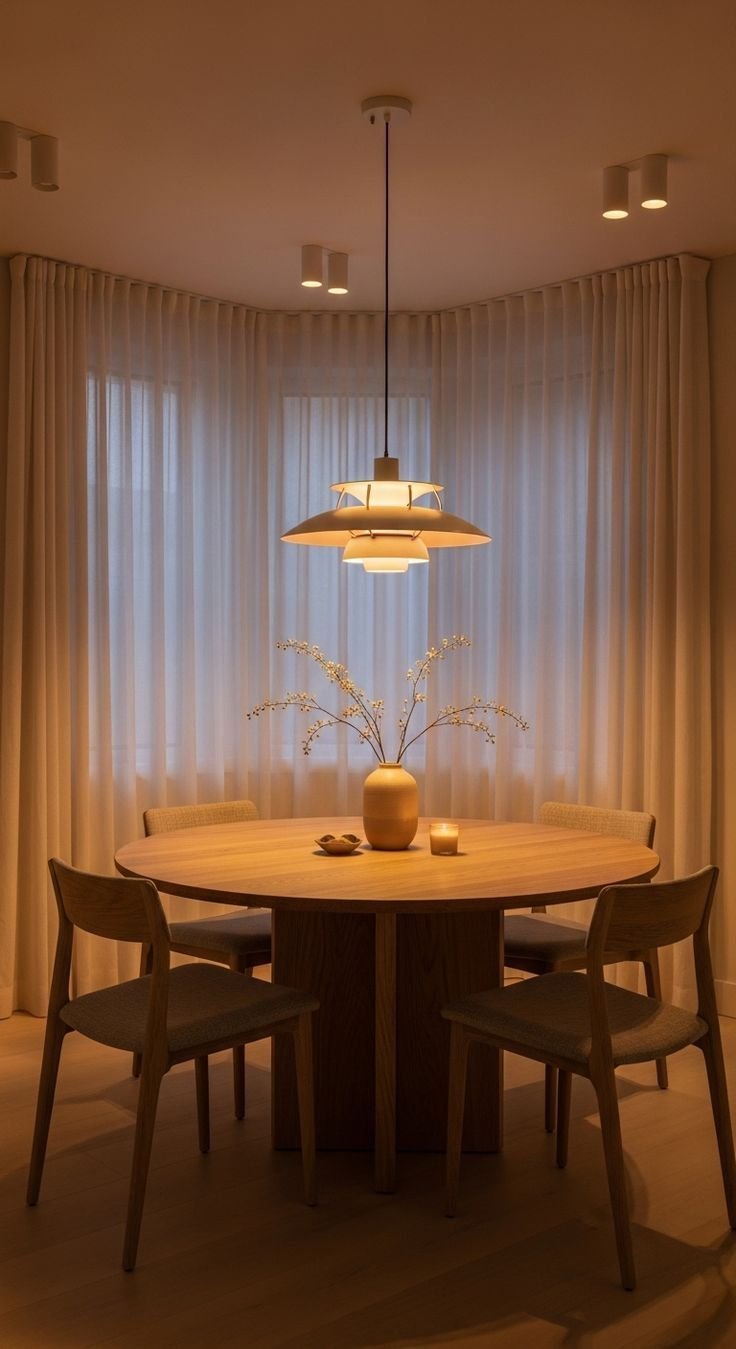
If you’re replacing your table, look for a size that leaves comfortable space for people to sit and move around it. If your current rectangular table is working well, there’s no need to replace it just for the sake of decorating. You can still improve the room with the other ideas below.
2. Keep the Dining Table Mostly Clear
One of the easiest ways to make a small dining room feel bigger is to stop treating the dining table like a permanent storage surface.
Mail, shopping bags, school papers, and random household items tend to collect there because it’s convenient. But when the table is covered, the whole room can look busier than it actually is.
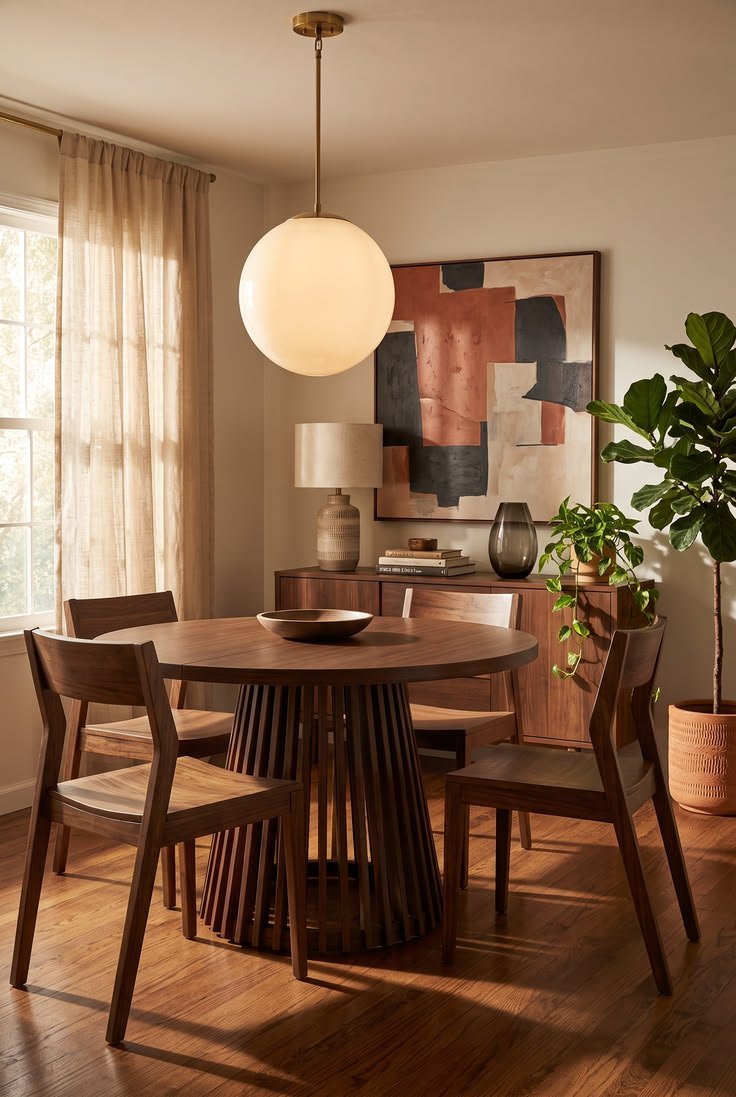
Try keeping just one simple centerpiece on the table. A small vase with a few branches, a shallow bowl, or a candle on a simple tray can be enough.
If you need the table to do double duty as a workspace, use a small basket or box to collect everyday items. The goal isn’t to keep the room perfectly styled all the time. It’s to make clearing the table quick enough that you’ll actually do it.
3. Use a Narrow Sideboard Instead of Bulky Storage
Storage is useful in a dining room, but large cabinets can quickly make a small space feel crowded.
If you need somewhere to keep serving dishes, table linens, or extra glasses, consider a narrow sideboard or a slim console-style cabinet. A piece with a simple shape and a little open space underneath can feel lighter than a bulky, solid cabinet.
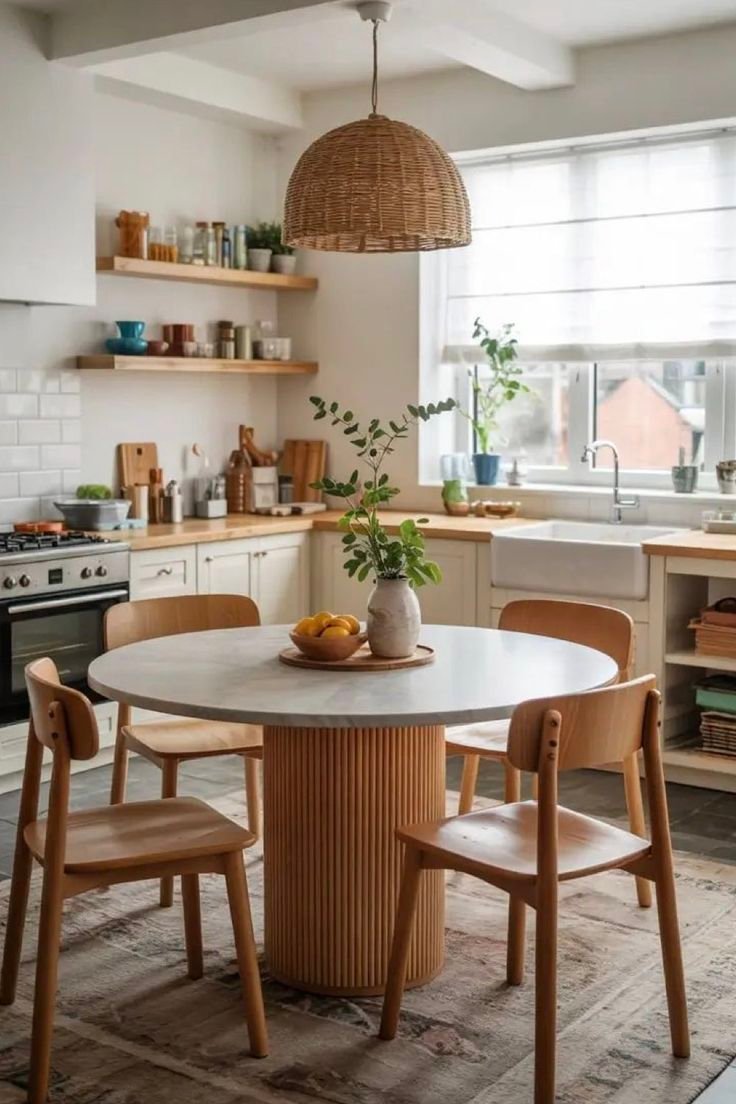
You can also use the top for a small lamp, a piece of artwork, or a single decorative object. Just avoid filling the entire surface with accessories.
If you already have a large cabinet, try moving it to a wall where it doesn’t interrupt the main walking path. Sometimes the problem isn’t the furniture itself—it’s where it’s placed.
4. Hang a Mirror Where It Can Reflect Light
A mirror can help a small dining room feel more open, but placement matters more than size.
Instead of hanging one simply because there’s an empty wall, look for a spot where it can reflect a window, a doorway, or a lighter part of the room. This can make the space feel brighter and give the impression of more depth.
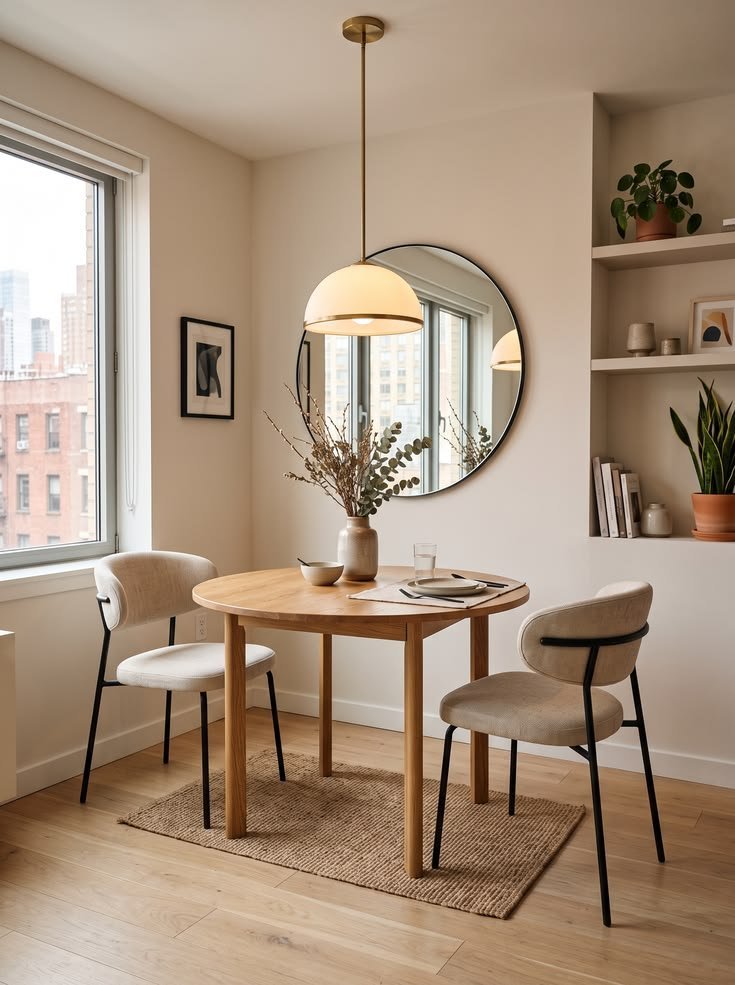
A medium-sized mirror above a sideboard or on the wall opposite a window can work well. If the room is narrow, a vertical mirror may help emphasize the height of the wall, while a horizontal one can make a short wall feel wider.
Avoid placing a mirror where it reflects a cluttered corner. That can make the room feel busier rather than more spacious.
5. Pick Dining Chairs With a Lighter Visual Shape
Dining chairs take up a surprising amount of visual space. In a small room, bulky chairs with thick arms or heavy upholstery can make the table feel crowded even when there’s enough room to sit.
If you’re buying new chairs, look for simple shapes with open backs or slimmer frames. Chairs that allow you to see a little of the wall or floor behind them can make the room feel less enclosed.
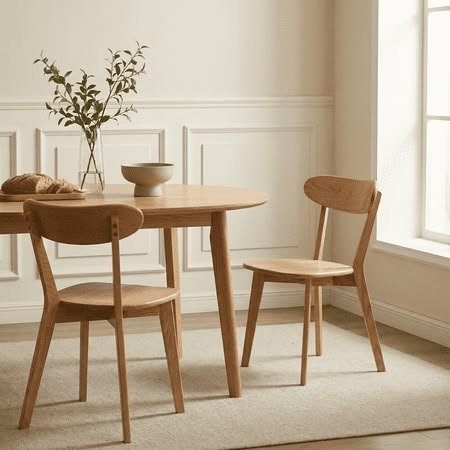
You don’t have to buy a matching set, either. A simple wooden table can look good with lightweight upholstered chairs, or you can use a bench on one side if it fits the room.
The important thing is to choose seating that’s comfortable and easy to move. A beautiful chair that’s awkward to pull out every day won’t feel like a good choice for long.
6. Let the Walls Do More of the Decorating
When floor space is limited, walls are one of your best decorating tools.
Instead of adding another piece of furniture, try hanging a large piece of artwork, a mirror, or a small collection of framed prints. This gives the room personality without taking up valuable floor space.
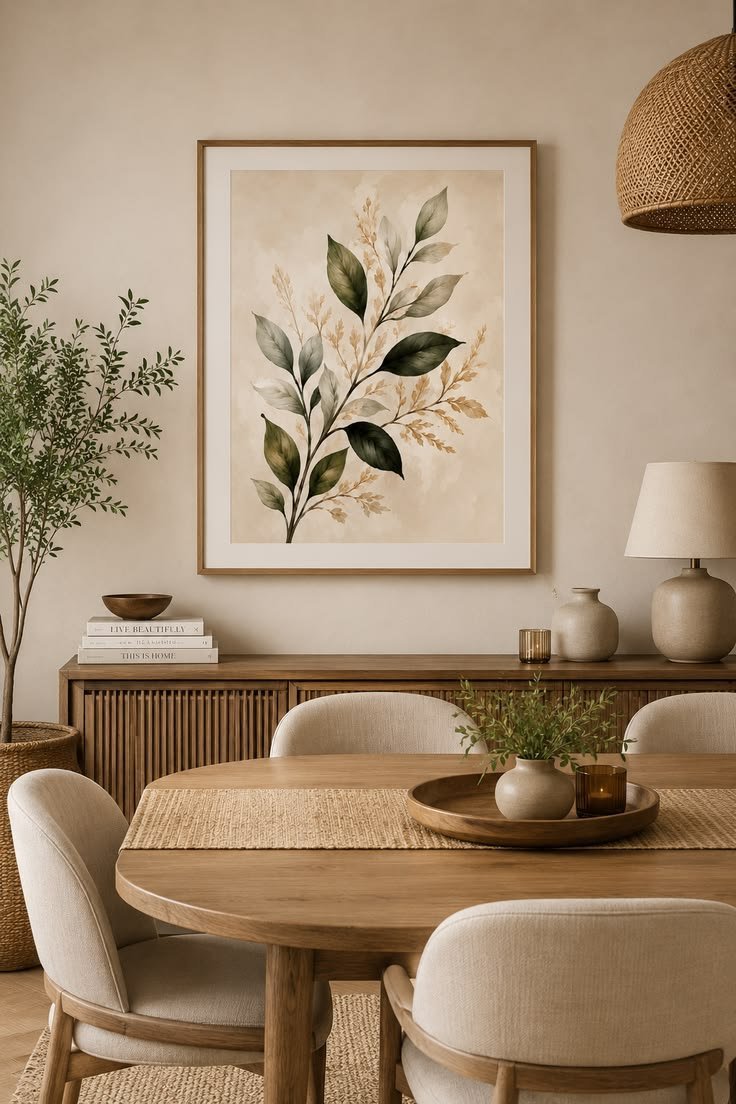
A single larger piece can sometimes work better than several small decorations because it creates one clear focal point. For example, a simple landscape print above the dining table can add color and interest without making the wall feel cluttered.
If you’re renting, removable picture-hanging strips or lightweight frames can make it easier to decorate without committing to permanent changes.
7. Use a Small Rug That Defines the Dining Area
A rug can help a small dining room feel more organized by giving the table and chairs a clear visual home.
The key is choosing the right size. A rug that’s too small can make the table look like it’s floating awkwardly in the room, while one that’s too large can make the space feel crowded.
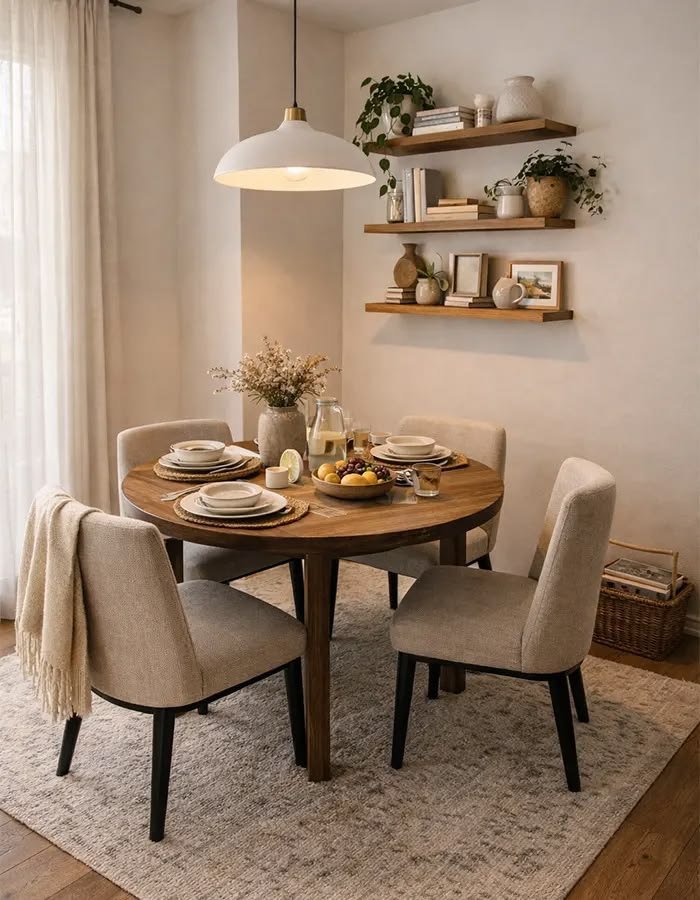
If you already have a rug, try centering it under the table and making sure the chairs can still move comfortably. If the rug is constantly catching chair legs, it may be more frustrating than useful.
For a small dining area, a simple, low-pile rug can be easier to maintain than something thick or heavily textured. A subtle pattern can also help hide everyday crumbs and small marks.
8. Use a Bench to Save Space on One Side
A dining bench can be a practical choice when you’re trying to fit seating into a tight space.
Unlike individual chairs, a bench can sit close to the wall when it’s not being used. This can make the room easier to walk through, especially if the table is near a doorway or a narrow passage.
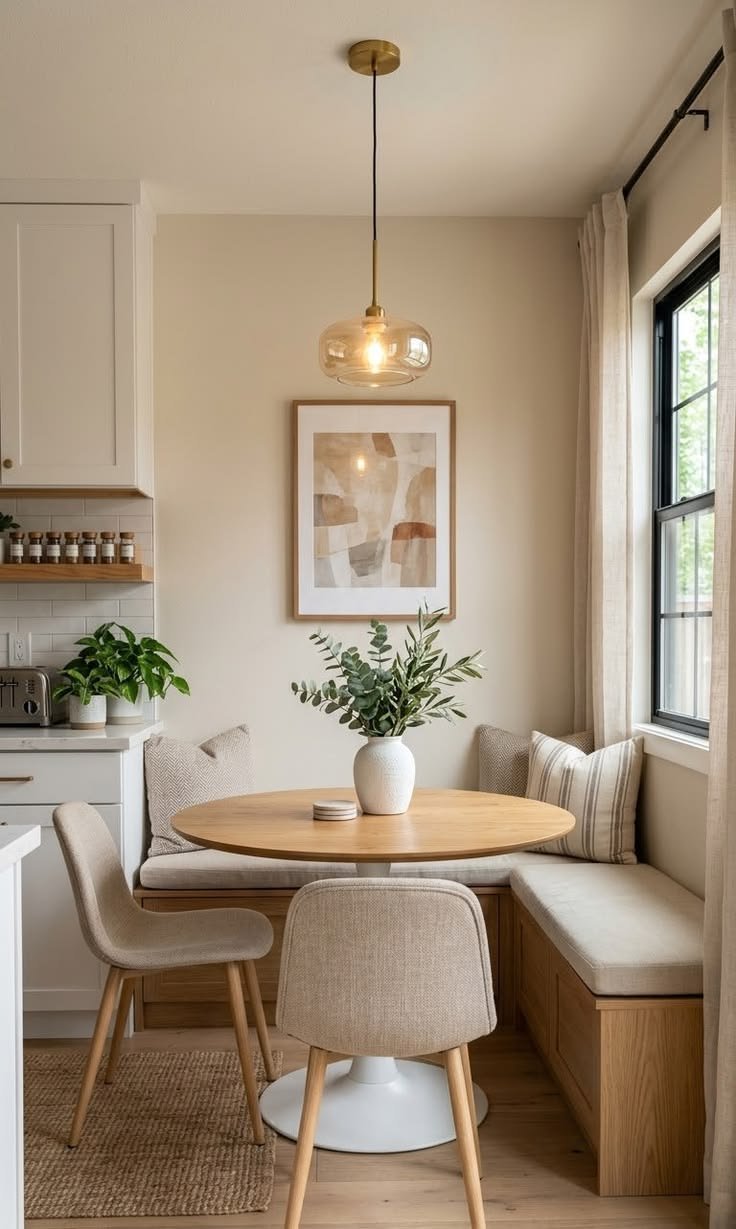
A bench also gives you a little flexibility when you have extra guests. You can fit more people on one side without needing to pull out several chairs.
If you already have a bench, try placing it against the wall and using chairs on the opposite side. This can create a more open arrangement without changing the table itself.
9. Keep the Color Palette Simple
A small dining room doesn’t have to be all white to feel spacious. But using too many strong colors at once can make the room feel visually busy.
A simple color palette can help the space feel more connected. You might choose warm white walls, natural wood furniture, and one or two accent colors in the artwork or table linens.
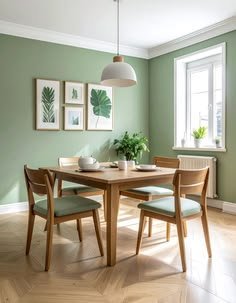
If you love color, you don’t have to avoid it. Try using one stronger color in a few places rather than introducing a different color in every corner. For example, a muted green in the curtains, artwork, and a small vase can create a sense of continuity.
The goal is to make the room feel like one space, not a collection of unrelated objects.
10. Make the Most of Natural Light
Natural light can make a small dining room feel brighter and more open, so it’s worth paying attention to what’s blocking it.
If you have curtains, choose a fabric that lets in some light during the day. You can still use heavier curtains for privacy, but keeping them open when possible can make the room feel less enclosed.
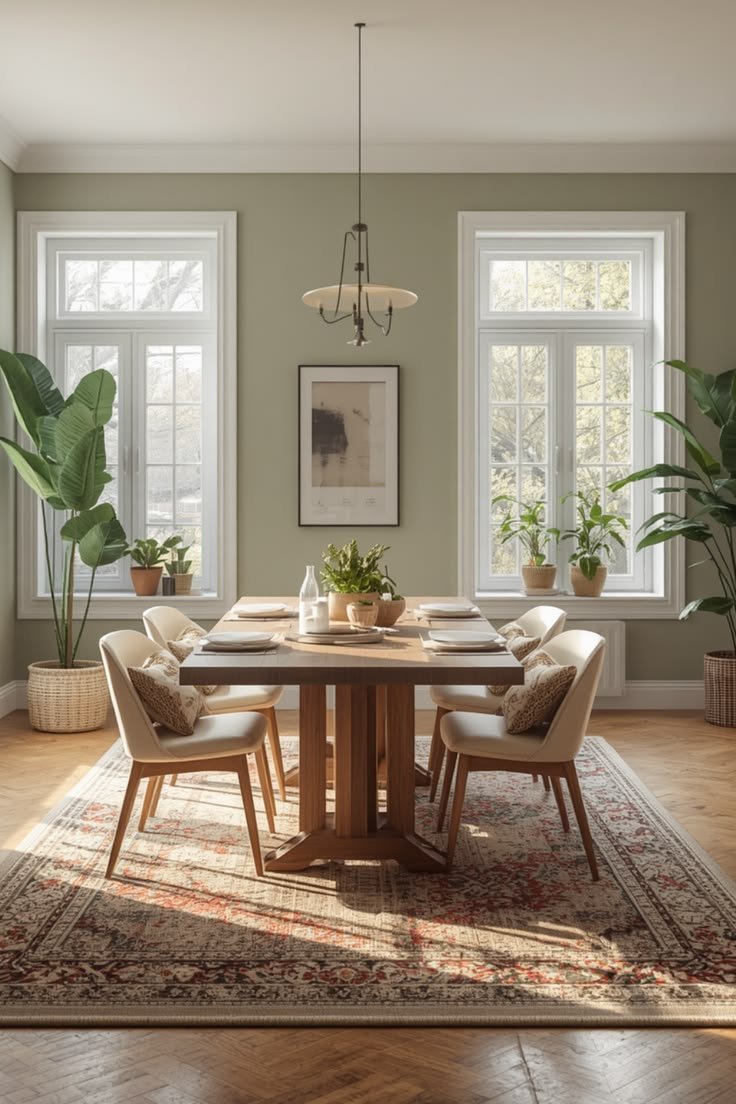
If the room has a window, avoid placing tall furniture directly in front of it unless there’s no other option. A small table or low cabinet can work better than a tall storage piece.
Even a simple change like moving a plant away from the window can help. You don’t need to remove everything from the room—just make sure the light has a clear path.
11. Use One Statement Light Instead of Several Small Decorations
A light fixture can be both practical and decorative, which makes it especially useful in a small dining room.
A simple pendant light above the table can create a focal point without taking up floor space. It also helps define the dining area, especially if the room is part of an open-plan living space.
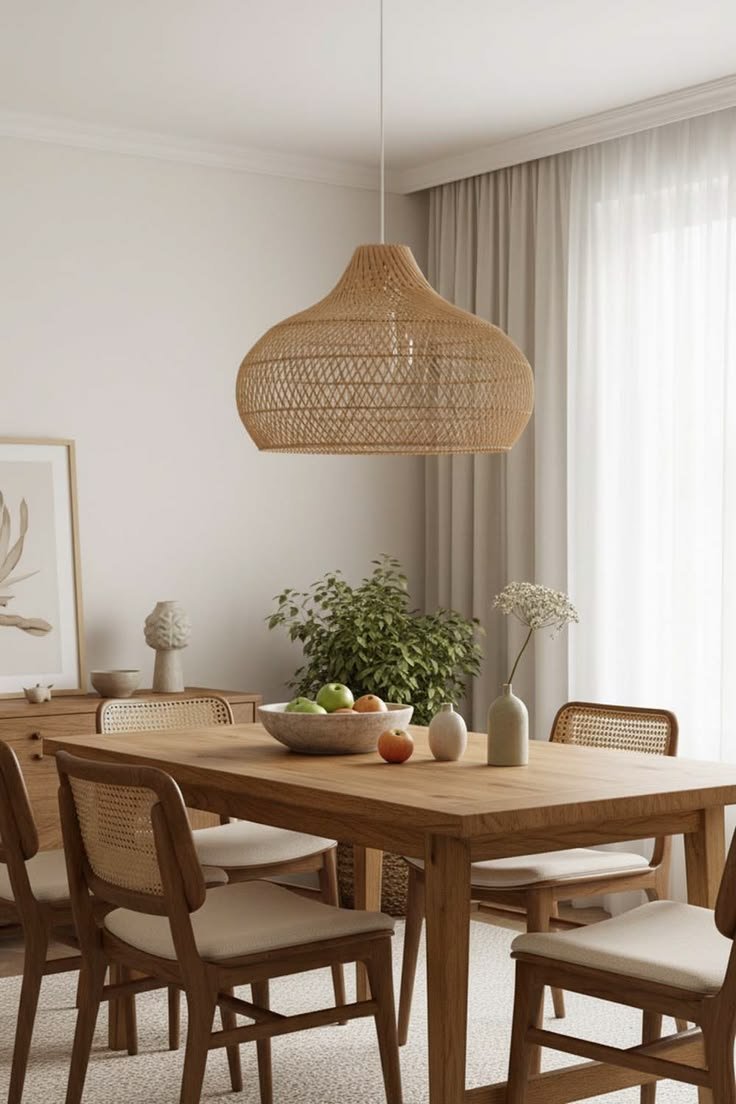
If you already have a light fixture, you may not need to replace it. Sometimes changing the bulb to a warmer tone or adjusting the height can make the room feel more comfortable.
If you’re installing a new fixture, make sure it’s positioned so it doesn’t interfere with people sitting at the table. A light that hangs too low can make the room feel cramped, even if it looks good in photos.
12. Use the Corners for Something Useful
Small dining rooms often have awkward corners that don’t seem big enough for furniture but are too empty to ignore.
Instead of filling them with random decorations, think about what the space actually needs. A narrow plant stand, a small wall shelf, or a compact bar cart can work if it doesn’t block the walking path.
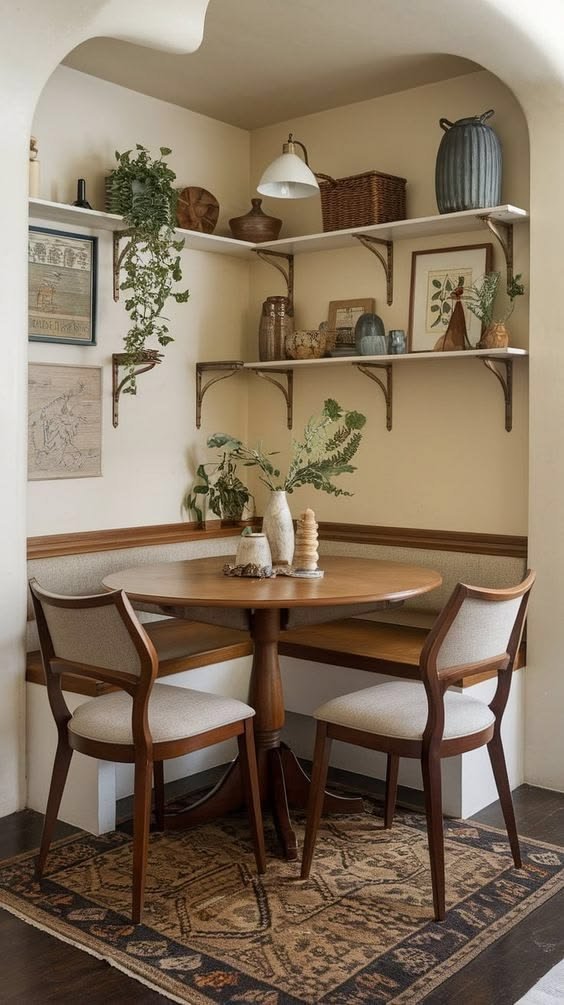
You could also use a corner for a small lamp or a piece of artwork. Sometimes the best solution is simply to leave the corner empty.
Not every part of a room needs to be filled. A little breathing room can make the whole dining area feel more intentional.
13. Use a Small Centerpiece That Can Be Moved Easily
A centerpiece should make the table feel finished, not make it harder to use.
If you eat at the table every day, choose something that can be moved in a few seconds. A small vase, a shallow bowl, or a simple tray can work well.
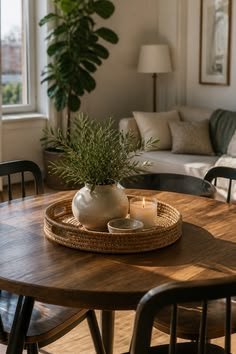
You can also use an ordinary household item in a more decorative way. A small glass jar filled with a few branches can look just as nice as a traditional vase, and it’s easy to move when you need the table for dinner.
The trick is to keep the centerpiece low enough that people can see across the table. A tall arrangement can look beautiful, but it may not be practical for everyday meals.
14. Avoid Overcrowding the Walls
Decorating the walls can make a small dining room feel more personal, but too many pieces can have the opposite effect.
If you have several small frames, try grouping them into one arrangement instead of spreading them across every wall. This creates a clearer focal point and keeps the room from feeling visually scattered.
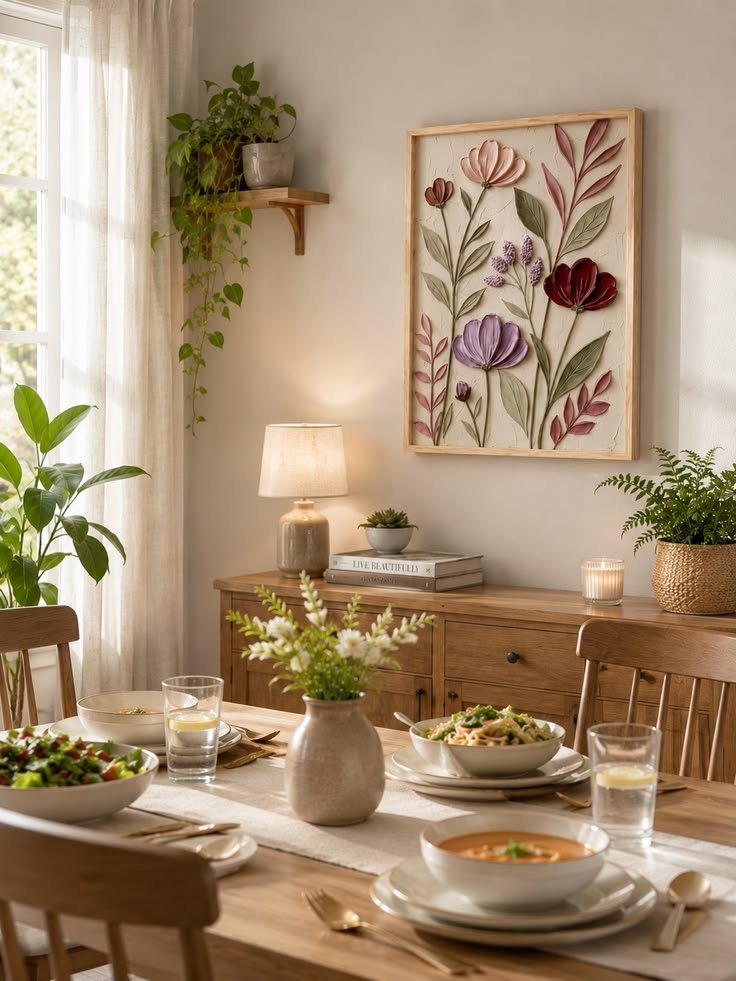
You can also leave some walls empty. A small dining room doesn’t need artwork on every available surface.
If you’re unsure whether a wall feels too busy, take a photo of the room and look at it from a distance. Sometimes it’s easier to see what needs to be removed when you’re not standing right in front of it.
15. Keep the Floor as Open as Possible
The floor is one of the most important parts of making a small dining room feel bigger.
Try to keep the main walking path clear, especially around the table and chairs. If you have a cabinet or a plant stand that’s constantly in the way, consider moving it to another room or finding a smaller alternative.
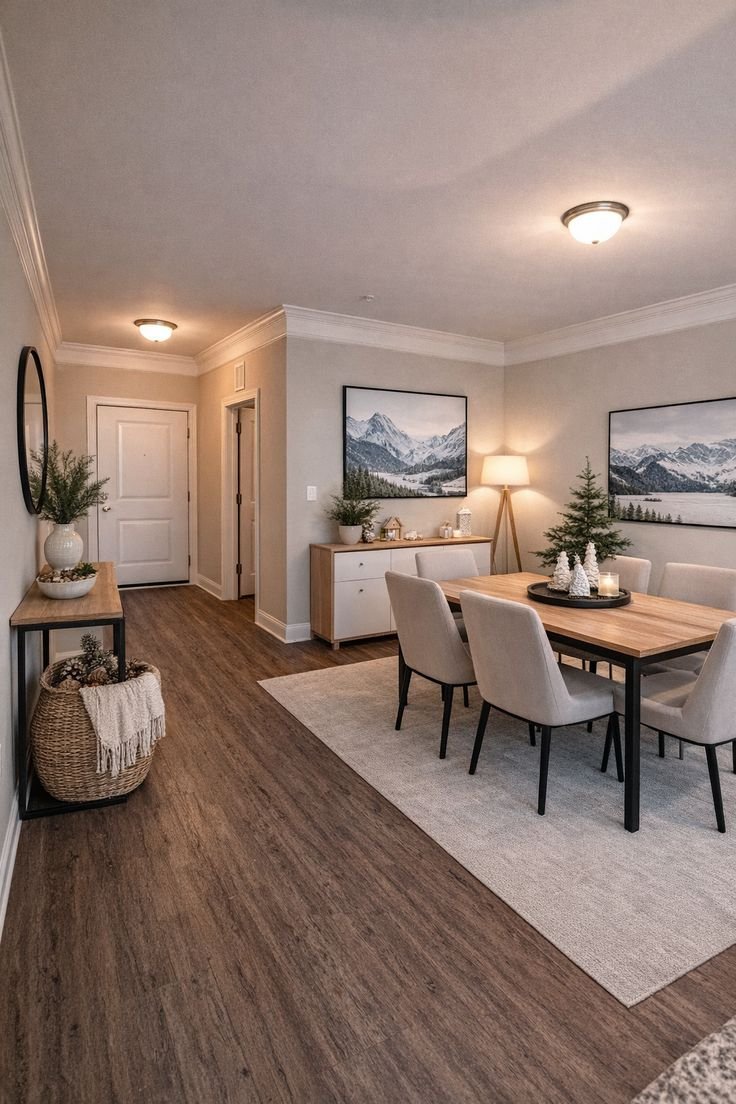
You can also make a small room feel more open by choosing furniture that sits slightly off the floor. A sideboard with legs, for example, can create a little visual space underneath, while a solid piece that reaches the floor can feel heavier.
You don’t need to remove everything from the room. Just pay attention to how the furniture affects the way you move through the space.
A Few Small Dining Room Mistakes to Avoid
Sometimes making a room feel bigger is less about adding something and more about removing what isn’t working.
Here are a few common mistakes to watch for:
- Using a rug that’s too small: It can make the table look disconnected from the rest of the room.
- Choosing oversized furniture: A large cabinet or bulky chairs can make the space feel crowded.
- Filling every empty corner: Some empty space is useful.
- Using too many decorative objects: A few well-chosen pieces usually look more intentional.
- Blocking natural light: Even a small obstruction can make a room feel darker.
- Ignoring the walking path: A room can look good but still feel uncomfortable to use.
The best small dining room decor ideas are the ones that make the space easier to live in, not just prettier to look at.
Making a Small Dining Room Feel Bigger Doesn’t Have to Be Expensive
You don’t need to buy new furniture or completely redesign the room to make it feel more open.
Start with the things that are already bothering you. If the table feels crowded, clear it. If the chairs are difficult to move, rearrange them. If the room feels dark, look at what’s blocking the light. If the walls feel empty, add one piece of artwork instead of several small decorations.
A few small changes can make a bigger difference than a room full of new accessories. The goal is to create a dining space that feels comfortable, useful, and personal—without making it feel like you’re trying to fit too much into it.
When you’re decorating a small dining room, think about what you actually use every day. That’s usually the best place to start.