Living Room10 min read
10 Living Room Rug Ideas
A living room without a rug almost always feels unfinished. The furniture seems to float, voices echo a little, and the room never quite feels cozy, no matter how nice the sofa is. Add the right rug and everything changes. It pulls the seating together, softens the sound, warms up a cold floor and gives the room a base to build on.
The problem is that rugs are one of the easiest things to get wrong. Too small, and it looks like a bath mat stranded in the middle of the room. Too bold, and it fights with everything else. Too delicate, and it's ruined within months by kids, pets or muddy shoes.
These living room rug ideas cover the decisions that actually make a difference: size, material, pattern, layering and placement, plus practical options for small spaces, open-plan rooms and busy households. Whether you're buying your first rug or replacing one that never felt right, you'll find ideas here that help you choose with confidence.
1. Choose a Rug Big Enough for the Front Legs
The most common living room rug mistake is buying one that's too small. A small rug floating in the middle of the room makes the space look smaller and the furniture look disconnected.
A simple rule of thumb is to choose a rug large enough for at least the front legs of your sofa and chairs to sit on it. This visually links all the seating together into one comfortable group. In a larger room, you can go bigger still and have all the furniture legs on the rug, which creates a more generous, finished look.
The rug should usually extend a little beyond the ends of the sofa, too. If it's narrower than the sofa, the whole arrangement looks top-heavy.
Before buying, mark the rug size on the floor with painter's tape or lay out some sheets of newspaper. It's a quick way to see how a size actually feels in your room, and it often shows that you need something bigger than you first thought.
2. Layer a Patterned Rug Over a Jute Rug
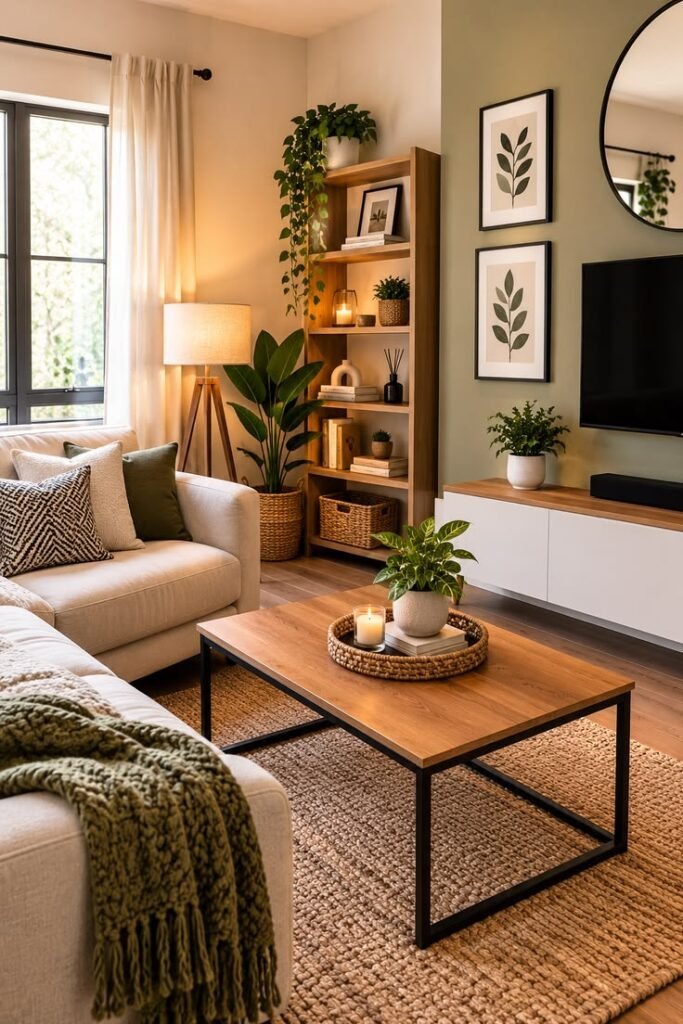
Layering rugs is a clever way to get the look of a large, interesting rug without the price tag. Start with a big, plain natural-fiber rug, such as jute or sisal, as the base. Then lay a smaller patterned rug on top, slightly off-center or at an angle.
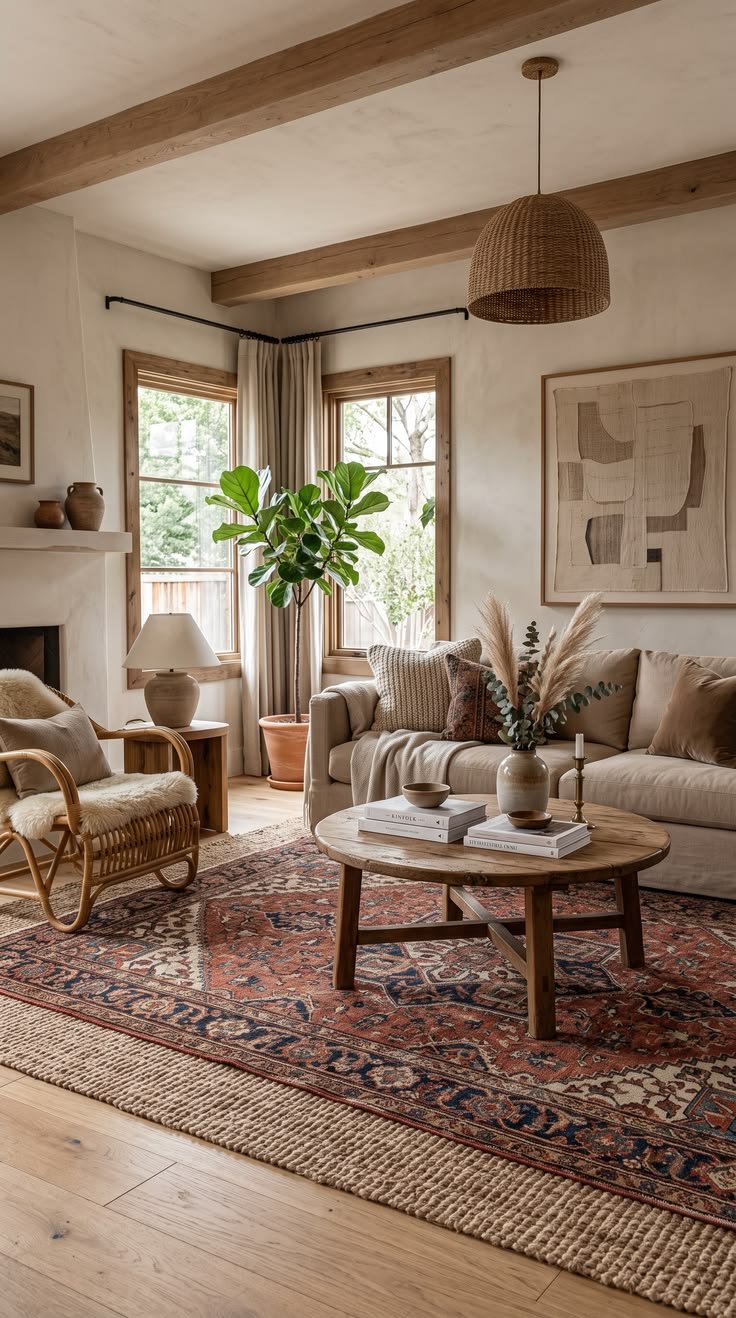
The large base rug solves the size problem and anchors the furniture, while the smaller rug on top adds color, softness and personality. It's also handy if you've fallen in love with a vintage rug that's too small for your room on its own.
Keep the two rugs clearly different. A flat, textured base and a softer, patterned top rug look intentional. Two similar rugs layered together just look like a mistake.
Layering also makes it easy to change the look. Swap the top rug with the seasons, use a lighter one in summer and a richer, warmer one in winter, and keep the same base all year.
3. Go Neutral with a Natural Fiber Rug
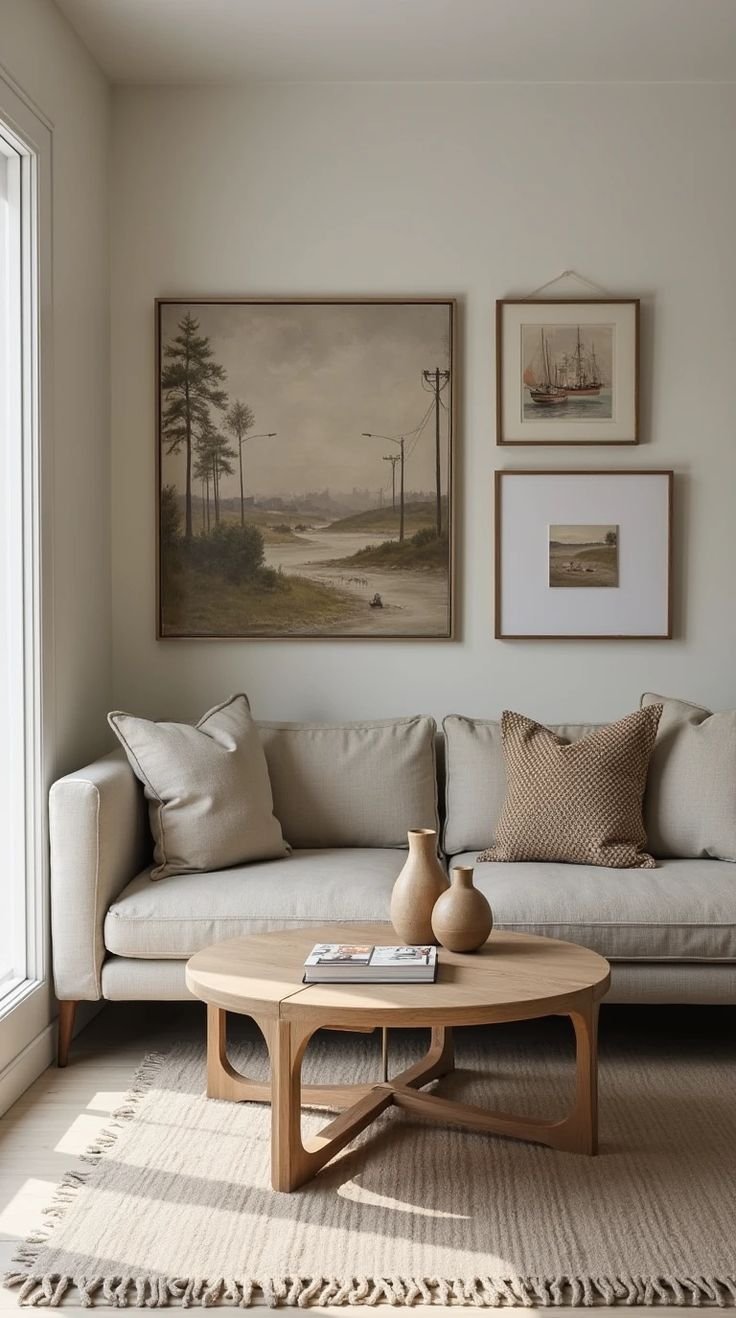
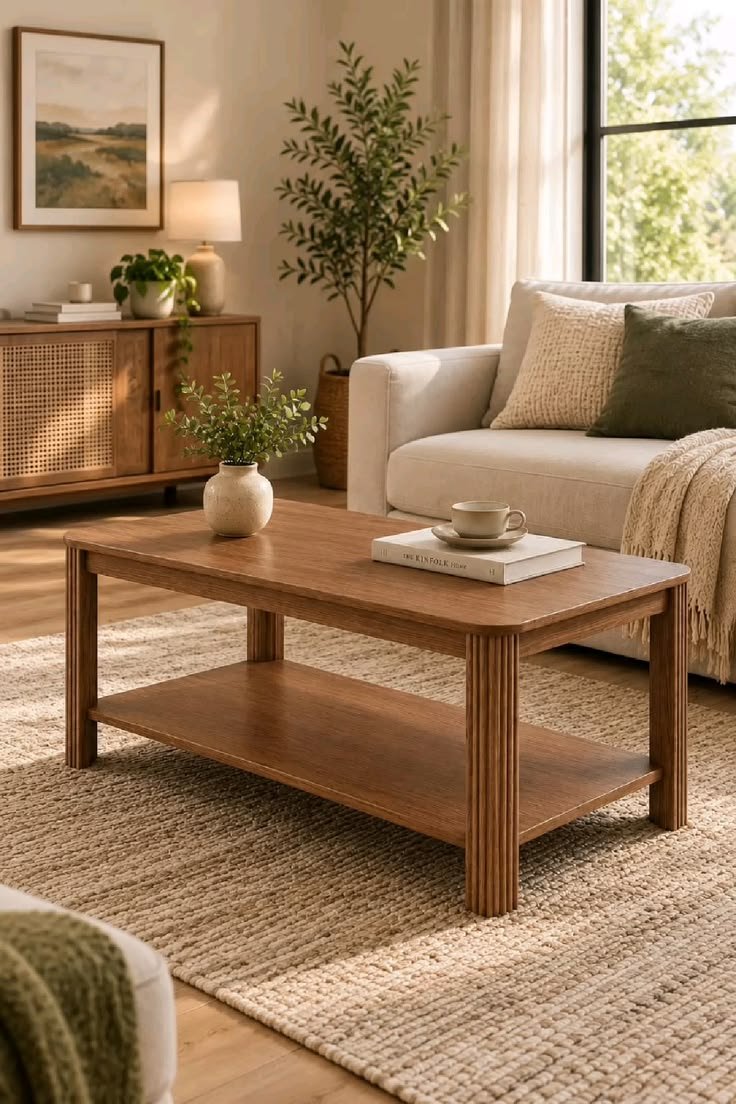
Jute, sisal and seagrass rugs bring an earthy, relaxed texture to a living room. They suit coastal, boho, Scandinavian, farmhouse and modern rooms alike, and they tend to be more affordable than wool in large sizes.
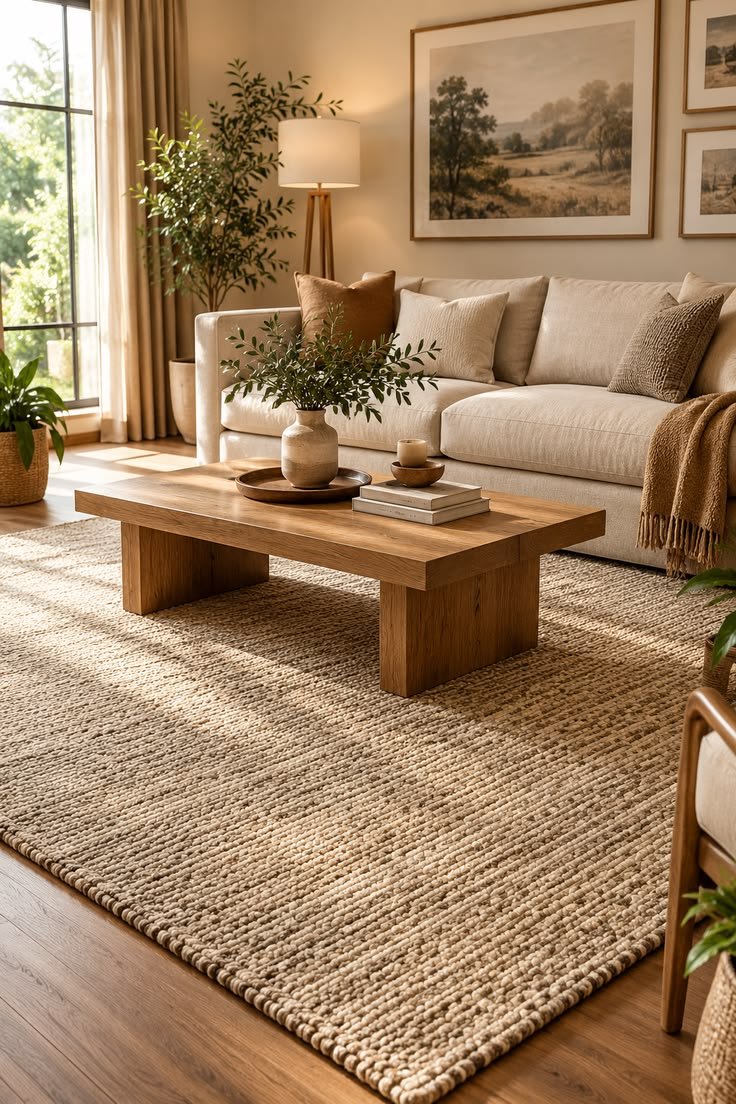
Natural fiber rugs are generally hard-wearing and hide crumbs and dust well, which makes them practical for busy rooms. Their neutral color also works as a calm base, so you're free to bring in color through cushions, throws and art instead.
There are a few trade-offs. Natural fibers can feel rough under bare feet, especially sisal, so they're not ideal if you like sitting on the floor. Many don't handle liquid spills well and can stain or change shape if they get very wet, so blot spills quickly rather than scrubbing.
If you want the look with a softer feel, try a jute and wool blend, or a chunky wool rug woven to look like jute.
4. Use a Vintage or Vintage-Style Persian Rug
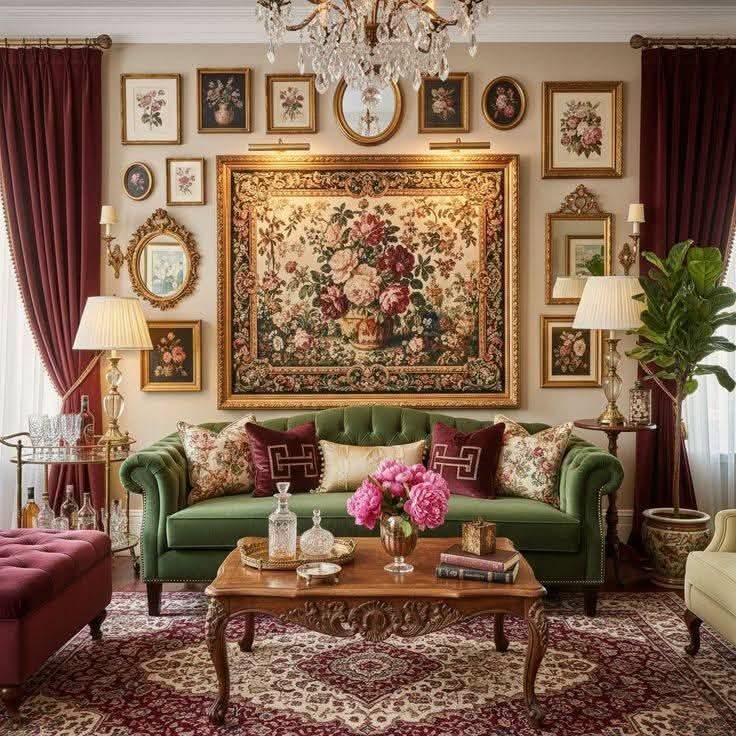
A vintage or vintage-style Persian rug adds instant character to a living room. Rich reds, faded blues, soft rusts and intricate borders bring warmth and history that a plain modern rug can't match.
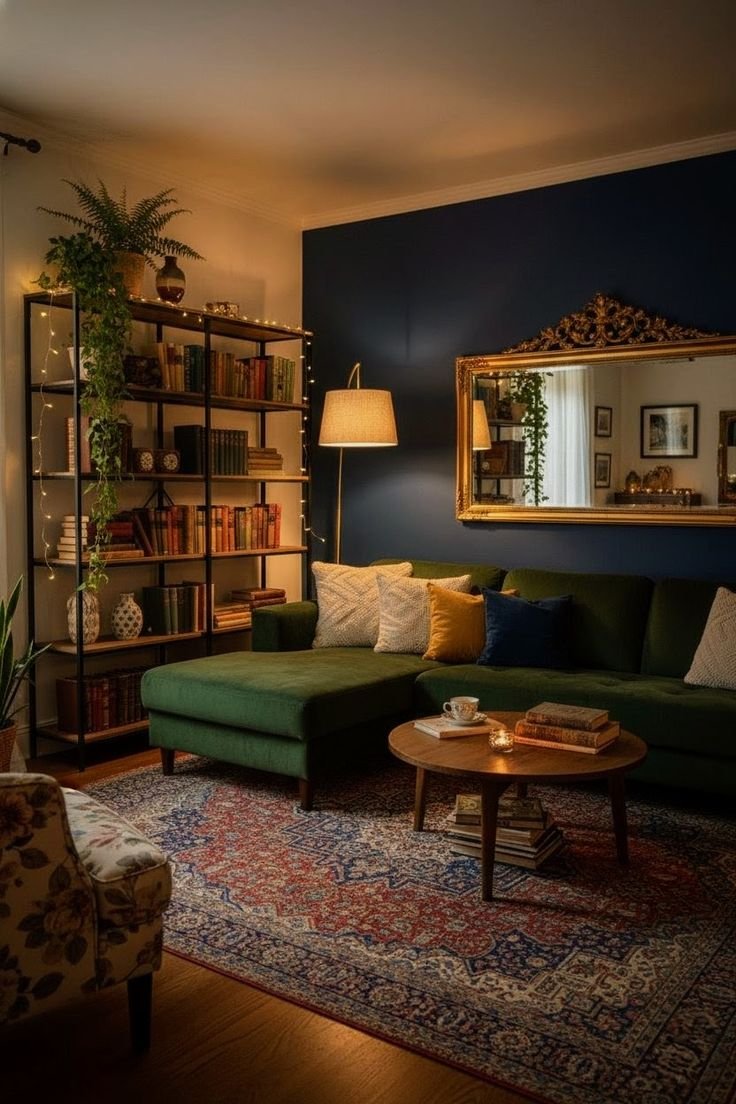
These rugs look especially good in rooms that might otherwise feel too new or too plain. A faded vintage rug under a modern sofa creates a lovely contrast between old and new, and it makes the room feel collected over time rather than bought all at once.
Real vintage rugs can be expensive, but there are many affordable vintage-style options with distressed, faded designs. These are often thinner, and some are even washable, which makes them practical for everyday living rooms.
Let the rug guide your color choices. Pick one or two of its colors, such as a soft rust or a muted blue, and repeat them in cushions, a throw or a piece of art. That ties the room together and makes the rug look like it was always meant to be there.
5. Pick a Washable Rug for Kids and Pets
If you have children, pets or simply a busy household, a washable rug can save a lot of stress. Many washable rugs are thin enough to go in a home washing machine, so spills, muddy paws and sticky fingers aren't the end of the world.
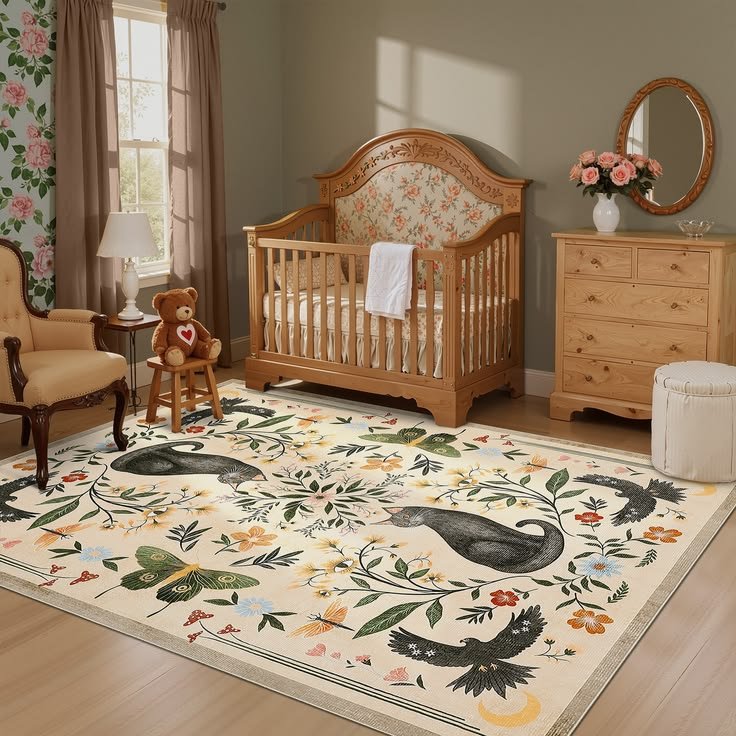
Washable rugs come in a wide range of styles, including vintage-inspired, modern, neutral and patterned designs, so you don't have to sacrifice looks for practicality.
Before buying, check the care instructions and your washing machine's capacity. Large rugs may be too big for a standard home machine, and some washable rugs come as a cover that separates from a non-slip pad underneath.
Because washable rugs tend to be thinner, they can feel less cushioned underfoot. A good rug pad underneath helps a lot (see idea 10). Patterned and multi-toned designs are also more forgiving than plain light colors, since small marks are harder to spot between washes.
6. Try a High-Pile Shag Rug for Cozy Rooms
A high-pile rug, such as a shag or a thick, fluffy wool rug, makes a living room feel soft, warm and inviting. It's ideal for rooms where people like to sit on the floor, play with kids or stretch out with a book.
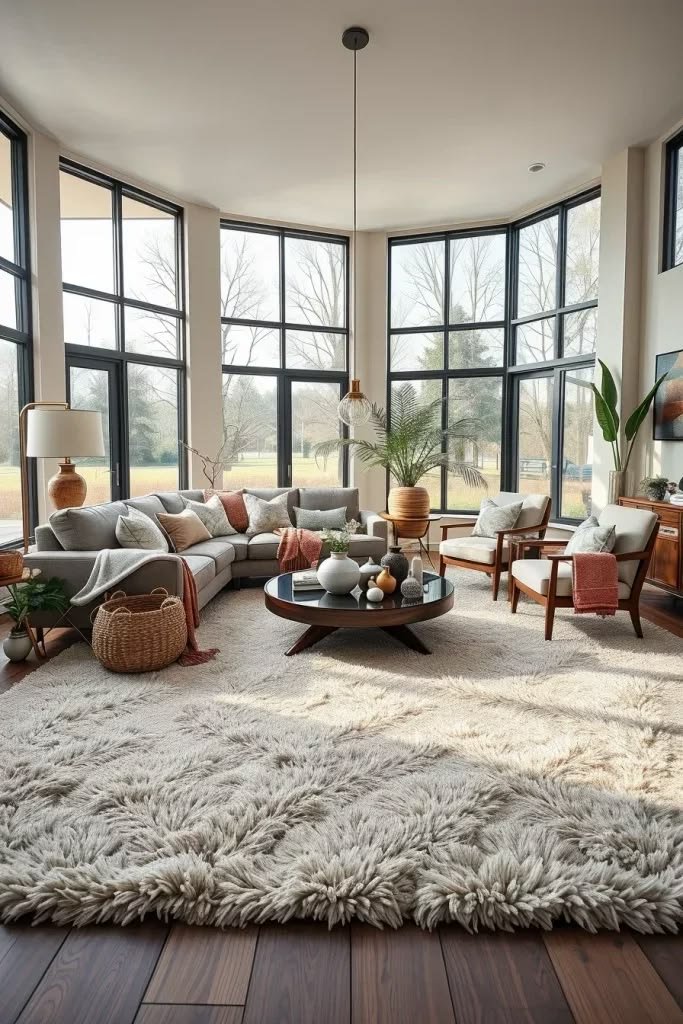
Shag rugs suit cozy, relaxed spaces especially well, and they work nicely in bedrooms and family rooms too. In cream, oatmeal or soft gray, a thick rug adds lovely texture to a neutral living room.
They do need a little more care. Crumbs and dust can hide in long fibers, and some high-pile rugs shed at first. Regular vacuuming helps, though some vacuums struggle with very long pile, so check whether you can turn off the brush roll or adjust the height.
High-pile rugs are also less practical under dining chairs or in very busy walkways. Use them where people will enjoy the softness most, such as in front of the sofa or by the fireplace.
7. Define Zones in an Open-Plan Room
In an open-plan home, rugs do an important job: they quietly separate one area from another without walls. A rug under the seating area tells you where the living room starts, even if the kitchen and dining area are only a few steps away.
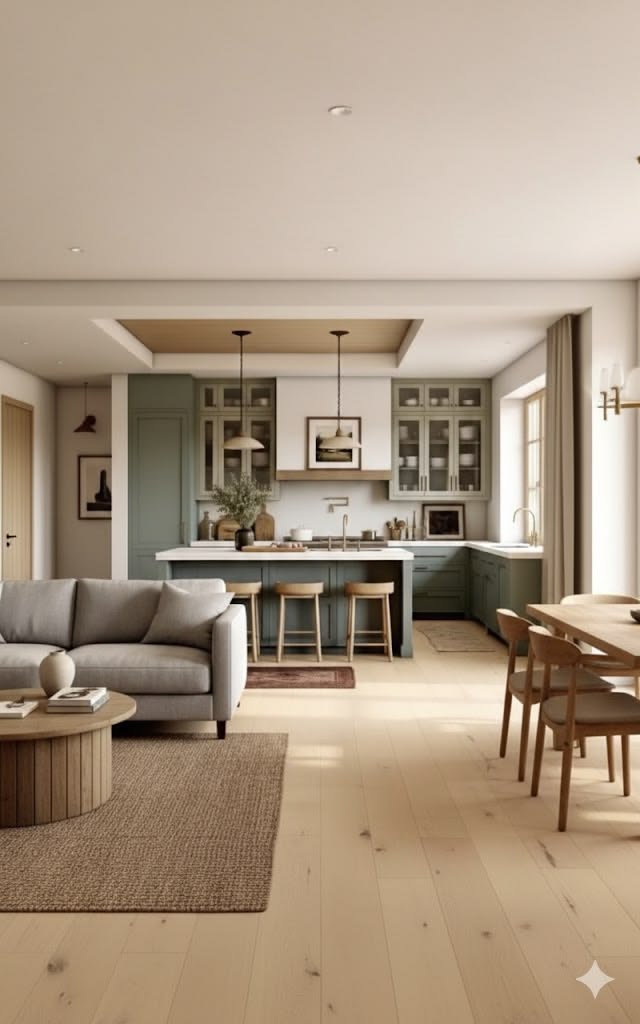
Choose a rug sized to fit the living area itself, with the seating arranged on or around it. This creates a defined, cozy zone inside a larger space, which can make a big room feel warmer and easier to furnish.
If you use more than one rug in an open space, for example under the living area and under the dining table, they don't need to match. They should feel related, though. Try repeating a color, choosing similar materials, or pairing a patterned rug with a plain one that shares a tone.
Leave some bare floor between rugs so each zone reads clearly. Rugs that touch or overlap in an open-plan room can look crowded rather than defined.
8. Use a Round Rug to Soften a Square Room
Most living rooms are full of straight lines: rectangular sofas, square coffee tables, window frames and bookshelves. A round rug breaks up all those hard angles and makes the room feel softer and more relaxed.
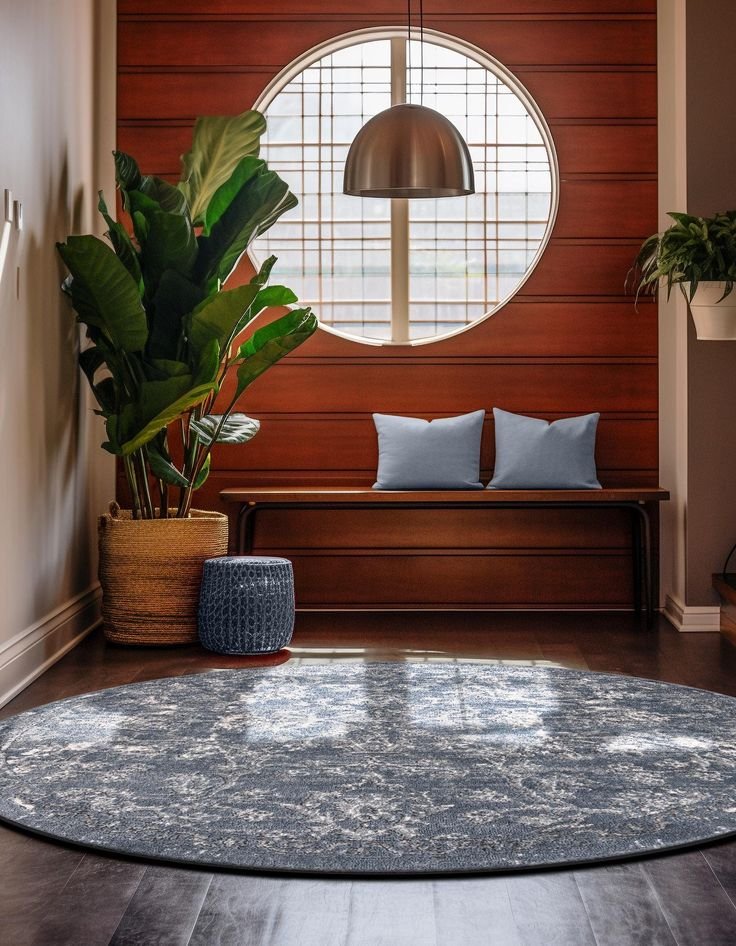
Round rugs work particularly well with a round coffee table, in a reading corner with an armchair, or in a small living room where a large rectangular rug would feel too heavy. They also suit rooms with curved furniture, such as a rounded sofa or barrel chairs.
As with any rug, size matters. A round rug should be large enough to hold the coffee table comfortably, with some space to spare around it. A tiny round rug in the middle of a large room looks lost.
If you love the idea but your seating arrangement is mostly rectangular, try layering a round rug on top of a larger rectangular base rug. It adds a soft shape without leaving the furniture disconnected.
9. Choose a Bold Geometric Rug as the Focal Point
If your living room feels a little flat, a bold geometric rug can bring it to life. Stripes, diamonds, checks and abstract shapes add energy and personality, and they make a statement right where your eye naturally lands.
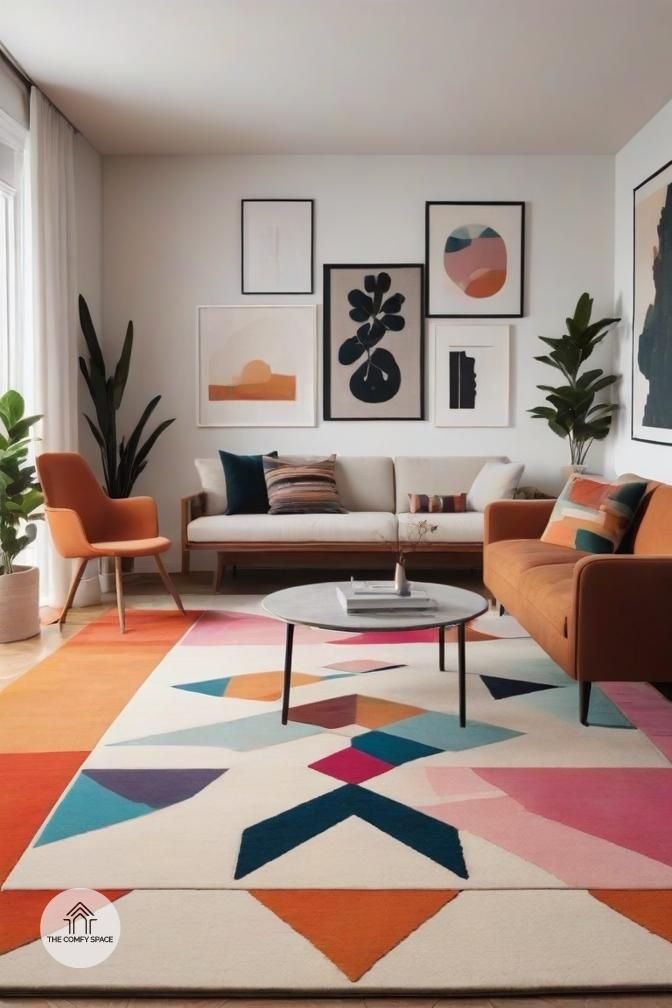
A geometric rug works best when the rest of the room is fairly calm. Pair it with a plain sofa and simple cushions so the rug has room to stand out. If you also want patterned cushions, choose a smaller pattern in a shared color so they don't compete.
Pattern scale makes a difference. A large, simple pattern can make a small room feel bigger and more modern, while a small, busy pattern tends to work better as an accent in a larger space.
Bold rugs are also forgiving in busy homes. A strong pattern hides everyday marks and wear much better than a plain light rug, so it's a good choice for families who still want something stylish.
10. Don't Skip the Rug Pad
A rug pad isn't the most exciting purchase, but it makes almost every rug better. It keeps the rug from slipping and bunching, makes it softer underfoot and helps protect your floors.
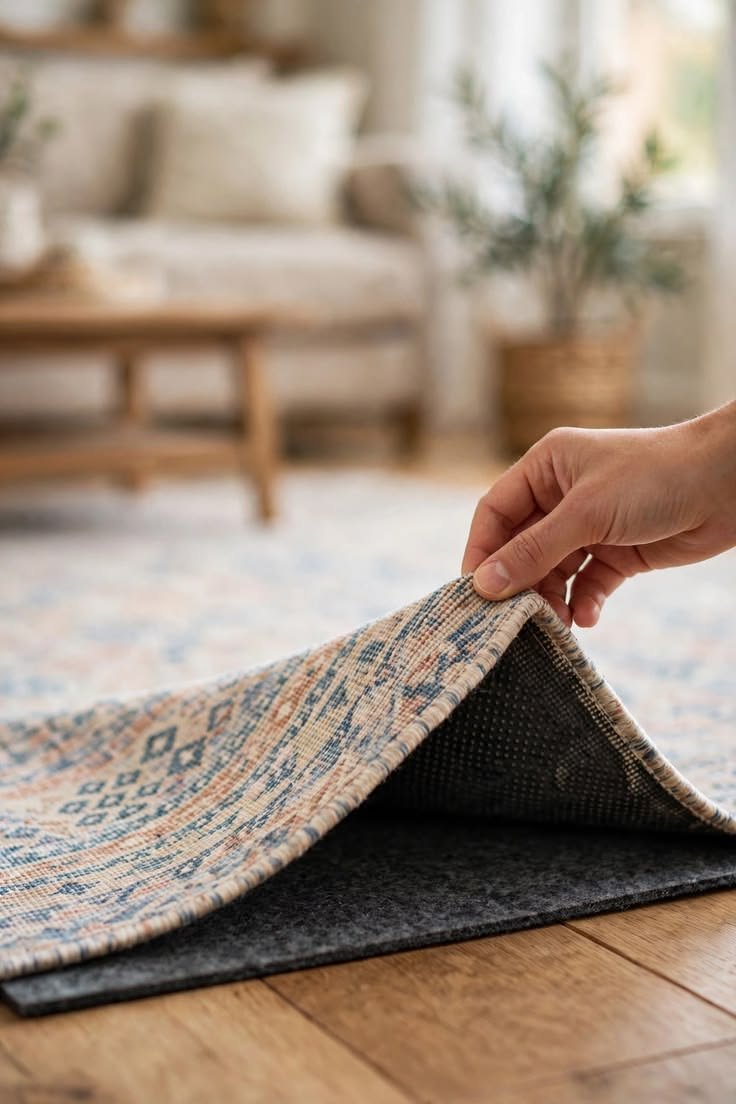
On hard floors, a non-slip pad is especially important. Thin rugs, washable rugs and runners can slide around easily, which is both annoying and a tripping hazard. A good pad holds the rug in place so the edges stay flat.
A cushioned pad also makes thin or inexpensive rugs feel more luxurious. It can help a budget rug look and feel more substantial, and it may help the rug last longer by reducing friction against the floor.
Choose a pad that's slightly smaller than the rug, so it doesn't peek out at the edges. If you have delicate floors or underfloor heating, check that the pad you choose is suitable for your floor type.
Choosing the Right Rug for Your Living Room
The best living room rug starts with the right size. Make sure it's large enough to anchor your seating, then choose a material that suits the way you live. Natural fibers add texture, washable rugs make life easier with kids and pets, and high-pile rugs bring softness to cozy rooms.
From there, add personality with a vintage design, a bold geometric pattern or a round shape that softens a boxy room. Layer rugs to stretch your budget, use them to define zones in an open-plan space, and finish with a good rug pad underneath.
Take your time, measure carefully, and choose a rug you'll love walking on every day.