Dining Room10 min read
10 Dining Table Condiment Tray Ideas
Every dining table collects a little crowd of bottles and jars. Salt and pepper, a bottle of olive oil, the hot sauce someone always asks for, a jar of chili flakes, maybe some honey for breakfast. Left loose, they drift across the table, leave sticky rings, and make the whole surface look cluttered even when everything else is tidy.
A condiment tray solves that in one simple move. It gathers all those everyday essentials into one place, so the table looks organized, cleaning is quicker, and you can lift everything off in seconds when you need the space. Chosen well, it can even become part of the decor rather than something you hide before guests arrive.
These dining table condiment tray ideas cover the practical side, like lazy Susans, tiered stands and portable caddies, along with styling ideas that make the tray look intentional. You'll find options for small tables, busy families and anyone who wants their everyday table to feel a little more put together.
1. Start with a Lazy Susan
A lazy Susan is one of the most practical condiment trays you can put on a dining table. Because it spins, everyone can reach the salt, the sauce or the oil without asking someone to pass it, which is especially helpful on round tables and at busy family meals.
Wooden lazy Susans look warm and suit farmhouse, rustic and modern homes alike. Marble and stone versions feel a little more polished, while white or light wood looks fresh in a bright kitchen.
Choose a size that fits comfortably in the center of the table with room left for serving dishes. A lazy Susan that's too large dominates the table and gets in the way of plates. One that's too small fills up quickly and starts to look crowded.
Keep the heaviest bottles toward the middle so it turns smoothly and doesn't tip. A raised edge or lip is worth looking for, too, because it stops bottles from sliding off when someone gives it an enthusiastic spin.
Resist the urge to fill every inch. Five or six items usually look tidier than ten, and leaving a little open space lets the turntable look styled rather than stuffed. If you find yourself adding more, it's often a sign that some of those bottles belong back in the pantry.
2. Use a Wooden Serving Tray with Handles
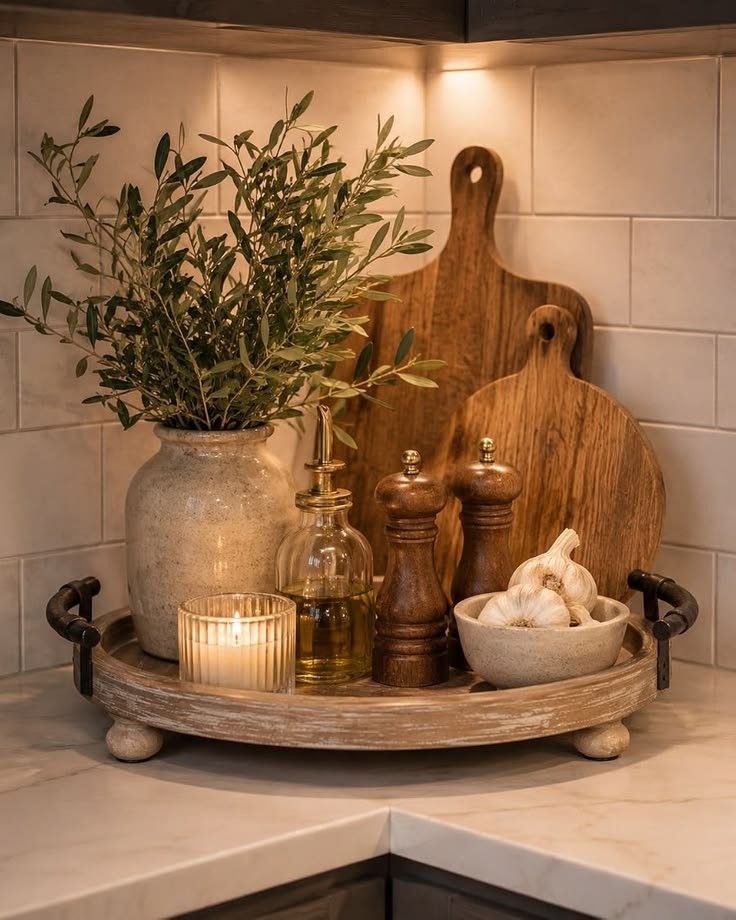
A rectangular wooden tray with handles is simple, versatile and easy to move. It works well on long rectangular tables, where a round lazy Susan can feel awkward, and you can carry everything to the counter in one trip when it's time to clear the table.
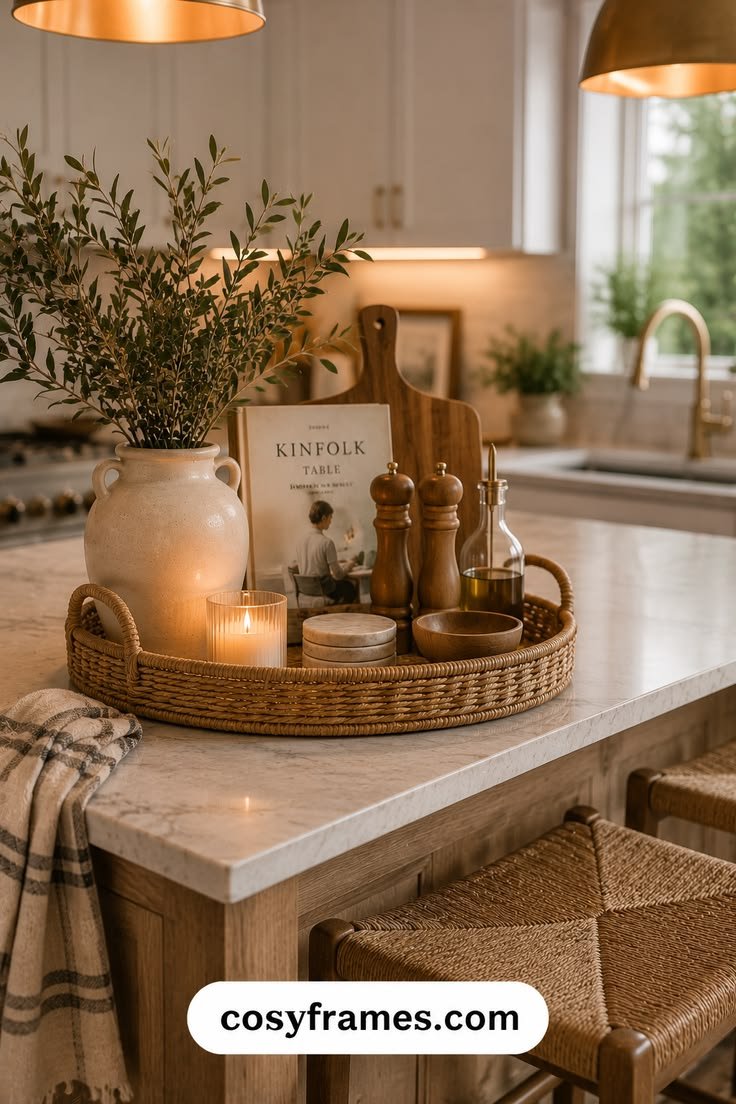
Look for a tray with low sides, which keep bottles contained without making them hard to grab. Natural wood tones such as oak, acacia or walnut pair beautifully with ceramic jars and glass bottles, and they add warmth to the table.
Wood does need a little care. Wipe up spills quickly, especially oil and vinegar, and avoid soaking the tray in water. A food-safe wood oil now and then helps keep it from drying out and makes spills easier to wipe away.
To protect the wood further, you can line the tray with a small cloth napkin or a cut piece of cork. It catches drips and is easy to wash or replace.
3. Decant into Matching Glass Bottles and Jars
Nothing makes a condiment tray look more pulled together than matching containers. Decanting oil, vinegar and common seasonings into simple glass bottles and jars instantly turns a jumble of mismatched packaging into a calm, intentional arrangement.
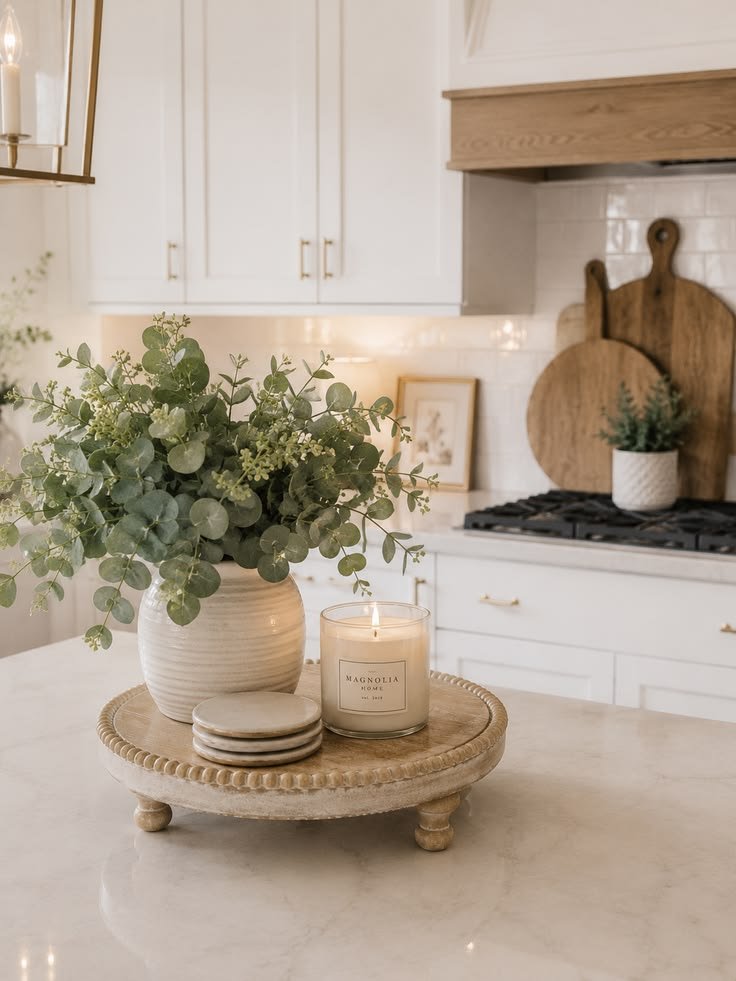
Clear glass lets you see what's inside and when you're running low. Amber glass looks warm and slightly vintage. Matching ceramic jars in a single color look clean and modern.
Labels help everyone find what they need. Simple handwritten tags, small chalkboard labels or printed stickers all work, and they keep the look consistent.
Keep food safety in mind. Many sauces need to be refrigerated after opening, so check the label before moving anything into a jar on the table. Shelf-stable items like oil, vinegar, salt, pepper and dried herbs are the best candidates for decanting. Wash and fully dry containers before refilling them.
4. Try a Marble or Stone Tray
A marble or stone tray brings an elegant touch to an everyday table. The smooth, cool surface looks luxurious, and it pairs particularly well with brass salt cellars, glass oil bottles and white ceramics.
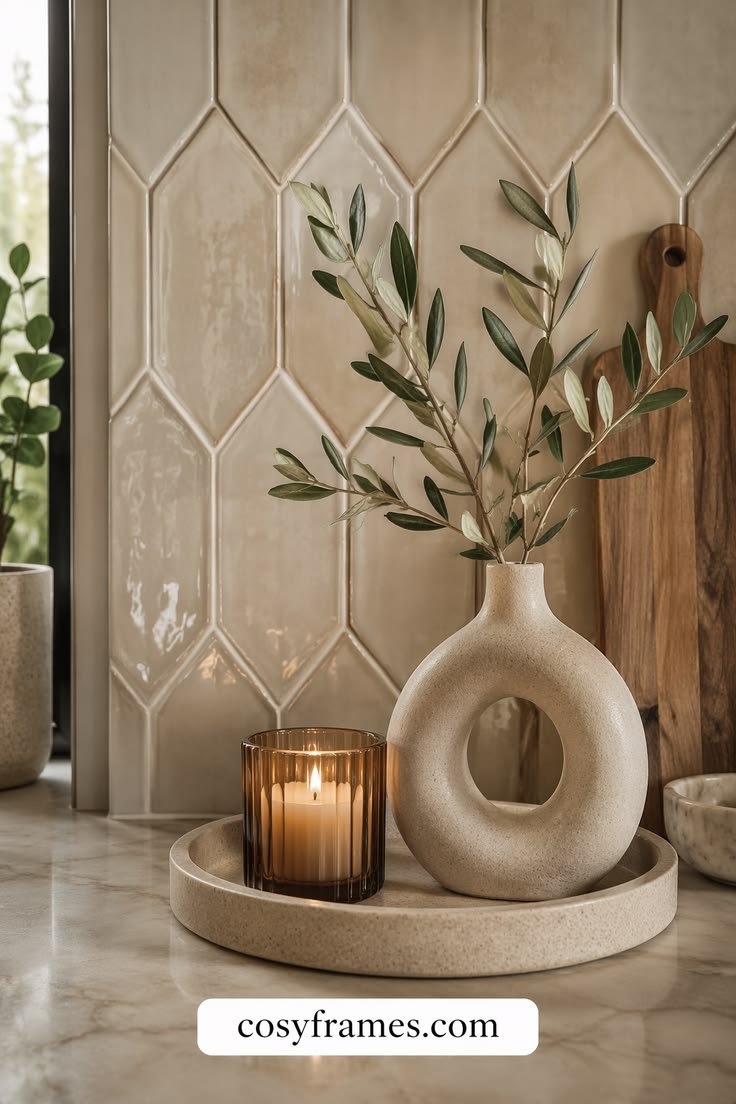
Stone is heavy and stable, which means bottles are less likely to tip over. It's also easy to wipe clean after a meal.
Choose the finish carefully. Some natural stones, including marble, can be marked by acidic liquids such as vinegar, lemon juice or tomato-based sauces. Wipe spills promptly, and consider a tray that's been sealed. If you love the look but worry about stains, a marble-effect tray in resin or ceramic is a practical alternative.
A marble tray also doubles as a lovely base for a small cheese board or a bowl of fruit, so it can work hard beyond condiments.
5. Create a Salt and Pepper Station
Sometimes the simplest tray is the most useful. A small tray holding only salt and pepper, styled with care, keeps the table clean and minimal while still looking intentional.
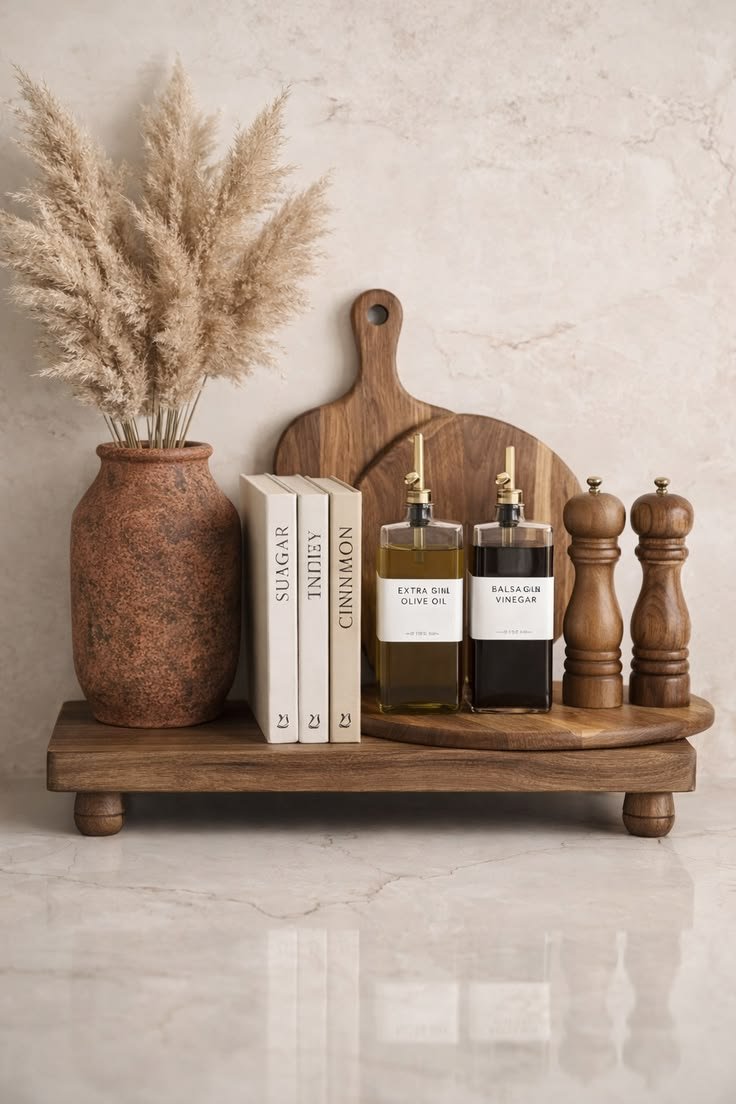
Try a lidded salt cellar paired with a pepper mill. A salt cellar lets people take a pinch of flaky salt, which feels a little special, while a grinder gives freshly ground pepper at the table.
Wood, marble, brass and ceramic all work. Pick materials that match the rest of your tableware, or choose one contrasting element, such as a brass pepper mill on a wooden tray, to add a little interest.
A small salt and pepper station is ideal for small dining tables, where a large tray would take up too much space. It also suits minimal homes, where every object on display needs to earn its place.
For a longer table, try two matching salt and pepper stations, one at each end, instead of a single large tray in the middle. Nobody has to stretch across the table, and the symmetry looks neat and considered, especially when guests are over.
6. Use a Tiered Stand to Save Space
If your table is small, think vertically. A two-tier stand holds twice as much in the same footprint, keeping condiments tidy without eating into the space you need for plates.
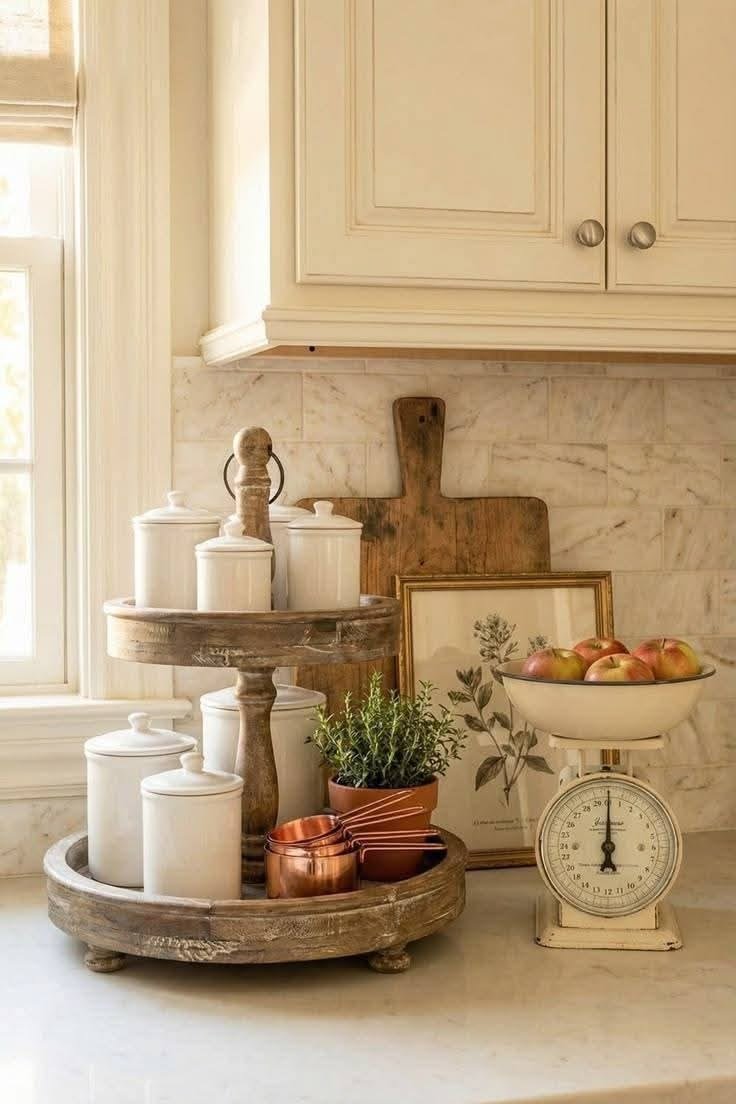
Put taller bottles, such as oil and sauces, on the bottom tier, and smaller items like salt, pepper and spice jars on top. That keeps everything stable and easy to grab.
Tiered stands come in wood, metal, marble and ceramic. A black metal stand looks modern and slightly industrial, while a wooden or rattan stand feels warmer and more relaxed.
Check the gap between tiers before buying. If it's too low, taller bottles won't fit on the bottom level, and you'll end up with things balanced awkwardly on top. Measuring your tallest bottle first saves a lot of frustration later.
A tiered stand also works beautifully on a kitchen island or a sideboard next to the dining table, where it can hold condiments, napkins and cutlery, freeing up even more space on the table itself.
7. Add a Small Bud Vase or a Sprig of Greenery
A condiment tray doesn't have to be purely functional. Adding one small decorative element, such as a bud vase with a single stem, a sprig of rosemary in a tiny jar, or a small potted herb, turns it into a little centerpiece.
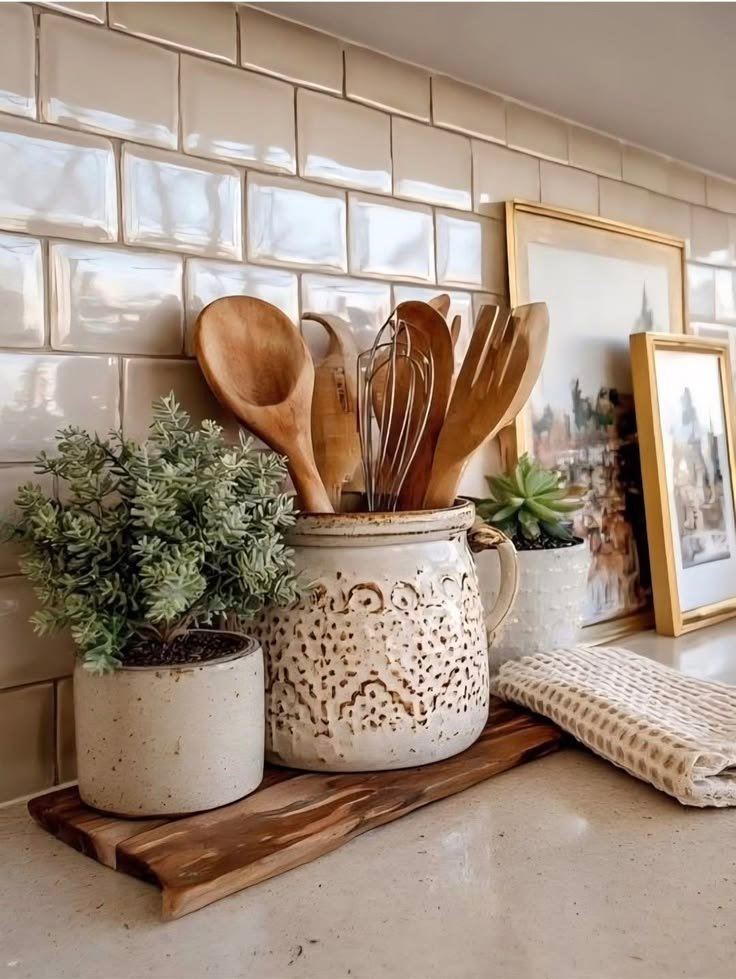
It's a simple trick that makes the whole table look more finished, especially when you don't have a separate centerpiece. A fresh herb is particularly fitting, because it ties the decoration back to food.
Keep the decorative piece low and small so it doesn't block the view across the table or get knocked over when people reach for the salt. One element is enough. More than that and the tray starts to look crowded.
Change the stem or herb with the seasons: a few spring flowers, summer basil, autumn leaves or a sprig of winter evergreen keep the tray feeling fresh.
8. Set Up a Breakfast Tray
If your dining table hosts a lot of breakfasts, consider a dedicated breakfast tray. Gather honey, jam, nut butter, sugar and perhaps a small jar of cinnamon onto one tray, ready to bring out with toast, pancakes or porridge.
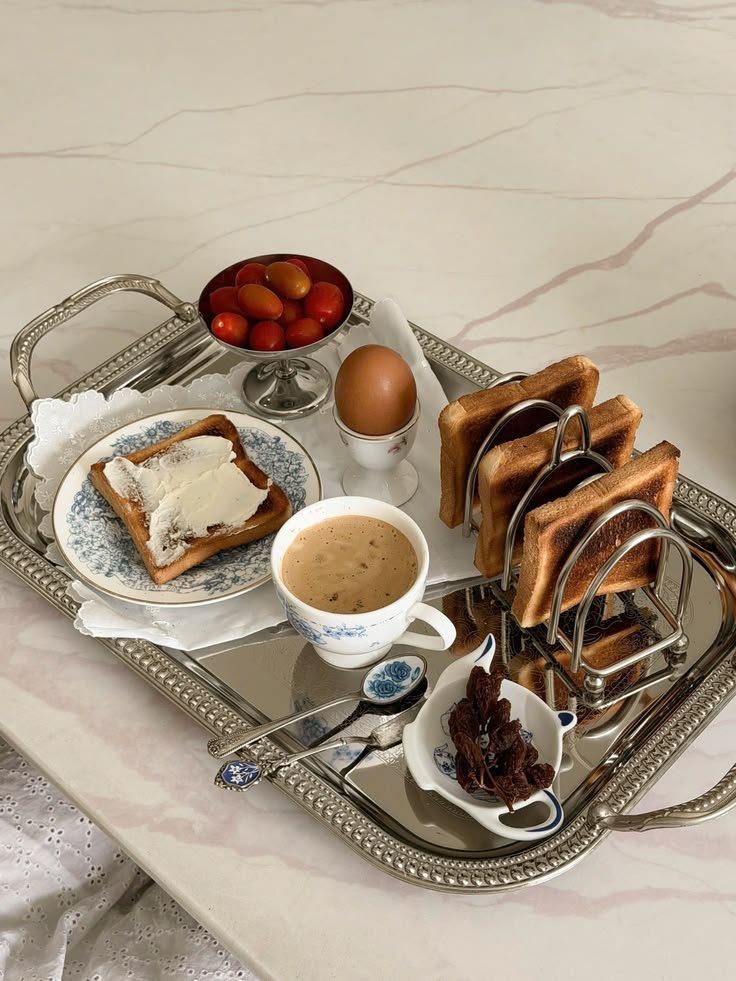
A honey jar with a wooden dipper, a couple of small jam jars with spoons and a lidded sugar bowl look charming together, especially on a wooden or woven tray.
Because some spreads need to be refrigerated after opening, keep the breakfast tray in the fridge or pantry and bring it out only for meals, rather than leaving it on the table all day. The tray makes this easy: everything comes out and goes away together.
A breakfast tray also makes weekend brunches feel a little more special, with very little extra effort.
9. Choose a Portable Caddy with a Handle
A condiment caddy with a central handle is incredibly practical, especially for families and anyone who eats in different spots. Lift it by the handle and carry everything from the kitchen to the dining table, the coffee table or even outside to the patio.
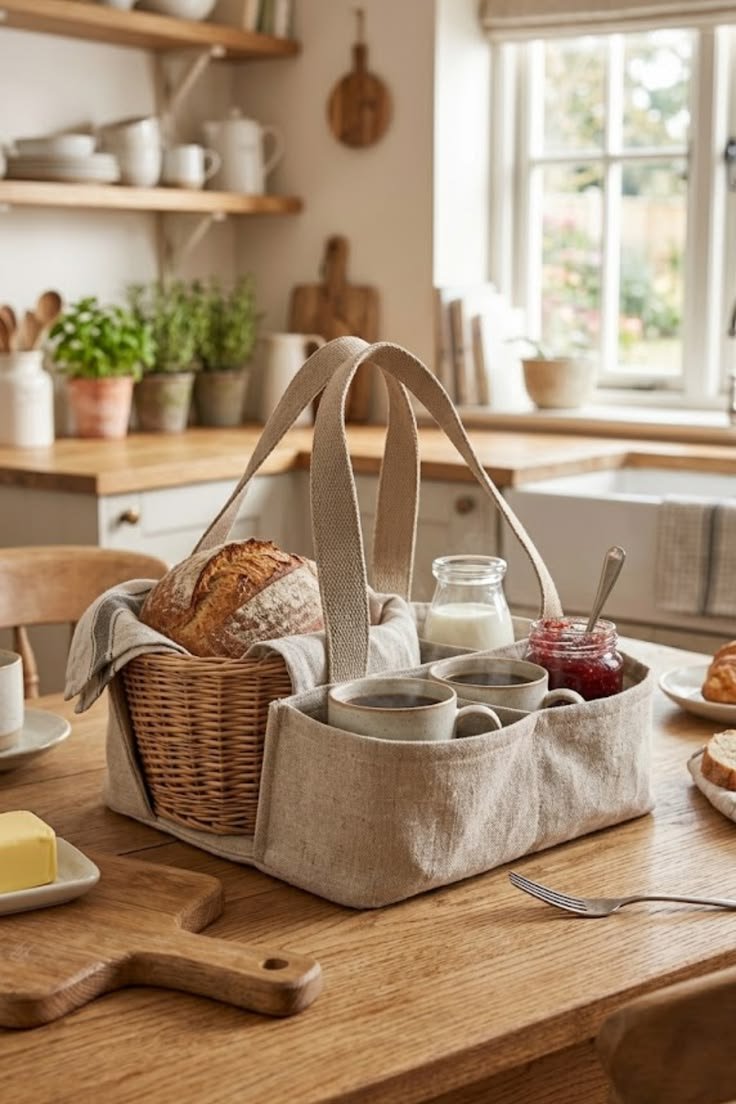
Caddies often have divided sections, which keep bottles upright and organized. Some include space for napkins or cutlery, too, so everything for a casual meal travels together.
Wood, metal and woven caddies all work. A wooden or woven caddy looks warm and relaxed, while a metal one feels a little more modern or industrial.
Caddies are also great for outdoor dining. Fill one with salt, pepper, sauces and napkins, and you won't need to make several trips back to the kitchen during a barbecue or garden lunch.
10. Make Theme Trays for Different Meals
If you cook different cuisines often, try building small theme trays you can swap in and out. A taco night tray might hold hot sauces, lime wedges and chili flakes. An Asian-inspired tray could carry soy sauce, chili oil and sesame seeds. A pasta night tray might hold olive oil, chili flakes and a wedge of cheese with a small grater.
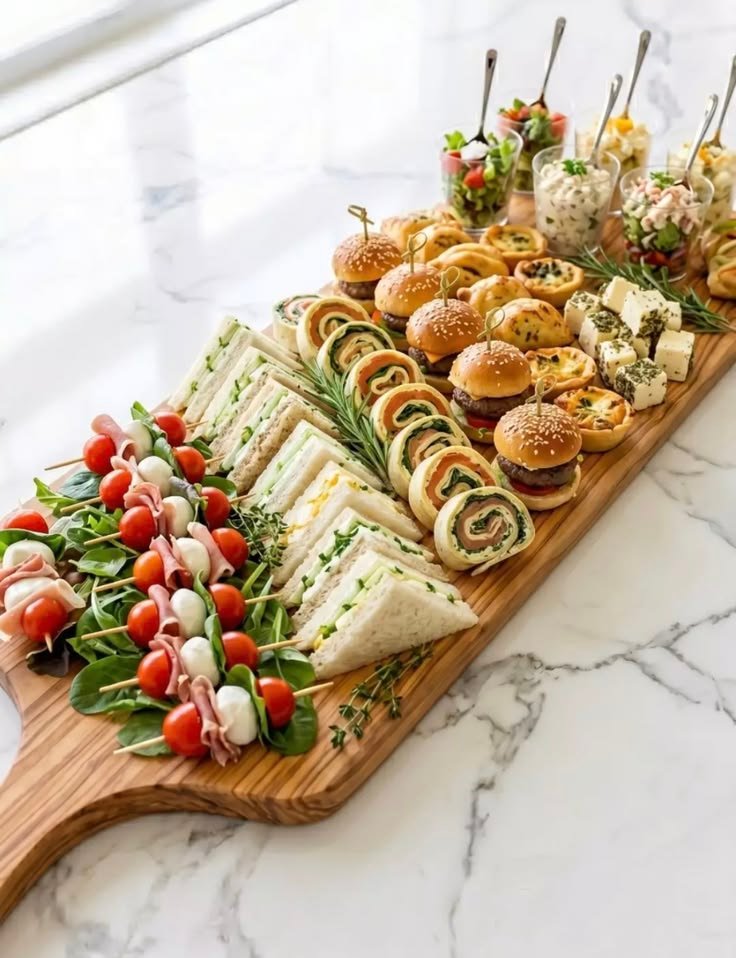
Theme trays keep the table relevant to the meal, so you're not crowding it with bottles nobody needs. They also make mealtimes feel a little more fun and considered.
Store each set together in the pantry or fridge, ready to bring out. Matching trays in the same material and size make swapping easy and keep the look consistent.
This idea also works well for entertaining. A well-stocked theme tray lets guests season their food just how they like it, without everyone getting up and down from the table.
Building a Condiment Tray That Works
The best condiment tray is one that suits how you actually eat. A lazy Susan is perfect for round tables and busy families, a wooden tray with handles works well on long tables, and a tiered stand or a small salt and pepper station saves space on smaller ones.
From there, make it look intentional. Decant shelf-stable essentials into matching containers, add a small sprig of greenery, and choose materials that suit your tableware. Breakfast trays, portable caddies and theme trays add even more flexibility.
Start by clearing every bottle off your table, put back only the essentials, and give them one tray to live on. Your table will instantly feel calmer.